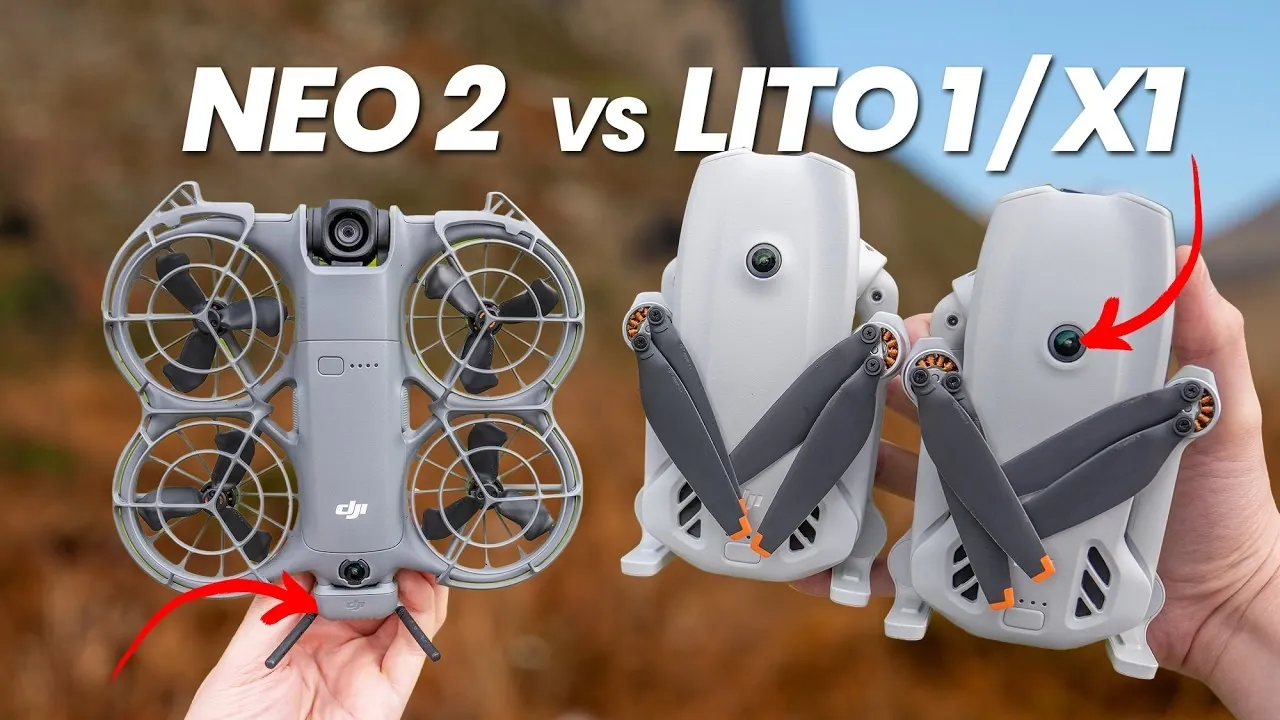
Choosing the right budget drone often comes down to balancing features, portability and performance. In this analysis, Drone Creative compares the DJI Lito X1, Lito 1 and Neo 2, highlighting their strengths and trade-offs. For instance, the Lito X1 stands out with its 1/1.3-inch sensor and Dlog-M support, making it a strong contender for professional-grade aerial photography. Meanwhile, the Neo 2 prioritizes portability with its lightweight design and built-in propeller guards, catering to users who need quick deployment and ease of use. The Lito 1, positioned as a more affordable option, provides reliable performance but lacks some of the advanced features found in the other two models.
Explore how these drones differ in key areas like stabilization, obstacle avoidance and battery life. You’ll gain insight into why the Lito X1 excels in low-light photography, how the Neo 2’s compact design supports action-oriented scenarios and where the Lito 1 fits as a budget-friendly choice for casual users. This breakdown will help you weigh the practical advantages of each model and identify the drone best suited to your specific needs.
DJI Lito X1 vs Neo 2 Drone
TL;DR Key Takeaways :
- The DJI Lito X1 excels in image quality, low-light performance and advanced features like a 1/1.3-inch sensor, Dlog-M support and 3-axis gimbal stabilization, making it ideal for professionals and aerial photography enthusiasts.
- The Neo 2 prioritizes portability and durability with a compact design, built-in propeller guards and controller-free tracking, making it suitable for action-oriented users in dynamic environments.
- The Lito 1 is a budget-friendly option for beginners or casual users, offering reliable performance but lacking advanced features like obstacle avoidance and high-end image quality.
- Battery life varies significantly, with the Lito X1 and Lito 1 offering 26-29 minutes of flight time, while the Neo 2 is limited to 11 minutes, better suited for short, action-packed flights.
- Durability and storage differ across models: the Neo 2 is robust with built-in storage, while the Lito drones are more fragile but offer advanced features for professional-grade use cases.
Design and Portability
Portability is a key factor for many drone users and the Neo 2 excels in this area. Its compact and lightweight design makes it easy to carry, deploy and maneuver, even in confined spaces. The inclusion of built-in propeller guards enhances safety, particularly for indoor flights or low-altitude operations. This makes the Neo 2 an excellent choice for users who prioritize convenience and quick deployment.
On the other hand, the DJI Lito X1 and Lito 1 feature foldable designs but are larger and heavier when unfolded. This added size contributes to greater stability during flight, which is particularly beneficial for high-altitude aerial photography. However, their bulkier design may pose challenges for users who need a highly portable option for travel or dynamic environments.
Camera and Image Quality
For those who prioritize image quality, the Lito X1 stands out as the superior choice. Equipped with a 1/1.3-inch sensor, it delivers highly detailed and noise-free footage, even in challenging lighting conditions. The support for Dlog-M enhances its dynamic range, making it ideal for professional-grade editing and post-production.
The Lito 1, while offering decent image quality, lacks the advanced features of the X1. It is a reliable option for casual users but may not meet the expectations of professionals. The Neo 2, with its wider field of view, is better suited for capturing action shots. However, its smaller sensor struggles to match the clarity and detail of the Lito X1, particularly in long-distance or high-resolution scenarios.

Discover other guides from our vast content that could be of interest on drones.
- 8+ Big drones capable of carrying large payloads and heavy equipment
- Solar 42 cinematic ambient drone synthesizer
- DJI Neo auto-follow drone for effortless content creation $199
- The Drone Dog Walker is the ideal accessory for your Pet
- How the Half-Priced DJI Lito X1 Drone Outperforms the Mini 5 Pro
- DJI Avata 360 vs Antigravity A1: Why the Cheaper Drone Could Actually Cost You More
- How to build a drone tracking radar from scratch
- Why the DJI Osmo Pocket 4P is Launching Under a Completely Different Name in the U.S.
- DJI’s Sub-250G Lito X1 Drone is Edging Closer to a US Launch
- DJI Avata 360 Camera Drone Hands-On Review : Specs, Battery Life & Video Quality
Low-Light Performance
Low-light performance is a critical consideration for many drone users and the Lito X1 excels in this area. Its larger sensor and F1.7 aperture allow it to capture more light, resulting in reduced noise and enhanced detail in dim environments. This makes it an excellent choice for nighttime photography or indoor shoots.
The Lito 1 performs adequately in low-light conditions but falls short of the X1’s capabilities. The Neo 2, however, struggles the most in such scenarios. Its smaller sensor and limited aperture produce darker and noisier footage, which may not meet the expectations of users seeking high-quality results in challenging lighting.
Obstacle Avoidance
Obstacle avoidance is an essential feature for safe and efficient drone operation. Both the Lito X1 and Neo 2 are equipped with omnidirectional obstacle avoidance systems, but their effectiveness varies. The Lito X1 includes a lidar sensor, which enhances its ability to detect obstacles in low-light environments, giving it a significant edge in challenging conditions.
The Neo 2, while capable of obstacle detection, is less reliable during fast or sudden movements, making it more suitable for controlled environments. The Lito 1, in contrast, lacks advanced obstacle avoidance features altogether, which may limit its usability in complex flight paths or crowded areas.
Stabilization and Tracking
Stabilization is crucial for capturing smooth and professional-grade footage. The Lito X1 leads in this category with its 3-axis gimbal, making sure steady footage even during dynamic movements or high winds. This makes it a preferred choice for users who require precision and stability in their aerial shots.
The Neo 2 employs a 2-axis mechanical gimbal combined with electronic stabilization. While effective, this setup is less refined compared to the X1. However, the Neo 2 offers a unique controller-free tracking option using hand gestures, which is particularly convenient for solo users or action-oriented scenarios. The Lito drones, though requiring a controller, provide advanced tracking features like Active Track 360, which ensures precise subject following.
Storage and Battery Life
Storage and battery life are critical factors to consider when choosing a drone. The Lito X1 and Neo 2 come with built-in storage capacities of 42GB and 49GB, respectively, eliminating the need for external memory cards. This feature is particularly useful for users who require quick and hassle-free storage solutions. The Lito 1, however, relies on a microSD card for storage, which may be less convenient for some users.
In terms of battery life, the Lito series outperforms the Neo 2. The Lito X1 and Lito 1 offer flight times ranging from 26 to 29 minutes, making them suitable for extended sessions. The Neo 2, with a flight time of just 11 minutes, is better suited for shorter, action-packed flights.
Durability and Repairs
Durability is a significant consideration, especially for users who operate in dynamic or risky environments. The Neo 2 shines in this category with its robust design, including propeller guards and a protected gimbal. These features make it more resilient during crashes or challenging maneuvers.
The Lito drones, while offering advanced features, have exposed propellers and gimbals, making them more prone to damage. Users of the Lito series should exercise caution during operation to avoid costly repairs or replacements.
Use Cases
Your intended use will heavily influence your choice of drone:
- Lito X1: Ideal for high-altitude aerial photography and videography, offering advanced features for capturing stunning visuals with professional-grade quality.
- Lito 1: A budget-friendly option for beginners or casual users seeking reliable performance without premium features.
- Neo 2: Perfect for action-oriented users who value portability, durability and ease of use in dynamic environments.
Additional Features
The Lito X1 offers several advanced features, including 48MP stills, raw image capture and slow-motion video capabilities at 4K 100 FPS or 1080p 200 FPS. These features make it a versatile tool for professional content creators who require high-quality and flexible shooting options.
The Neo 2, while limited to 12MP JPEGs, provides a wider field of view, making it suitable for capturing fast-paced action. However, its louder operation may be a drawback in quieter settings. The Lito 1, as a more affordable option, lacks some of these premium features but remains a solid choice for casual users who prioritize simplicity and cost-effectiveness.
Final Thoughts
The DJI Lito X1 emerges as the top choice for users seeking superior image quality, low-light performance and advanced features, making it ideal for aerial photography enthusiasts and professionals. The Lito 1 offers a more affordable entry point for beginners or casual users, while the Neo 2 caters to action-oriented individuals who prioritize portability, durability and ease of use. By carefully evaluating the strengths and limitations of each model, you can confidently select the drone that best aligns with your specific needs and preferences.
Media Credit: The Drone Creative
Disclosure: Some of our articles include affiliate links. If you buy something through one of these links, Geeky Gadgets may earn an affiliate commission. Learn about our Disclosure Policy.
