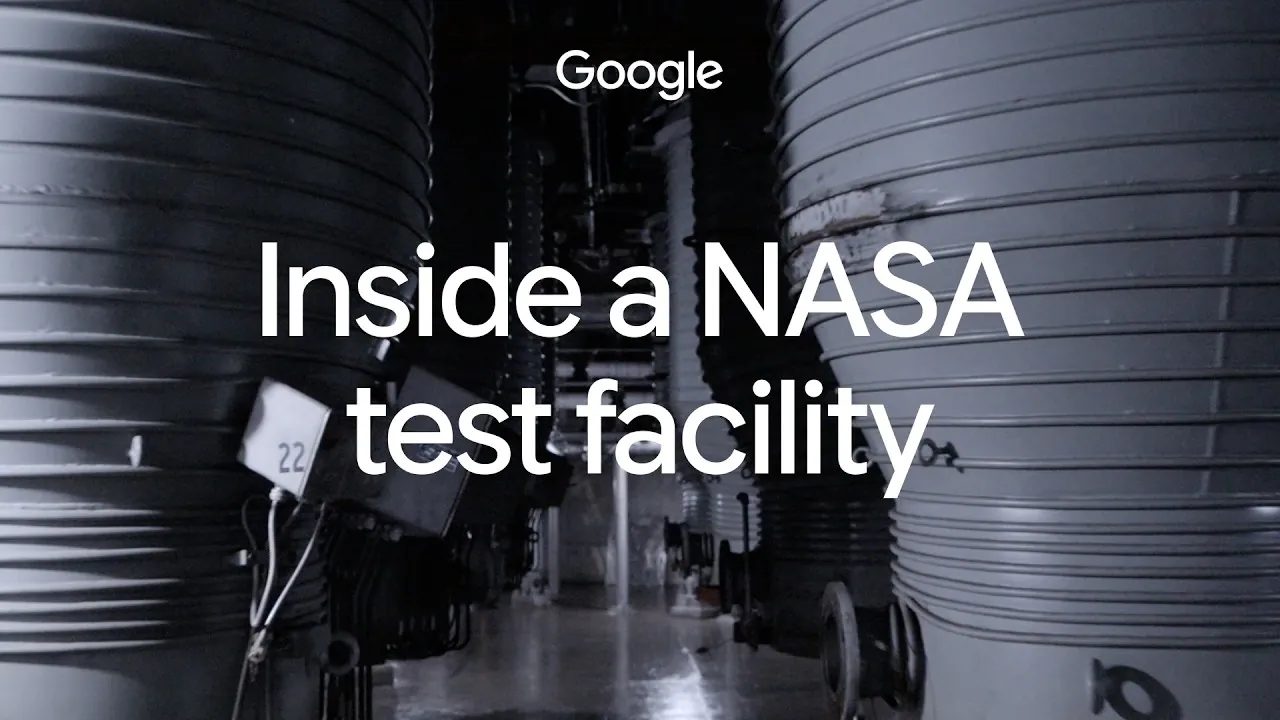
NASA’s Artemis II mission marks a pivotal step in humanity’s return to deep space exploration, focusing on the rigorous preparation required for its success. Central to this effort is the Orion spacecraft, which undergoes extensive testing at the Artemis II facility to ensure it can withstand the demands of a ten-day journey around the Moon. According to Google, one critical process involves acoustic chamber testing, where the spacecraft is exposed to simulated launch and space travel conditions to validate its life support, navigation and communication systems. These evaluations are essential for making sure crew safety and mission reliability as NASA advances its plans for lunar and Martian exploration.
Discover the mission’s major phases, including system checks in low Earth orbit and the figure-eight trajectory that will take the crew around the Moon. Gain insight into the specific roles of the Artemis II crew, such as Reid Wiseman’s leadership as Mission Commander and Christina Koch’s focus on research operations. This overview also examines how the mission’s detailed planning and execution contribute to NASA’s long-term goals for sustainable deep space exploration.
What is Artemis II?
TL;DR Key Takeaways :
- Artemis II is a pivotal mission in NASA’s Artemis program, aiming to test the Orion spacecraft and its systems in a deep space environment, laying the groundwork for sustainable human exploration of the Moon, Mars and beyond.
- The mission features a ten-day timeline with three key phases: Earth orbits for system testing, a figure-eight trajectory around the Moon and a safe return to Earth, providing critical data for future missions.
- The crew of four astronauts, Reid Wiseman, Victor Glover, Christina Koch and Jeremy Hansen, represents a collaborative and international effort, showcasing diverse expertise and global commitment to space exploration.
- Powered by the Space Launch System (SLS), the most powerful rocket ever built, Artemis II will demonstrate advanced technologies, including life support, navigation and communication systems, essential for long-term space missions.
- Artemis II is a stepping stone toward NASA’s long-term goals of establishing a sustainable presence on the Moon, building a lunar gateway and preparing for future missions to Mars and deep space exploration.
Artemis II is a critical precursor to NASA’s long-term vision of deep space exploration. The mission will test the Orion spacecraft in a deep space environment, making sure its systems are robust enough to withstand the challenges of extended space travel. By completing two Earth orbits and executing a figure-eight trajectory around the Moon, Artemis II will simulate the conditions that future missions will encounter. This mission is not solely about testing advanced technology; it is about laying the groundwork for humanity’s next giant leap into the unknown.
The mission also serves as a proving ground for the integration of innovative systems, including life support, navigation and communication technologies. These systems are essential for making sure the safety and success of future missions, particularly those that aim to establish a long-term human presence on the Moon and eventually venture to Mars. By addressing these challenges head-on, Artemis II is setting the stage for a new era of exploration.
Meet the Crew
The Artemis II crew comprises four highly skilled astronauts, each bringing unique expertise and experience to the mission. Their roles and contributions highlight the collaborative and international spirit of the Artemis program:
- Reid Wiseman: As Mission Commander, Wiseman will lead the team, making sure the mission’s objectives are met with precision and efficiency.
- Victor Glover: Serving as Pilot, Glover will oversee critical spacecraft operations, including navigation and system management.
- Christina Koch: A Mission Specialist, Koch will use her extensive background in space science to support research and operational tasks.
- Jeremy Hansen: Representing the Canadian Space Agency, Hansen will embark on his first spaceflight, contributing to the mission’s international collaboration.
This diverse team underscores the global commitment to advancing space exploration and the shared vision of pushing humanity’s boundaries.

Here is a selection of other guides from our extensive library of content you may find of interest on NASA.
Mission Timeline
Artemis II is carefully designed to achieve its objectives within a ten-day window, with each phase of the mission contributing to its overarching goals:
- Phase 1: The mission begins with two Earth orbits, during which the crew will test the Orion spacecraft’s systems in low Earth orbit. This phase ensures that all systems are functioning optimally before venturing farther into space.
- Phase 2: The spacecraft will embark on a figure-eight trajectory around the Moon, bringing the crew closer to the lunar surface than any human has been in over five decades. This phase will provide invaluable data on the spacecraft’s performance in a deep space environment.
- Phase 3: The mission will conclude with a safe return to Earth, marking a significant milestone in NASA’s journey toward sustainable lunar exploration and setting the stage for future missions.
Each phase is designed to rigorously test the spacecraft and its systems, making sure that future missions can build on the knowledge gained from Artemis II.
The Space Launch System (SLS)
Powering Artemis II is the Space Launch System (SLS), the most powerful rocket ever constructed. Standing at an imposing 322 feet, taller than the Statue of Liberty, the SLS is engineered to support humanity’s boldest space exploration goals. Its immense thrust will propel the Orion spacecraft beyond Earth’s orbit, allowing it to reach the Moon and beyond.
The SLS represents a significant technological achievement, combining advanced engineering with unparalleled power. Its design incorporates lessons learned from previous space programs, making sure it meets the demands of modern exploration. By allowing missions like Artemis II, the SLS is a critical component of NASA’s strategy to push the boundaries of what is possible in space exploration.
Testing for Success
Before Artemis II embarks on its historic journey, rigorous testing ensures the mission’s success. One of the most critical processes is acoustic chamber testing, where spacecraft hardware is subjected to extreme sound pressure and frequencies. These tests replicate the intense conditions of launch and space travel, making sure that all equipment can endure the harsh environment of space.
In addition to hardware testing, Artemis II will contribute to new lunar research. Scientists aim to study the Moon’s surface to identify and extract resources such as water, which can be converted into rocket fuel. This capability could transform space exploration by reducing the need to transport fuel from Earth, making missions to Mars and beyond more feasible. By addressing these challenges, Artemis II is not only advancing technology but also laying the foundation for a sustainable future in space.
Looking Ahead: Long-Term Goals
Artemis II is a vital step in NASA’s broader vision of using the Moon as a stepping stone for Mars exploration. By establishing a sustainable presence on the Moon, NASA aims to develop the technologies and strategies needed for longer missions in deep space. The Moon’s proximity to Earth makes it an ideal testing ground for these advancements, serving as a launchpad for humanity’s journey to the Red Planet and beyond.
The Artemis program’s long-term goals include building a lunar gateway, a space station orbiting the Moon, that will serve as a hub for research, exploration and eventual missions to Mars. By focusing on sustainability and innovation, NASA is making sure that the lessons learned from Artemis II will benefit not only future missions but also humanity’s broader aspirations in space.
Why Artemis II Matters
Artemis II is a defining moment in the history of space exploration. By combining rigorous testing, international collaboration and ambitious goals, this mission bridges the gap between experimental and operational spaceflight. It represents a bold step forward in humanity’s quest to explore the cosmos, unlocking new possibilities for scientific discovery and technological innovation.
This mission is not just about reaching the Moon; it is about unlocking the potential of the cosmos for future generations. By following the progress of Artemis II, you are witnessing the dawn of a new era in human exploration, one that promises to take us farther than ever before.
Media Credit: Google
Disclosure: Some of our articles include affiliate links. If you buy something through one of these links, Geeky Gadgets may earn an affiliate commission. Learn about our Disclosure Policy.
