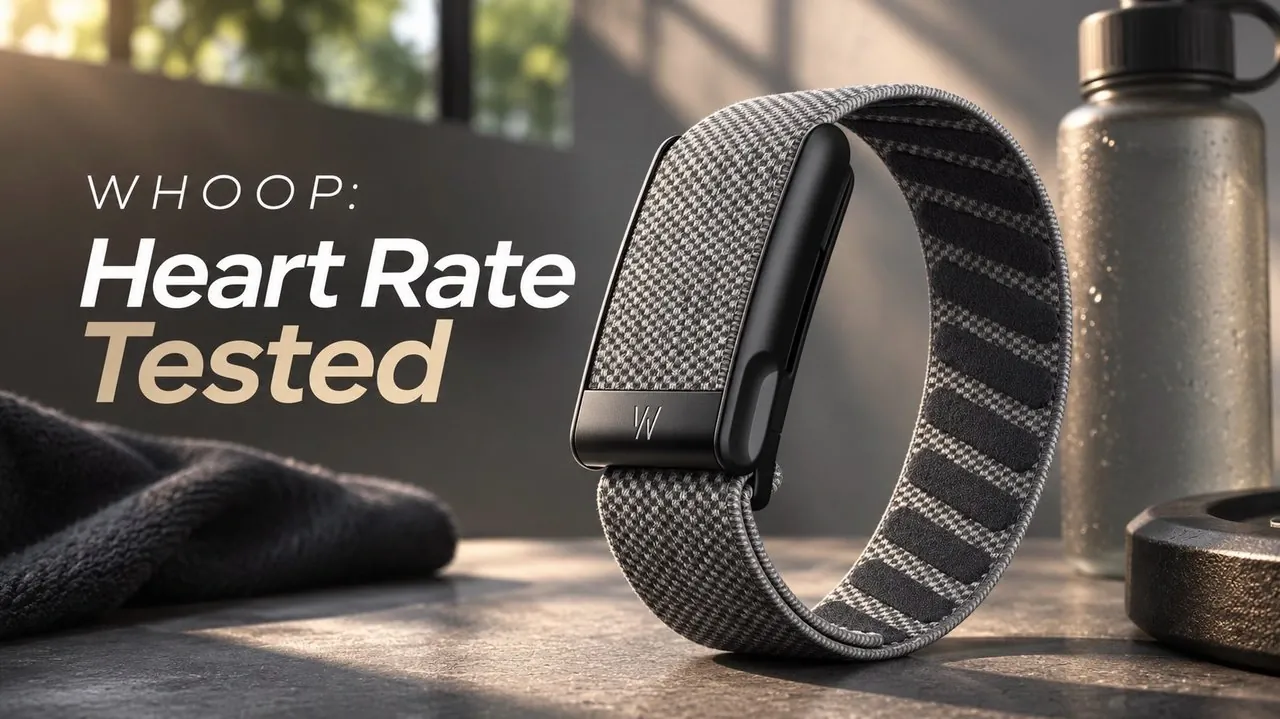
WHOOP’s new heart rate algorithm, the software that interprets readings from its wearable sensors, earned a higher accuracy score but still missed weightlifting peaks. Its overall heart rate score rose from 96 to 99, although that does not mean you can trust it equally for every workout. Running readings closely matched a chest strap’s measurements, while weightlifting remained less dependable, as The Quantified Scientist explains. Gain a clearer picture of where the update delivers more reliable tracking and why those missed peaks still matter when you’re following hard efforts.
WHOOP’s Heart Rate Update Improved Outdoor Cycling Most
TL;DR Key Takeaways :
- WHOOP’s overall heart rate accuracy score rose from 96 to 99 with the updated algorithm.
- Outdoor cycling showed the largest improvement, with correlation against the chest strap rising from 0.90 to 0.97.
- Outdoor running correlation reached 0.99, with the updated algorithm improving on an already close result.
- Weightlifting correlation changed little, rising from 0.95 to 0.96, and readings still tended to be low at higher heart rates.
- The Quantified Scientist recommends wearing WHOOP on the biceps or another fleshier area during workouts for the best heart rate accuracy.
WHOOP announced the major update in summer 2026. Months of readings from a WHOOP MG worn on the biceps were compared with the earlier algorithm, using a Polar H10 ECG chest strap as the reference; the data was not filtered or adjusted to make the results look better. New-algorithm data ran from August to November 2026, covering warmer and colder periods, while the earlier testing took place around May 2026.
Overall Heart Rate Score Rose to 99
For heart rate accuracy, the old algorithm scored 96 and the new algorithm scored 99. Both received a “great” mark, with one score just on the edge of “perfect.”
Improvements were mostly in harder exercises. In this test, the significant overall difference was based purely on biking.

Here are more guides from our previous articles and guides related to Whoop and heart rate that you may find helpful.
- Fitbit vs Whoop vs Oura Ring 5: REM Sleep Tracking Compared (One Month Test)
- Best Wearables for Heart Rate Variability and Sleep Heart Rate
Outdoor Biking Saw the Largest Improvement
For outdoor cycling, the updated algorithm tracked the chest strap more closely than its predecessor. Its correlation rose from 0.90 to 0.97, where 1 represents perfect correlation, and almost all new-algorithm readings were on or close to the reference line.
WHOOP MG still recorded heart rates that were too low at a few moments and missed part of one peak. Two of the worst outdoor cycling sessions showed more deviation after the weather had turned colder.
In this test, cycling was the main benefit of the update, though the result should be read in the context of biceps placement, which makes heart rate measurement easier.
Outdoor Running Improved by a Smaller Margin
For outdoor running, the updated algorithm produced a 0.99 correlation and showed more readings close to the chest strap reference on average. The older algorithm was already relatively close, although it had clusters of readings farther from the reference and larger deviations.
Most running sessions with the updated algorithm differed by only a few beats per minute at minor points, while a selected session showed a little more deviation. In one session, the heart rate trace closely overlapped the chest strap’s readings.
Hiking Tracked Closely, Spinning Changed Little
For the hike, the correlation was 0.99, and almost all readings were very close to the reference line. WHOOP detected most of the heart rate variation, with one minor deviation.
Spinning results stayed approximately the same with the two algorithms, whose correlations rounded to 1.00 and 0.99.
Weightlifting Results Changed Little
For weightlifting, the new algorithm had a correlation of 0.96, compared with 0.95 for the old algorithm. Both tended to read low at higher heart rates, although the deviations were potentially slightly smaller with the update. It was very hard to tell whether the improvement was significant.
In one weightlifting session, WHOOP did not fully detect all the heart rate peaks. In another, it missed peaks by a larger margin, though it performed better in the second half. On average, WHOOP detected more weightlifting peaks than most other devices.
Biceps Placement Gives Better Workout Accuracy
For workouts, The Quantified Scientist, a postdoctoral scientist specializing in biological data analysis, recommends wearing WHOOP on the biceps or another fleshier area rather than the wrist to get the best heart rate accuracy. The wrist should be fine at other times.
WHOOP 5.0 and WHOOP MG use the same heart rate sensors, so similar tracking performance is expected. Their additional sensors differ and could affect the internals or cause interference, although he considers either outcome very unlikely.
We see accuracy as what makes heart rate tracking worth having, because its benefits depend on trends we can trust. That close agreement in running is encouraging, but the missed peaks and occasional low readings during outdoor cycling matter too. A rise in the overall accuracy score from 96 to 99 is welcome, but misreading hard efforts undermines the very decisions a tracker is meant to inform.
The Quantified Scientist considers WHOOP’s updated heart rate tracking good enough for cardio on the biceps, but still would not trust it for accurate weightlifting readings. Outdoor cycling accounted for the main gain, with correlation increasing from 0.90 to 0.97, while changes elsewhere were smaller. For cyclists seeking the improvement measured here, the key condition is placement: these results came from wearing WHOOP on the biceps, not the wrist.
Media Credit: The Quantified Scientist
Disclosure: Some of our articles include affiliate links. If you buy something through one of these links, Geeky Gadgets may earn an affiliate commission. Learn about our Disclosure Policy.
