If you’re choosing a camera drone for filming yourself, the rumored DJI Neo 3 has reported tracking upgrades worth watching. Its leaked battery energy rating is 64% higher than its predecessor’s, but extra weight means you cannot assume a matching increase in flight time. Other reported changes include propellers mounted below their supporting arms and built-in hardware for connecting to controllers or goggles. Get the details on those design changes and the claimed tracking and obstacle-sensing upgrades, as reported by TechAvid.
DJI Neo 3: Rumored Design and Tracking Changes
TL;DR Key Takeaways :
- A leaked Chinese registration listing puts the DJI Neo 3 at 192.7 g, compared with 151 g for the Neo 2 without its optional transceiver.
- A leaked label suggests an 18.9 Wh battery, approximately 64% more energy than the Neo 2’s, with a different configuration that would make existing batteries incompatible.
- A leaked marketing sheet points to high-speed ActiveTrack and upgraded omnidirectional obstacle detection.
- Leaked packaging and unboxing footage suggest the Neo 3 incorporates its wireless transceiver into the airframe, unlike the Neo 2’s separate module.
- The leaked design appears to use pusher-style propellers positioned below their supporting arms.
Leaked packaging, a battery label and marketing material point to changes in the DJI Neo 3 airframe, tracking system and transmission hardware. DJI has not announced the drone.
The DJI Neo line is designed for autonomous shooting, allowing a drone to follow its subject without being flown like a conventional camera drone. The current DJI Neo 2 launched internationally in November 2025.
Leaked Images Point to a Heavier Airframe
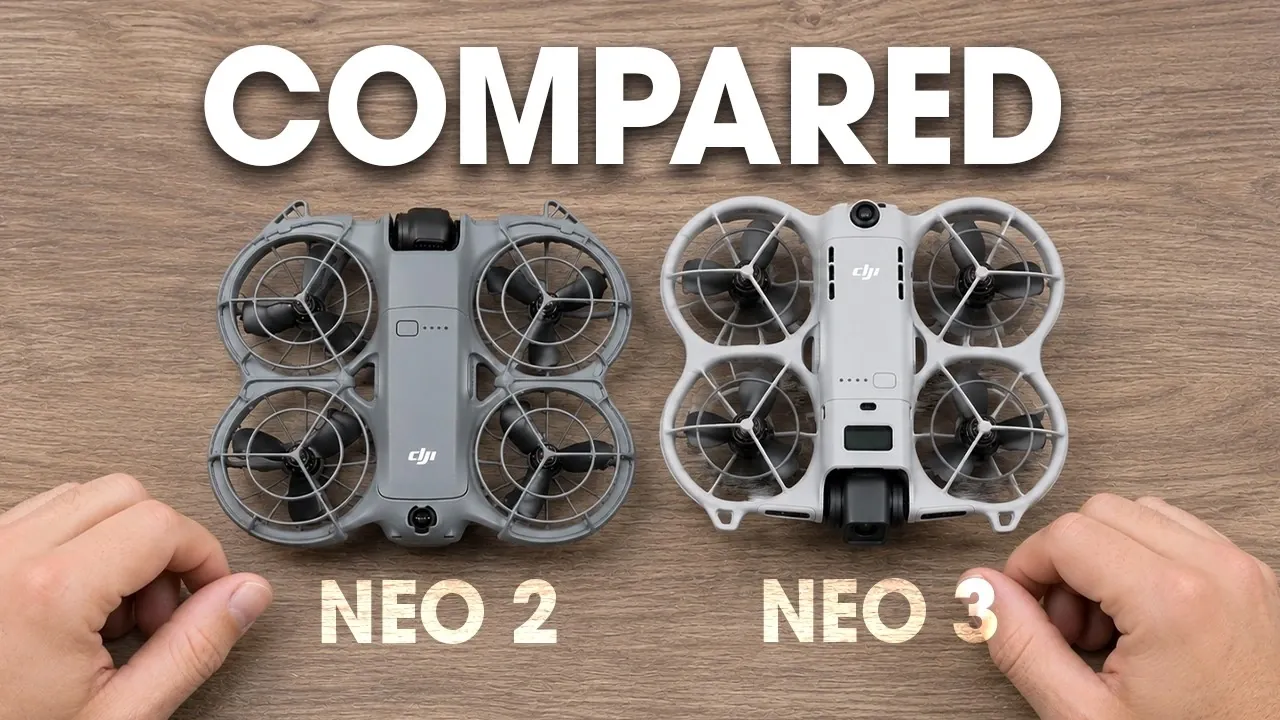
Leaked packaging photographs and footage show a rumored Neo 3 that looks different from its predecessor. It reportedly has hub-and-spoke propeller guards, more ventilation openings, a redesigned top section and an upward-facing sensor.
A leaked Chinese registration listing puts its weight at 192.7 g, around 42 g, or almost 28%, more than the Neo 2. DJI lists the Neo 2 at 151 g without its optional digital transceiver.
Propeller maintenance could change, too: the Neo 2’s guards come off relatively easily, while replacing Neo 3 propellers reportedly requires a screwdriver to remove part of the cage.

Unlock more potential in DJI Neo 3 leaks by reading previous articles we have written.
- DJI Neo 3 64% Larger Battery, 193g and 16-Minute Flight Time
- DJI Neo 3 Leak Reveals a Likely Upward Obstacle Detection Sensor
- Leaked DJI Neo 3 May Integrate Transceiver vs Neo 2 Module
- DJI Neo 3 Could Extend the Neo 2’S 19-Minute Flight Time
Pusher-Style Propellers Could Change the Layout
The leaked design appears to use a pusher-style propeller arrangement, with the propellers below their supporting arms rather than above them. University of Michigan researchers Prashin Sharma and Ella Atkins explain that this arrangement exposes the accelerated airflow to less obstruction from those arms.
The research on this layout tested experimental aircraft, not the Neo 3, so it shows what the arrangement can do in general rather than what DJI’s drone will do. In a 2019 University of Michigan study, an experimental pusher hexacopter produced approximately 15% more thrust in static conditions than its tractor-style counterpart. The researchers found the pusher configuration more efficient for hovering and slow flight, while the tractor configuration was more efficient for missions with substantial forward travel. The pusher aircraft also had a lower lift-to-drag ratio during forward-flight testing.
A separate 2016 study measured a 2-4% improvement in hovering propulsion efficiency with a pusher configuration, but identified the added landing-gear height and weight needed to accommodate underside-mounted propellers as disadvantages. A 2026 study used pusher layouts to accommodate compact tubular propeller enclosures on experimental sub-250 g quadcopters.
A Different Battery Could Rule Out Neo 2 Spares
A leaked label suggests the Neo 3 would use a three-cell battery with a different physical and electrical configuration from the Neo 2’s pack. The rumored battery has seven contacts rather than five, so existing Neo 2 batteries would not be compatible.
The label lists these specifications:
- 1,800 mAh capacity.
- 10.5 V nominal voltage.
- 12.9 V maximum charging voltage.
- 18.9 Wh energy rating.
That energy rating is approximately 64% higher than the Neo 2’s 11.5 Wh, but you should not treat it as an equivalent increase in flight time: the rumored drone is heavier.
Tracking and Obstacle Sensing May Get Updates
A leaked marketing sheet points to high-speed ActiveTrack, automatic camera movements and an upgraded omnidirectional obstacle detection system.
The Neo 2 already has an omnidirectional monocular vision system and forward-facing LiDAR, with obstacle detection and avoidance while tracking subjects from the front or sides. DJI says its vision system cannot reliably detect some objects, including thin branches, cables, transparent surfaces and moving obstacles.
For tracking, DJI specifies a maximum of 12 m/s for the Neo 2, compared with 8 m/s for the original Neo. The Neo 2 also has a Cycling option in ActiveTrack, plus Spotlight and Point of Interest tracking modes.
The leaked sheet mentions SelfieShot 2.0, one-hand gesture control and palm take-off and landing for the Neo 3. The Neo 2 already supports gesture control and palm launches and landings, as well as SelfieShot framing for individuals and groups.
Transmission Hardware May Move Into the Airframe
The Neo 2 needs a separate digital transceiver when you use it with a compatible remote controller or goggles. Leaked packaging contents and subsequent unboxing footage suggest the Neo 3 instead incorporates its wireless transceiver into the airframe.
We think omnidirectional obstacle avoidance matters most here, because a drone you launch and let follow you only works if you can stop watching it. Reliable sensing in every direction is what earns that trust. The Neo 2’s limitations with thin branches, cables, transparent surfaces and moving obstacles show why the reported sensing upgrade matters more to us than the other changes. The key is whether it can address those gaps, not simply carry an omnidirectional label.
Moving from a Neo 2 to the rumored DJI Neo 3 could mean replacing your spare batteries rather than carrying them over. You can weigh that extra purchase against the reported tracking upgrades when DJI provides official details, with specifications still subject to change. If you want a drone for filming yourself without conventional piloting, the DJI Neo 3 could be worth watching for more details.
Media Credit: TechAvid
Disclosure: Some of our articles include affiliate links. If you buy something through one of these links, Geeky Gadgets may earn an affiliate commission. Learn about our Disclosure Policy.
