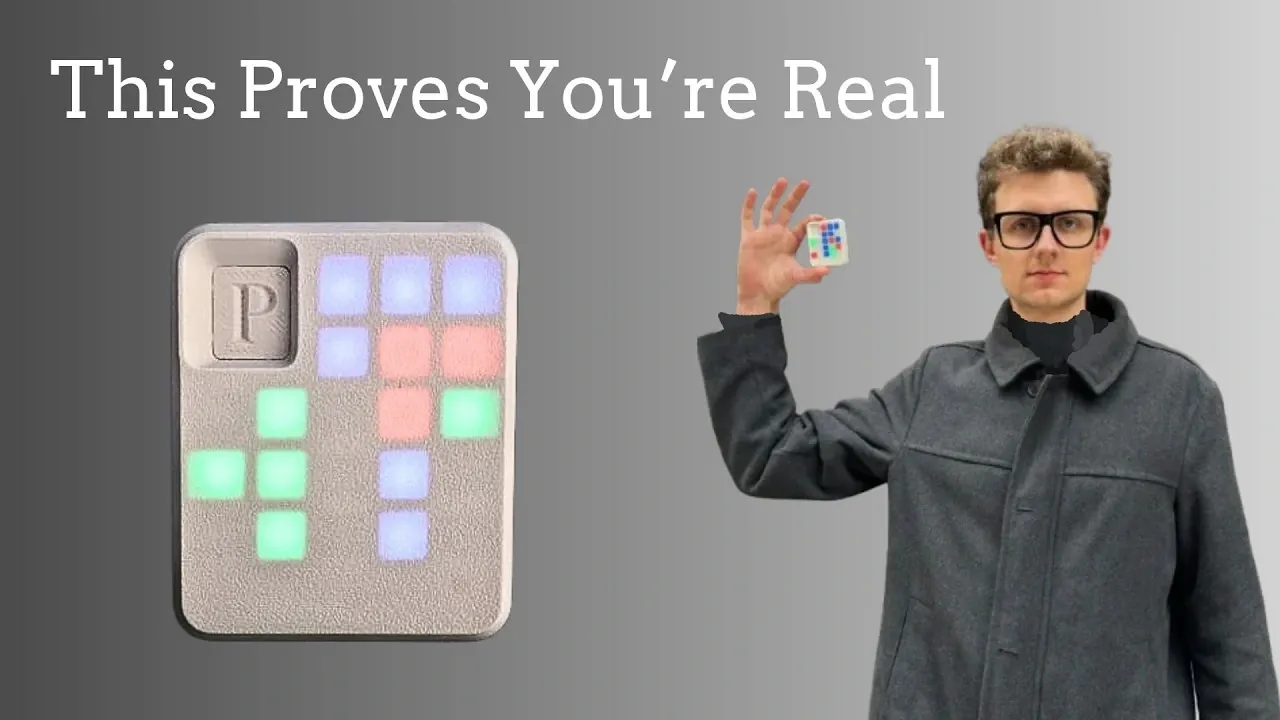
Protector is a wearable pin that flashes a changing pattern of lights, so that a video of you can later be checked against the pattern only your pin could have produced. Its lights change once a second, following a sequence the maker says nobody without the pin can predict. A match means the footage is very likely real, according to the maker, but verification combines computer processing with manual work. Learn what makes this approach different from spotting convincing fakes and how you can get a recording checked, as explained by The Information Syndicate, the channel of the pin’s inventor, who makes and sells it.
Protector: A Wearable Check for Video Authenticity
TL;DR Key Takeaways :
- The Protector is a wearable pin whose changing lights appear in any video of the wearer, giving viewers something to check the footage against.
- Once a second, the pin uses a device-specific private key and clock to display a unique light sequence.
- Viewers can upload a recording to iamnotfake.com, where computer processing and manual work compare the pin’s lights with its generated sequences.
- According to the maker, a matching sequence indicates a video is very likely real, while a mismatch suggests it is probably a deepfake.
- The Protector is available to preorder for $120 with shipping included, with orders limited to the US and five pins per order.
A deepfake is a convincingly generated or altered video that falsely shows someone saying or doing something that did not happen. AI tools make it possible for almost anyone to create such videos, increasing the need to check recordings online.
The Protector is a wearable pin intended to help verify the wearer’s identity. It is made and sold by the creator behind The Information Syndicate, so the claims about how well it works are the maker’s own.
A Secret Key Produces Changing Light Sequences
Each pin contains a device-specific private key, a clock and a small computer. Once a second, the computer uses the key and time to display a unique light sequence. According to the maker, nobody without the device can predict it.
To keep its clock accurate, the pin connects to the internet only briefly while charging. The maker recommends wearing it whenever you might be recorded or make a video that you want others to verify independently.

Take a look at other insightful guides from our broad collection that might capture your interest in AI pins and wearables.
- The iPhone Successor? Apple’s New AI Pin is Basically a Talking AirTag
- Apple’s Secret AI Wearables: Everything We Know About the New Glasses, Pin, and AirPods
- Apple’s AI Pin: The Wearable That Could Replace Your Smartphone
- Why Apple’s Leaked AI Pin is Different from the Rest
Viewers Can Check a Recording Online
Viewers can upload a recording to iamnotfake.com to check the lights on a Protector pin. The process combines computer processing and manual work to compare the recorded sequence with sequences generated by the device within the searchable time frame.
According to the maker, a matching sequence indicates that a video is very likely real, while a mismatch suggests it is probably a deepfake. The maker designed, coded and assembled the pin in a Columbia University dorm room, and a patent is pending.
The Protector is available to preorder for $120 at iamnotfake.com, with shipping included. Orders are limited to the US and to five pins per order. The maker says preorders ship by December 18.
We think the notable idea is proving a real clip is real rather than chasing every new fake. Detection tools must keep catching up with generators, whereas a check based on a private key does not depend on how realistic fakes look. The pin’s changing light sequences give that approach a concrete basis: recorded lights can be compared with the device’s sequences, with a match indicating, according to the maker, that a video is very likely real.
Wearing the pin gives people who do not know you something to check when a recording of you reaches them. For anyone who wants others to be able to check footage of them independently, the Protector is worth looking at in more detail.
Media Credit: The Information Syndicate
Disclosure: Some of our articles include affiliate links. If you buy something through one of these links, Geeky Gadgets may earn an affiliate commission. Learn about our Disclosure Policy.
