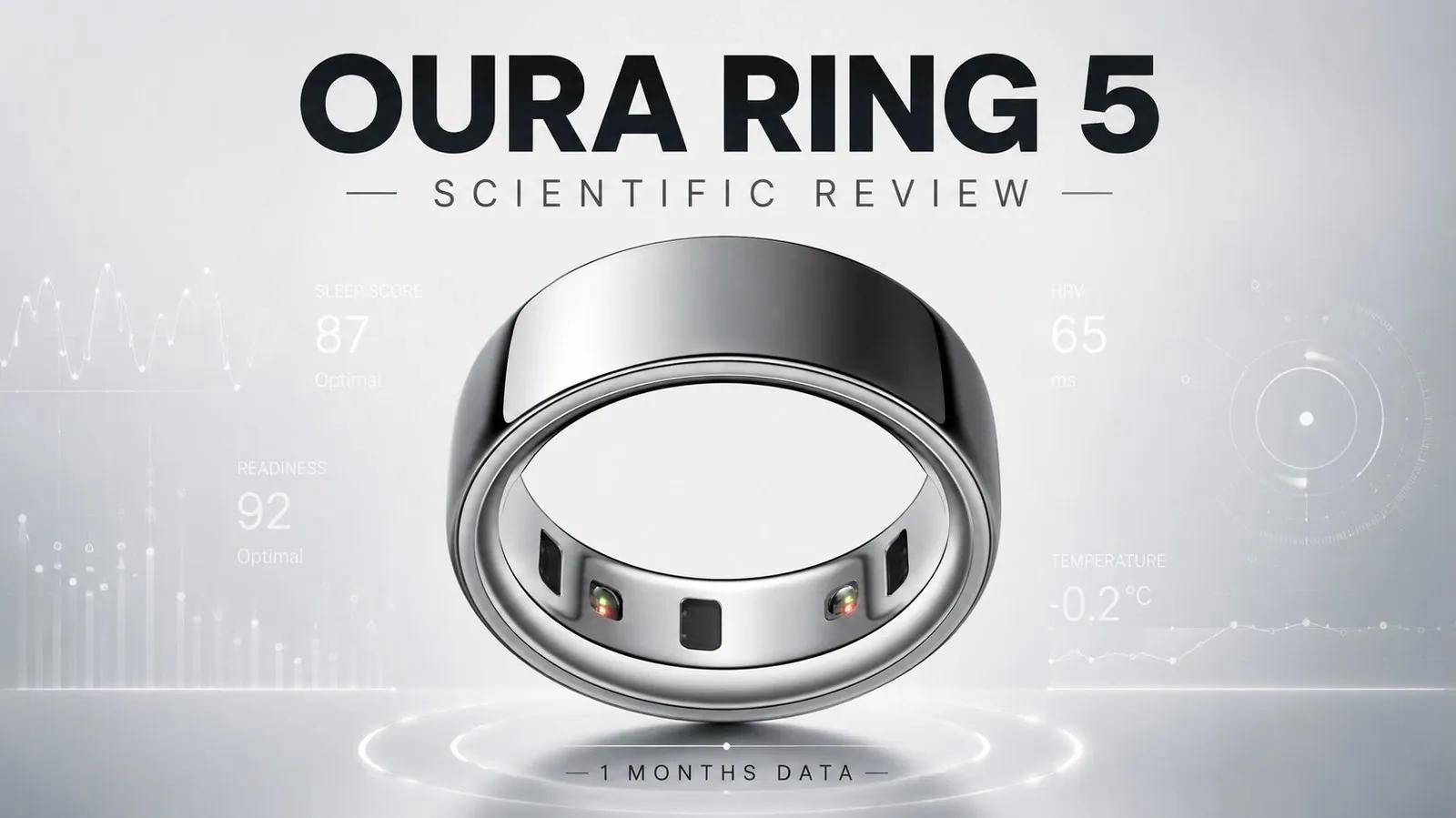
The sleep-tracking results discussed in this article are based on The Quantified Scientist’s one-month testing and reflect the reviewer’s individual results. They should not be interpreted as an independent clinical or peer-reviewed validation of the Oura Ring 5’s sleep-stage accuracy.
The Oura Ring 5 represents a blend of refined design and targeted health tracking, but its performance varied across key metrics in The Quantified Scientist’s testing. One of the device’s standout features in the review was nighttime heart rate and HRV tracking, which produced results comparable to ECG chest straps. However, the testing also identified shortcomings in the unit tested, including lower sleep-stage tracking accuracy, particularly in REM sleep detection, as well as inconsistent results during dynamic exercise heart rate monitoring. These findings provide a nuanced view of the Oura Ring 5’s capabilities and limitations observed during the review period.
Explore how the Oura Ring 5 performed against competitors in areas such as sleep tracking precision and exercise performance metrics during this reviewer’s testing. The results provide insight into its suitability for steady-state activities versus dynamic workouts, while its streamlined design aims to improve wearability for daily use. This breakdown can help you assess the findings alongside your own health and fitness priorities and other available research and testing.
A Sleeker, More Wearable Option
TL;DR Key Takeaways:
- The Oura Ring 5 features a smaller, more streamlined design that prioritizes comfort and wearability for long-term daily use.
- In the reviewer’s testing, nighttime heart rate and HRV tracking showed excellent accuracy, with results comparable to ECG chest straps.
- Sleep-stage tracking was less consistent than the Oura Ring 4 in the reviewer’s testing, particularly for REM sleep detection, placing it behind Fitbit and Whoop in this comparison.
- Exercise heart rate tracking showed improvements but remained inconsistent during activities involving rapid heart rate changes or pressure on the hands.
- Overall, the review highlighted strong recovery-focused tracking alongside limitations in sleep-stage and exercise heart rate tracking, with the findings reflecting this reviewer’s individual testing rather than a broader scientific validation.
Design and Comfort
The Oura Ring 5 introduces a smaller, more streamlined design that prioritizes comfort for long-term wear. This improvement addresses a common issue with bulkier smart rings, such as the Ultra Human Ring Pro, which can feel intrusive during daily use. The lightweight and unobtrusive form factor allows the ring to integrate easily into everyday life, whether you’re working, exercising or sleeping. Its polished and minimalist aesthetic also appeals to users seeking a stylish alternative to traditional fitness wearables, making it a versatile choice for both casual and professional settings.
Nighttime Heart Rate and HRV Tracking: A Standout Feature
One of the Oura Ring 5’s most notable strengths in The Quantified Scientist’s testing was its performance in nighttime heart rate and HRV tracking. In the reviewer’s tests, these measurements showed excellent agreement with ECG chest strap data. Heart rate and HRV are useful metrics for assessing factors such as recovery, training load and physiological stress. For users interested in recovery-focused insights, the results highlight nighttime heart rate and HRV tracking as a particularly strong aspect of the Oura Ring 5.

Unlock more potential in Oura Ring 5 by reading previous articles we have written.
- Oura Ring 5 vs Oura Ring 4: What You Actually Get for the Upgrade
- Why the Oura Ring 5 Costs $50 More Than Its Predecessor
- Oura Ring 5 vs RingConn Gen 3: Which Smart Ring Actually Deserves Your Money?
- Why the $400 Oura Ring 5 is Designed to Die
- Oura Ring Gen 5 1 Month Review: Good, Bad & Annoying
- Oura Ring 5 : Much More Than Just a Smart Ring
- Smaller Oura Ring 5 Offers 9-Day Battery and Solid Sleep Tracking
- Garmin CIRQA Offers a Screenless $199 Alternative to Oura Ring
Sleep Stage Tracking: Weaker Results in This Test
Despite the strong heart rate results, the Oura Ring 5 showed a noticeable decline in sleep stage tracking compared with the previous generation in the reviewer’s testing. REM sleep detection, in particular, was less reliable in these tests, with instances of REM sleep being misclassified as light sleep or awake time. Deep and light sleep tracking performed relatively well, but the overall results placed the Oura Ring 5 behind Fitbit, Apple Watch and Whoop in this particular comparison. These findings reflect the reviewer’s individual test results and should not be interpreted as establishing the relative sleep-stage accuracy of these devices more broadly.
For users who rely heavily on detailed sleep-stage data, the results are worth considering alongside other independent and peer-reviewed research into wearable sleep tracking.
Exercise Heart Rate Tracking: Improvements with Limitations
The Oura Ring 5 demonstrated moderate improvements in exercise heart rate tracking during The Quantified Scientist’s testing, although performance varied depending on the activity. The ring performed well during some steady-state activities, such as running, where heart rate changes occurred more gradually. However, the reviewer observed greater discrepancies during activities involving rapid heart rate fluctuations or pressure on the hands, such as cycling.
Indoor cycling results were generally more reliable than those recorded during outdoor biking in these tests. Wrist-based devices such as the Apple Watch and Garmin also performed better in some of the reviewer’s dynamic exercise comparisons. These results suggest that exercise type and movement may influence the quality of heart rate measurements obtained from the ring.
How It Stacks Up Against Competitors
In The Quantified Scientist’s testing, the Oura Ring 5 performed particularly well in nighttime heart rate and HRV tracking. However, its sleep-stage tracking results and challenges with exercise heart rate monitoring placed it behind some competing devices in parts of this particular comparison.
For sleep-stage tracking, Fitbit, Apple Watch and Whoop produced stronger results than the Oura Ring 5 in the reviewer’s testing, while the Oura Ring 5’s results were closer to devices from Garmin and Amazfit. During exercise testing, wrist-based devices such as the Apple Watch and Garmin generally performed better in scenarios involving high-intensity or dynamic activity and rapid heart rate changes.
These rankings are specific to the reviewer’s testing methodology, device sample and individual physiology. They should therefore be viewed as comparative results from this review rather than definitive rankings of the devices’ overall accuracy.
Key Takeaways
The review highlighted several strengths of the Oura Ring 5, particularly its recovery-focused metrics and nighttime heart rate and HRV tracking. Its smaller design and improved comfort also make it an appealing option for users seeking a wearable that integrates easily into daily life.
At the same time, the testing identified weaker sleep-stage tracking performance compared with the previous Oura generation and some competing devices, particularly for REM sleep. Exercise heart rate monitoring also remained inconsistent during certain activities. Taken together, the results suggest that the Oura Ring 5 performed particularly well as a recovery-focused wearable in this test, while users primarily interested in detailed exercise or sleep-stage tracking may want to consider these findings alongside other independent testing and research.
Next Steps: Further Testing and Validation
To better understand the discrepancies observed during the review, further testing with additional Oura Ring 5 units, different fingers and a broader user base could help determine whether the results are device-specific, influenced by individual physiology or representative of a wider pattern. Testing across a larger sample would provide a stronger basis for assessing the consistency of the results.
Additional validation research could also provide greater context for the findings observed in this review. Comparing results from individual wearable testing with independently validated and peer-reviewed studies is particularly important when assessing sleep-stage performance, where methodology, reference equipment, algorithms and individual differences can affect the results.
The Oura Ring 5 offers notable improvements in design and comfort, making it a more wearable and unobtrusive option for everyday use. In The Quantified Scientist’s testing, nighttime heart rate and HRV tracking were particular strengths. However, the weaker sleep-stage tracking observed in the reviewer’s testing and inconsistent exercise heart rate results leave areas for improvement. For users who prioritize recovery insights and value a sleek, unobtrusive design, the Oura Ring 5 remains a strong contender based on these results. Those who place greater emphasis on detailed sleep-stage or dynamic exercise tracking may want to compare these findings with other independent tests and scientific validation before deciding which wearable best meets their needs.
Media Credit: The Quantified Scientist
Disclosure: Some of our articles include affiliate links. If you buy something through one of these links, Geeky Gadgets may earn an affiliate commission. Learn about our Disclosure Policy.
