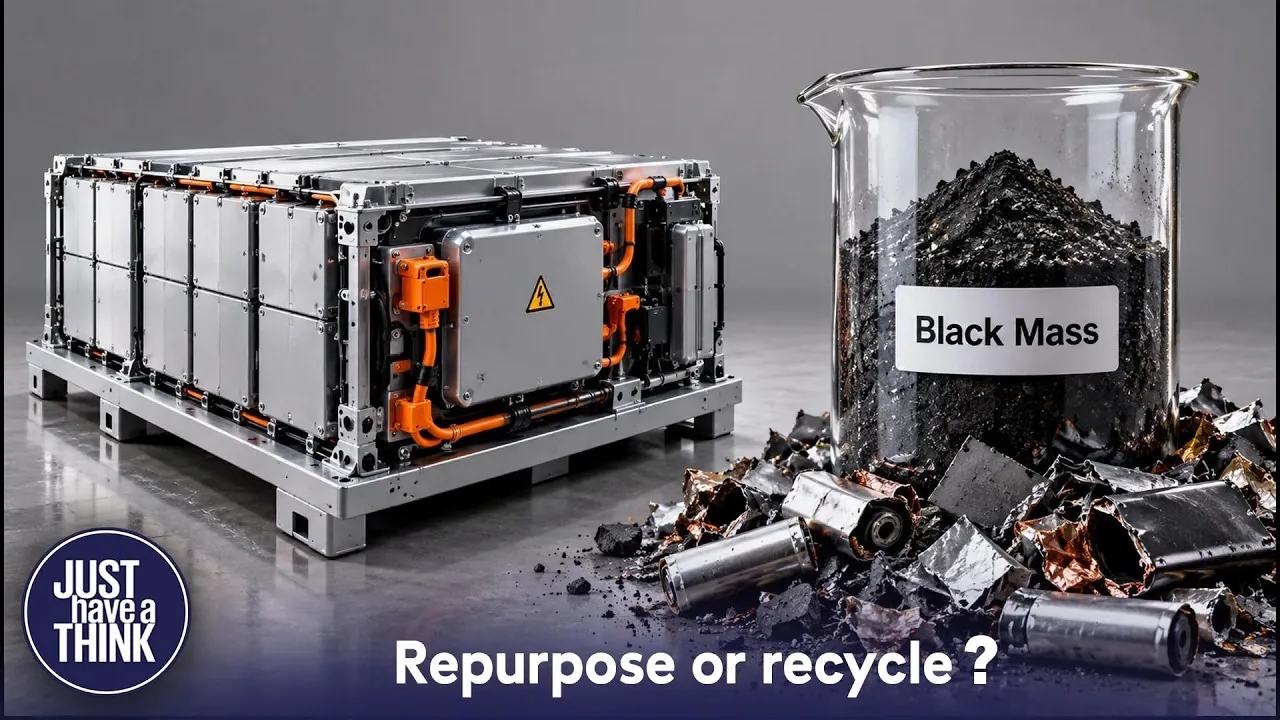
Electric vehicle (EV) batteries, once retired from their primary use in cars, often retain a significant portion of their original capacity, typically around 70-80%. This opens the door to repurposing them for secondary applications, such as grid stabilization or renewable energy storage, rather than immediately recycling them. In a recent feature by Just Have a Think, the case is made for prioritizing these second-life uses to maximize both environmental and economic benefits. However, this approach is not without its challenges, including the need for improved battery designs and more efficient testing and integration processes.
In this feature, you’ll explore the specific advantages of repurposing EV batteries, such as reducing waste and lowering the demand for new energy storage systems. You’ll also gain insight into real-world examples, including projects in California and Canada that successfully integrate second-life batteries into renewable energy grids. Additionally, the discussion highlights key obstacles, from high costs to competition with new batteries and examines how advancements like modular battery systems could help overcome these barriers.
The EV Boom and Its Implications
TL;DR Key Takeaways :
- Electric vehicles (EVs) are projected to account for 30% of global new car sales by 2026, creating a growing need to manage retired EV batteries effectively.
- Repurposing EV batteries for secondary applications, such as grid stabilization and renewable energy storage, offers greater environmental and economic benefits compared to immediate recycling.
- Real-world examples, such as projects by B2U Storage Solutions and Moment Energy, demonstrate the feasibility and advantages of second-life battery systems in improving energy efficiency and sustainability.
- Challenges to widespread adoption include limited availability of retired batteries, high costs of repurposing and competition with cheaper new batteries, requiring innovation and policy support to overcome.
- Designing batteries for multiple lifecycles, through modular systems and advanced diagnostics, is key to maximizing their utility and aligning with sustainability goals.
The adoption of EVs is accelerating across regions such as Europe, North America and Asia-Pacific, driven by government incentives, advancements in battery technology and increasing consumer demand for sustainable transportation. This surge in EV sales also signals a future influx of batteries reaching the end of their automotive life. Despite being retired from vehicles, these batteries often retain 70-80% of their original capacity, making them suitable for secondary applications rather than immediate recycling. This creates an opportunity to extend their utility while reducing the demand for new energy storage systems.
Unlocking the Potential of Second-Life Batteries
When EV batteries are no longer viable for automotive use, their remaining energy storage capacity can be harnessed for various second-life applications. These include stabilizing electricity grids, supporting renewable energy storage and powering off-grid systems. By repurposing these batteries, industries can achieve several key benefits:
- Reducing waste: Extending the lifecycle of EV batteries minimizes the volume of waste sent to recycling facilities or landfills.
- Lowering costs: Repurposed batteries can provide a cost-effective alternative to new energy storage systems.
- Promoting sustainability: Using existing materials reduces the environmental footprint associated with mining and manufacturing new batteries.
This approach not only supports a more sustainable energy ecosystem but also aligns with global efforts to transition to cleaner energy sources.

Here are additional guides from our expansive article library that you may find useful on electric vehicles.
- New $51 per Kilowatt-Hour Sodium-Ion Batteries Emerge
- Tesla Cyber Cab Gets an 18% Smaller Rare Earth-Free Motor
- Janus Electric Converts Diesel Trucks to EVs in Six Days
- New BMW i4 EV gets official
- Audi reveals more details about its electric Quattro drive system
- iPhone Duo: Can Apple Finally Beat Samsung at Foldables?
- Galaxy Z TriFold 2 Leaks: The Foldable Breakthrough We Waited For
- Nissan’s Electric Future: LEAF, Qashqai and Juke EVs Power Britain’s Roads
Real-World Applications of Second-Life Batteries
Several companies and initiatives are already demonstrating the feasibility and benefits of second-life battery systems. For example:
- B2U Storage Solutions and Moment Energy have successfully repurposed retired EV batteries for stationary energy storage projects, showcasing their practicality and reliability.
- In California, second-life batteries are used to store surplus solar energy, improving grid stability and reducing reliance on fossil fuels.
- In Canada, similar projects integrate renewable energy sources into the grid, enhancing energy efficiency and sustainability.
These examples highlight the potential of second-life applications to address energy storage challenges while maximizing the value of retired EV batteries.
Challenges to Widespread Adoption
Despite their promise, second-life applications face several significant challenges that must be addressed to scale their adoption effectively:
- Limited availability of retired batteries: EV batteries are lasting longer than initially expected, delaying their availability for repurposing projects.
- High costs: The processes of transporting, testing, certifying and integrating used batteries can be expensive, often reducing the economic appeal of second-life systems.
- Competition with new batteries: The declining cost of manufacturing new batteries makes it harder for repurposed systems to compete on price and performance.
Overcoming these barriers will require advancements in technology, supply chain efficiency and policy support to make second-life applications more viable and cost-effective.
The Role of Battery Chemistry in Repurposing
The suitability of EV batteries for second-life applications depends heavily on their chemistry. Different battery types offer distinct advantages and limitations:
- Lithium iron phosphate (LFP) batteries: Known for their long cycle life and lower material value, LFP batteries are particularly well-suited for secondary applications such as stationary energy storage.
- Nickel-based chemistries (NMC, NCA): These batteries contain valuable metals like nickel and cobalt, making them more attractive for recycling to recover critical materials rather than repurposing.
Understanding the characteristics of various battery chemistries is essential for determining the most effective strategies for their reuse or recycling.
Designing Batteries for Multiple Lifecycles
To fully realize the potential of second-life applications, manufacturers are increasingly adopting Design for Remanufacturing (DfRem) principles. This approach involves designing batteries with multiple lifecycles in mind, making them easier to disassemble, test and repurpose. Key innovations in this area include:
- Modular battery systems: These designs allow for the replacement of individual cells, extending the overall lifespan of the battery and simplifying the repurposing process.
- Advanced diagnostics: Improved testing and monitoring technologies enable more accurate assessments of battery health, making sure their suitability for second-life applications.
By incorporating these principles into battery design, manufacturers can create products that are more adaptable to evolving energy needs and sustainability goals.
Building a Sustainable Future for EV Batteries
The future of EV battery management lies in striking a balance between second-life applications and recycling. To achieve this, ongoing research and innovation are addressing critical challenges, such as:
- Developing cost-effective methods for diagnosing and testing retired batteries.
- Enhancing modular designs to simplify disassembly and repurposing processes.
- Improving supply chain logistics to reduce transportation and integration costs.
These advancements will be instrumental in scaling second-life solutions and making sure that EV batteries are utilized to their full potential before being recycled. By prioritizing repurposing over immediate recycling, the industry can reduce waste, lower costs and contribute to a more sustainable energy future.
Media Credit: Just Have a Think
Disclosure: Some of our articles include affiliate links. If you buy something through one of these links, Geeky Gadgets may earn an affiliate commission. Learn about our Disclosure Policy.
