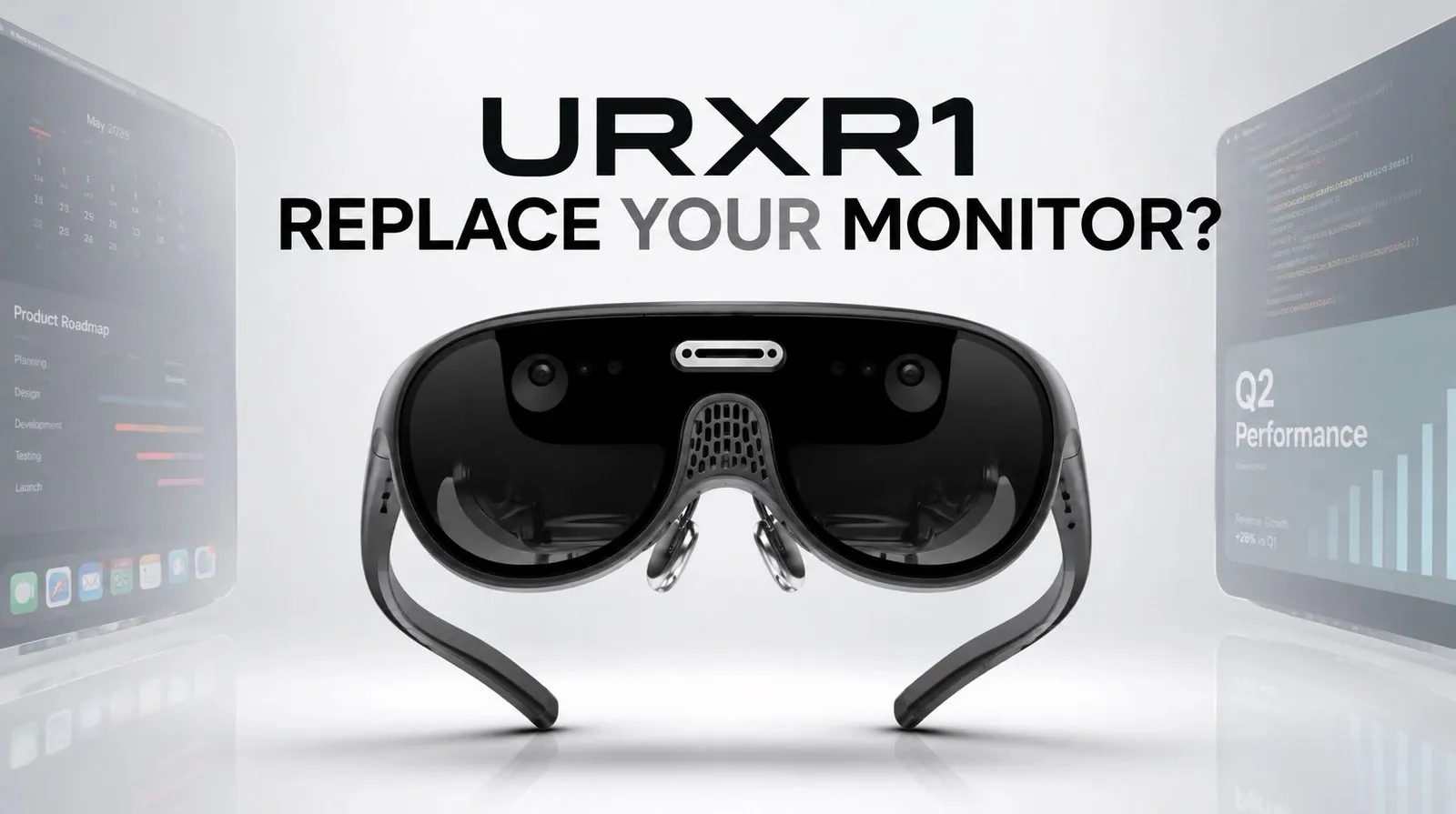
Smart glasses are being explored as an alternative to traditional monitors, offering a compact way to reimagine digital workspaces. Jasmine Uniza tested the URXR One smart glasses over a two-month period, focusing on practical features like adjustable screen size and mixed reality integration. For instance, the glasses allow users to project a virtual screen at a customizable distance, which can help save desk space while promoting ergonomic work habits. However, limitations such as a 1080p resolution cap and reliance on early-stage software reveal areas where these devices still fall short.
Discover how the URXR One performs in scenarios like multitasking and remote work and learn how its mixed reality features connect digital and physical environments to enhance productivity. Gain insight into the ergonomic benefits of using smart glasses for short-term tasks, alongside an evaluation of key drawbacks, including limited compatibility and the absence of built-in audio.
Can Smart Glasses Truly Replace Monitors?
TL;DR Key Takeaways :
- The URXR One smart glasses aim to replace traditional monitors by projecting a customizable virtual screen, offering portability and desk space savings.
- Mixed reality functionality allows users to blend digital and physical environments, enhancing multitasking and collaboration without losing awareness of surroundings.
- Ergonomic design reduces physical strain, with lightweight construction and adjustable screen positioning, though the lack of prescription lens options limits usability for some users.
- Technical limitations include a 1080p resolution cap, prototype fragility and restricted software compatibility, which hinder broader adoption and high-performance tasks.
- Key areas for improvement include adding built-in audio, prescription lens options and higher brightness levels, with future iterations expected to address these shortcomings and expand functionality.
The URXR One smart glasses demonstrate the potential to replace traditional monitors by projecting a virtual screen at a comfortable distance. This eliminates the need for a physical display, freeing up valuable desk space and enhancing portability. The adjustable screen size is a standout feature, allowing you to customize the display to suit your specific needs, whether you’re analyzing detailed spreadsheets, coding, or enjoying multimedia content. This adaptability makes the glasses a versatile tool for a variety of tasks, offering a level of flexibility that traditional monitors cannot match.
Moreover, the portability of the URXR One means you can carry your “monitor” wherever you go, making it particularly appealing for remote workers, frequent travelers, or anyone who values a clutter-free workspace. However, while the concept is promising, the glasses still face hurdles in achieving the same level of performance and usability as conventional monitors.
Mixed Reality: Bridging the Digital and Physical Worlds
One of the most compelling features of the URXR One smart glasses is their mixed reality functionality. Unlike traditional monitors, these glasses allow you to remain aware of your surroundings while working, creating a seamless blend of digital and physical environments. This feature is especially valuable in collaborative settings or multitasking scenarios. For instance, you can interact with colleagues, monitor your physical workspace, or even keep an eye on your surroundings without needing to remove the glasses.
This capability enhances productivity by allowing you to stay engaged with both digital content and real-world interactions simultaneously. Whether you’re working in a busy office, attending a virtual meeting, or managing tasks at home, the mixed reality feature ensures that you remain connected to your environment while staying focused on your work.

Here are more detailed guides and articles that you may find helpful on smart glasses.
- Leaked Details Suggest Apple Glasses Are Finally Happening
- Samsung’s New Smart Glasses Are Aiming Straight for Meta’s Crown
- Samsung Integrates the Galaxy Ecosystem Into Everyday Eyewear
- The Hidden Genius Behind Apple’s Upcoming Smart Glasses
- Apple Glasses May Finally Arrive with an Unexpected Approach
- MemoMind One Smart Glasses Drop Cameras for Dual HUD Tech
- Samsung AI Smart Glasses Prepare for a Fall 2026 Release
- Apple Confirms the N50 Smart Glasses Launch for WWDC 2027
- MemoMind Smart Glasses Drop to $399 Before $600 Price Return
- Samsung Unveils Galaxy Smart Glasses with 9-Hour Battery
Ergonomics and Comfort: A Practical Edge
The ergonomic design of the URXR One smart glasses addresses a common challenge faced by users of traditional monitors: physical strain. These glasses are designed for comfort, allowing you to wear them for sessions lasting 1.5 to 2 hours without discomfort. By allowing you to adjust the position and size of the virtual screen, the glasses help improve posture and reduce strain on your neck and back. This flexibility is particularly beneficial for users who work in varying environments, such as coffee shops, co-working spaces, or home offices.
Additionally, the lightweight design of the URXR One ensures that the glasses remain comfortable even during extended use. However, the lack of prescription lens options limits their usability for individuals who require corrective eyewear, highlighting an area for potential improvement in future iterations.
Technical and Software Limitations
Despite their innovative features, the URXR One smart glasses face several technical and software-related challenges. The resolution is capped at 1080p due to power constraints, even though the hardware is theoretically capable of supporting higher resolutions. This limitation affects the clarity of detailed visuals, making the glasses less suitable for tasks like graphic design, video editing, or other activities that demand high-resolution displays.
The prototype units also exhibited issues such as fragile stems and heat dissipation, though these problems have reportedly been addressed in newer models. On the software side, the glasses currently support multiple virtual monitors but are limited to specific laptop models. This restricts their usability, though future updates inspired by advancements in wearable technology, such as Apple Vision Pro software, promise to expand compatibility and functionality.
For gaming enthusiasts, the URXR One is compatible with devices like the Steam Deck and Nintendo Switch, provided you use an adapter. However, the lack of universal software support remains a significant barrier to broader adoption, limiting the glasses’ appeal to a niche audience.
Additional Features and Areas for Improvement
While the URXR One smart glasses offer several innovative features, they also have notable drawbacks. The absence of built-in audio means you must rely on external solutions such as headphones or speakers, which can be inconvenient in certain situations. Additionally, the brightness of the display, while adjustable, is less intense compared to other smart glasses, potentially affecting visibility in brightly lit environments.
Another limitation is the lack of prescription lens inserts, which restricts the glasses’ usability for individuals with vision impairments. These shortcomings highlight areas where the URXR One could improve to better meet the needs of a broader range of users. Addressing these issues in future models could significantly enhance the glasses’ appeal and functionality.
Challenges and Future Prospects
While the URXR One smart glasses excel in short-term tasks, they face challenges when it comes to extended use. The single-screen limitation without additional software reduces their appeal for multitasking professionals and the lack of prescription lens options remains a significant drawback for users who require corrective eyewear. These issues underscore the need for further development to make the glasses a viable option for all-day use.
Looking ahead, the future of smart glasses appears promising. Anticipated improvements include higher resolution displays, enhanced software compatibility and greater durability. Future iterations may also address current shortcomings, such as the absence of built-in audio and prescription lens options. Comparisons with other models, such as the VR Luma Ultra and Xrial 1 Pro, will provide valuable insights into the evolving landscape of wearable technology.
The URXR One smart glasses represent an exciting step forward in the development of wearable computing. While they are not yet ready to fully replace traditional monitors, they offer a compelling vision of the future, highlighting the potential of smart glasses to redefine how you interact with digital content in both professional and personal contexts. With continued innovation and refinement, smart glasses like the URXR One could play a pivotal role in shaping the next generation of computing devices.
Media Credit: Jasmine Uniza ☕️
Disclosure: Some of our articles include affiliate links. If you buy something through one of these links, Geeky Gadgets may earn an affiliate commission. Learn about our Disclosure Policy.
