
What if your next pair of glasses didn’t just help you see better but also transformed how you interact with the world? The latest leaks surrounding Samsung and Apple’s upcoming smart glasses suggest a future where augmented reality meets everyday life in ways we’ve only imagined. With Samsung aiming to blend innovative tech with high fashion and Apple focusing on redefining spatial computing within its ecosystem, these two tech giants are gearing up for a battle that could reshape the wearable tech market. But as exciting as these innovations sound, they also raise questions: Will Samsung’s bold versatility outshine Apple’s ecosystem mastery, or will Apple’s methodical approach prove to be the smarter bet?
In this leak summary, Robots With Opinions unpack the most intriguing details about Samsung and Apple’s smart glasses projects, from Samsung’s stylish collaborations with Gentle Monster to Apple’s minimalist first-gen design and Vision OS integration. You’ll discover how Samsung plans to cater to both creatives and professionals with advanced display technologies, and why Apple’s phased approach could set the stage for a spatial computing revolution. But the road to innovation is rarely smooth, technical challenges and strategic trade-offs could shape how these devices evolve. As we explore these revelations, one thing becomes clear: the future of smart glasses is closer than you think, and it’s more ambitious than ever.
Samsung vs Apple : Smart Glasses
TL;DR Key Takeaways :
- Samsung is developing two smart glasses models: one focused on style and social functionality, and another prioritizing productivity and immersive experiences, with a planned launch as early as 2026.
- Samsung’s partnerships with Gentle Monster and Warby Parker aim to combine fashion with functionality, while integrating its Gemini AI assistant for enhanced voice interactions and personalized features.
- Apple’s smart glasses emphasize spatial computing and ecosystem integration, starting with basic functionality and gradually introducing advanced features, with fully-featured models expected by 2028.
- Apple’s Vision OS enables immersive applications when paired with a Mac, while a lighter mode for mobile use is designed for iPhone integration, showcasing a phased development strategy.
- Both Samsung and Apple are using their unique strengths, Samsung with versatility and creative applications, and Apple with ecosystem cohesion and gradual refinement, to challenge Meta’s dominance in the smart glasses market.
Samsung Smart Glasses : Versatility Meets Style
Samsung is reportedly working on two distinct models of smart glasses, each designed to cater to different user needs. One model is aimed at competing with Meta’s Ray-Ban Stories, focusing on sleek aesthetics and social functionality. The other model prioritizes productivity and immersive experiences, featuring advanced display technologies for professional and creative applications. Both models are expected to launch as early as 2026, signaling Samsung’s ambitious entry into the wearable tech market.
To ensure their smart glasses appeal to a broad audience, Samsung has partnered with renowned eyewear brands Gentle Monster and Warby Parker. These collaborations aim to seamlessly blend fashion with functionality, creating a product that is both stylish and technologically advanced. Additionally, Samsung plans to integrate its Gemini AI assistant, which could enhance voice interactions, provide personalized recommendations, and potentially outpace Meta’s AI capabilities. Key features of Samsung’s smart glasses include:
- Support for the Android SDK, allowing faster app development and seamless integration of features.
- Enhanced capabilities for landscape photography and videography, appealing to creative users and offering a broader range of content options compared to Meta’s vertical content focus.
- Applications ranging from navigation overlays to advanced photo and video editing tools, enhancing both personal and professional use cases.
However, early prototypes have faced challenges, such as visible rainbow effects on displays, which could impact visual clarity. Addressing these technical hurdles will be critical for delivering a polished and reliable user experience. Despite these challenges, Samsung’s smart glasses are shaping up to be a strong contender in the wearable tech market, offering a compelling mix of style, functionality, and innovation.
Apple Smart Glasses: A Spatial Computing Revolution
Apple’s approach to smart glasses focuses on spatial computing and seamless integration within its ecosystem. The glasses are expected to run Vision OS when paired with a Mac, allowing advanced spatial experiences for productivity and entertainment. For more mobile-friendly functionality, they may also pair with an iPhone, offering a lighter, on-the-go mode for everyday use.
Interestingly, Apple’s first-generation smart glasses may not include a built-in display. Instead, they could focus on basic features such as notifications and voice interactions. This minimalist design would allow Apple to refine its technology and user experience before introducing more advanced features in future iterations. Fully-featured models with integrated displays are rumored to debut by 2028, giving Apple ample time to perfect its hardware and software. Key highlights of Apple’s smart glasses include:
- Integration with Vision OS, allowing immersive applications and workflows when tethered to a Mac.
- A cohesive ecosystem strategy, where the glasses complement other Apple devices for a seamless and unified user experience.
- A phased development approach, starting with basic functionality and gradually introducing advanced features in subsequent models.
While the lack of standalone capabilities in early models may limit their initial appeal, Apple’s long-term strategy positions the glasses as a cornerstone of its ecosystem, with significant potential for future innovation. By focusing on gradual refinement and ecosystem integration, Apple aims to deliver a product that aligns with its reputation for quality and user-centric design.
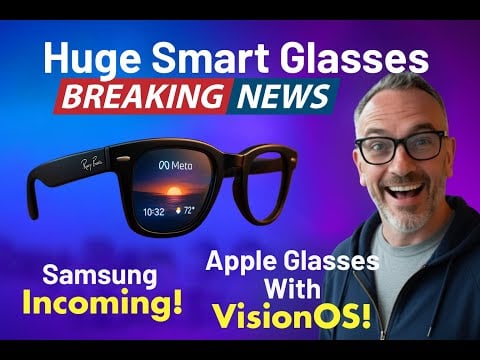
Samsung & Apple AI Smart Glasses Leaks
Take a look at other insightful guides from our broad collection that might capture your interest in AI smart glasses.
- Xiaomi AI Smart Glasses Review: Features, Price & Performance
- Xiaomi AI Smart Glasses : Honest Review After 3 Weeks of Use
- Meta Ray-Ban Smart Glasses: Features, Price, and Performance
- Samsung’s Smart Glasses Will Transform Wearable Technology
- Top 5 Smart Glasses Transforming Wearable Technology in 2025
- Meta Ray-Ban Display AI Glasses : The Future of Smart Eyewear?
- Meta Display Dual Screen Smart Glasses : Set to Launch in 2026
- Meta Display Smart Glasses Review: Are They Worth the $800 Price
- Olympus EyeTrek El-10 Open Source Smart Glasses
- Inmo Air 3 vs Rokid Smart Glasses : Compared for Everyday Use
Comparing Samsung and Apple: Diverging Strategies
Samsung and Apple are adopting distinct strategies in their pursuit of smart glasses innovation, each using their unique strengths to carve out a competitive edge. Samsung’s reliance on the Android SDK allows for rapid app development and a wide range of features, potentially giving it an advantage in versatility and creative applications. By collaborating with fashion-forward brands and integrating advanced AI capabilities, Samsung aims to deliver a product that appeals to both tech enthusiasts and style-conscious consumers.
In contrast, Apple’s Vision OS represents a bold step toward redefining spatial computing, emphasizing seamless integration with its ecosystem. While its early hardware may lack standalone capabilities, Apple’s phased approach allows it to refine its technology and gradually introduce new features. This strategy aligns with Apple’s focus on delivering polished, high-quality products that enhance the overall user experience.
Both companies are positioning themselves to challenge Meta’s dominance in the smart glasses market, which has been bolstered by products like the Ray-Ban Stories. By focusing on stylish designs, advanced features, and ecosystem integration, Samsung and Apple are poised to become major players in this rapidly evolving space.
The Road Ahead
The smart glasses market is poised for significant growth, with Samsung and Apple leading the charge toward a new era of wearable technology. Samsung’s emphasis on versatility, fashion-forward collaborations, and creative applications positions it as a strong competitor in the market. Meanwhile, Apple’s focus on spatial computing and ecosystem integration highlights its commitment to delivering a fantastic user experience over time.
As both companies address current challenges and refine their offerings, the competition between Samsung and Apple is likely to drive innovation and consumer choice. Whether you’re drawn to Samsung’s versatile features and stylish designs or Apple’s promise of seamless ecosystem integration and spatial computing, these developments signal an exciting future for wearable technology. The next few years will be pivotal in shaping the smart glasses landscape, offering consumers a glimpse into the possibilities of augmented reality and beyond.
Media Credit: Robots With Opinions
Disclosure: Some of our articles include affiliate links. If you buy something through one of these links, Geeky Gadgets may earn an affiliate commission. Learn about our Disclosure Policy.
