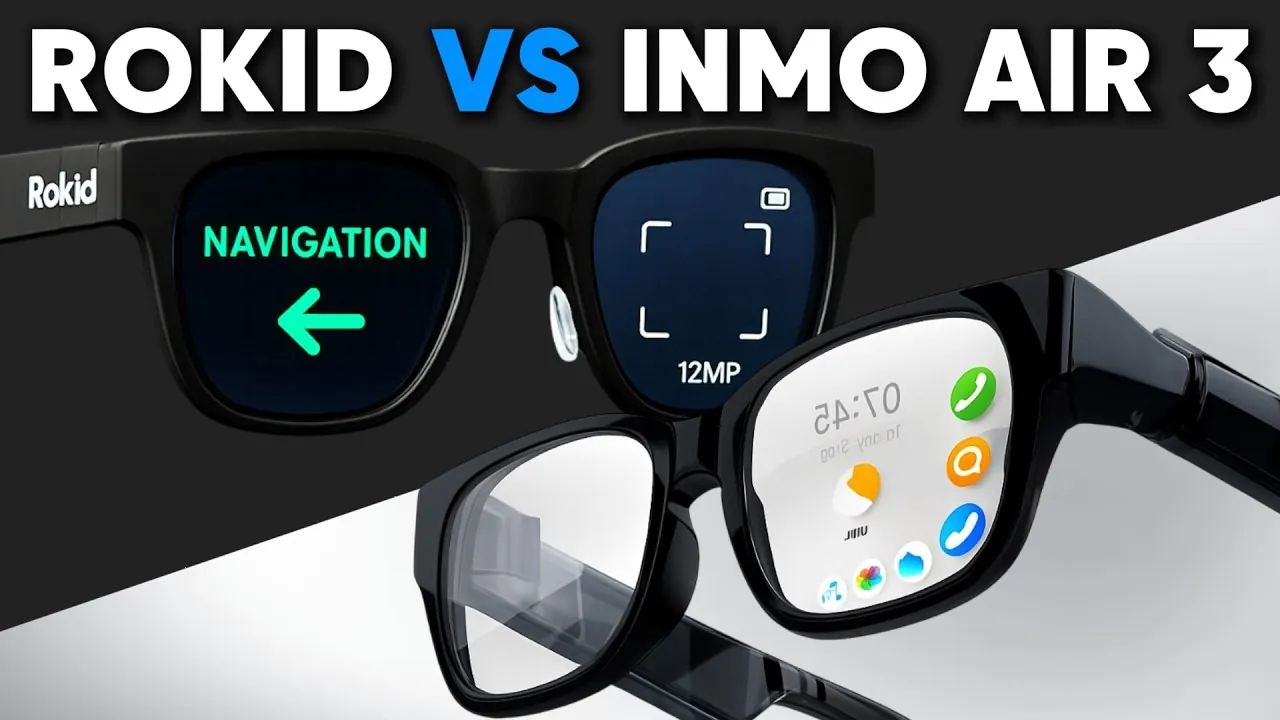
Imagine stepping into a world where your glasses don’t just help you see but also connect you to a digital universe. From navigating bustling city streets with augmented reality (AR) maps to capturing stunning moments with built-in cameras, AR smart glasses are no longer a futuristic concept, they’re here, and they’re evolving rapidly. But with so many options on the market, how do you decide which pair is right for you? Enter the Inmo Air 3 and Rokid Smart Glasses, two contenders that promise to redefine how we interact with technology. While one features innovative specs and raw power, the other prioritizes sleek design and seamless functionality. The question is: which one truly delivers?
Steven Sullivan unpacks the strengths and weaknesses of these two AR devices, covering everything from display quality and camera performance to usability and battery life. Whether you’re drawn to the Inmo Air 3’s Android versatility or intrigued by Rokid’s lightweight design and AI-powered features, you’ll discover how each device caters to different needs and lifestyles. But the choice isn’t as straightforward as it seems, each model has its trade-offs that could make or break your experience. By the end, you’ll have a clearer sense of which smart glasses align with your priorities and, perhaps, a new perspective on what AR technology can bring to your life.
Inmo Air 3 vs Rokid Smart Glasses
TL;DR Key Takeaways :
- Rokid Smart Glasses offer a lightweight and ergonomic design (49g) compared to the heavier Inmo Air 3 (135g), making them more comfortable for extended use.
- Rokid’s display technology prioritizes outdoor visibility with 1,500 nits brightness, while Inmo Air 3 provides a higher resolution and wider field of view but struggles in bright sunlight.
- Rokid excels in usability with intuitive touch and voice controls, while Inmo Air 3 relies on a less efficient touch remote or ring interface.
- Rokid Smart Glasses provide superior camera performance, robust accessibility features, and better prescription lens support (-16 to +16 diopters) compared to Inmo Air 3’s limited range (-4 to +4 diopters).
- Rokid outperforms in battery life, customer support, and overall reliability, making it the recommended choice for a seamless AR experience.
Design and Build
The design of AR smart glasses significantly impacts comfort and practicality, especially during extended use. Rokid Smart Glasses excel in this area with their lightweight construction, weighing just 49 grams. This ensures a snug and comfortable fit, even for prolonged periods. In contrast, the Inmo Air 3 is noticeably heavier at 135 grams, which can feel cumbersome and less ergonomic over time.
Both models feature clear lenses with optional sunshades for outdoor use, but Rokid’s minimalist and streamlined design enhances portability and aesthetics. If comfort and ease of wear are your priorities, the Rokid Smart Glasses offer a clear advantage.
Display Technology
Display quality is a critical factor in AR devices, as it directly influences usability and visual clarity. Rokid Smart Glasses feature a 640x480p monochrome green heads-up display (HUD) with a 23° field of view and an impressive brightness of 1,500 nits. This high brightness level ensures excellent visibility, even in bright outdoor environments.
The Inmo Air 3, on the other hand, offers a 1080p full-color display with a wider 36° field of view. While the higher resolution and broader field of view enhance the overall visual experience, its 600-nit brightness limits usability in direct sunlight. For users prioritizing outdoor visibility and consistent performance, Rokid’s display technology is better suited to meet these demands.
AR Smart Glasses Compared

Check out more relevant guides from our extensive collection on smart glasses that you might find useful.
- Xiaomi AI Smart Glasses Review: Features, Price & Performance
- Meta Display Dual Screen Smart Glasses : Set to Launch in 2026
- Meta Ray-Ban vs Rokid Smart Glasses : Features & Benefits
- Meta Ray-Ban Smart Glasses: Features, Price, and Performance
- Top Tips for Enhancing Your Meta Ray-Ban Smart Glasses
- Meta Ray-Ban Smart Glasses: Design, Features, and Performance
- Meta Ray-Ban Display AI Glasses : The Future of Smart Eyewear?
- Are Meta Smart Glasses Worth Buying?
- TCL RayNeo X2 AR smart glasses
- How to Choose the Right Size for Your Meta Smart Glasses
Processing Power and RAM
Performance is a key differentiator between these two devices. Rokid Smart Glasses are powered by the Snapdragon AR1 processor paired with 2GB of RAM, delivering efficient and reliable performance tailored to its specific features. This streamlined system ensures smooth operation without unnecessary complexity.
In contrast, the Inmo Air 3 is equipped with a more powerful Snapdragon 8-core processor and 8GB of RAM. This additional processing power supports its Android-based system, allowing multitasking and access to a broader range of applications. However, the resource-intensive nature of the Android platform can lead to inefficiencies. If you value raw power and multitasking capabilities, the Inmo Air 3 may appeal to you. However, for a more optimized and seamless experience, Rokid’s system is the better choice.
Camera Capabilities
Camera performance is an essential consideration for users interested in photography and video recording. Rokid Smart Glasses feature a 12MP camera capable of 1680p video recording, a 109° field of view, and advanced low-light HDR capabilities. This combination ensures clear and detailed images across various lighting conditions.
The Inmo Air 3, equipped with a 16MP camera and 1080p video recording, offers a slightly wider 120° field of view. However, users have reported issues with image distortion and poor low-light performance. For consistent and reliable camera functionality, Rokid’s camera delivers superior results.
Control and Usability
Ease of use is a critical factor in determining the practicality of AR devices. Rokid Smart Glasses excel with intuitive touch and voice controls that integrate seamlessly with AI-powered features such as navigation, live translation, and productivity tools. These controls enhance usability and streamline the user experience.
The Inmo Air 3 employs a touch remote or ring for control, mimicking the interface of an Android smartphone. While this approach may feel familiar to some users, it can be less efficient and less user-friendly compared to Rokid’s streamlined controls. For a more intuitive and accessible interface, Rokid Smart Glasses stand out as the superior option.
Applications and Features
Both devices cater to different user needs through their unique features. Rokid Smart Glasses include built-in AI capabilities such as live translation for 89 languages, offline teleprompter functionality, Google Maps integration, and accessibility tools for visually and hearing-impaired users. These specialized features make Rokid a practical choice for AR-specific tasks.
The Inmo Air 3, running on Android 14, provides access to the Google Play Store, allowing the use of apps like Google Chrome and document editing tools. While this expands its versatility, Rokid’s tailored features and seamless integration offer a more focused and efficient AR experience. For users seeking specialized AR functionality, Rokid’s features are better suited to meet these needs.
Prescription and Accessibility
For users requiring prescription lenses, Rokid Smart Glasses accommodate a broader range, supporting prescriptions from -16 to +16 diopters. This makes them suitable for a wider audience. In comparison, the Inmo Air 3 supports a more limited range of -4 to +4 diopters, restricting its usability for individuals with stronger prescriptions.
Additionally, Rokid’s robust accessibility features enhance usability for individuals with specific needs, further solidifying its position as a versatile and inclusive option. For users with prescription requirements or accessibility concerns, Rokid Smart Glasses offer greater flexibility and support.
Battery Life and Performance
Battery life is a crucial factor in determining the practicality of smart glasses. Rokid Smart Glasses deliver reliable performance with adjustable brightness settings to suit various environments, making sure extended usability.
The Inmo Air 3, however, struggles in this area, offering only 1.5 hours of battery life under intensive use. Users have also reported overheating issues, which can further diminish its usability for extended sessions. For longer and more reliable usage, Rokid Smart Glasses are the better choice.
Customer Support
Customer support plays a vital role in the overall experience of using AR devices. Rokid excels in this area, offering responsive customer service, regular software updates, and active integration of user feedback. These factors contribute to a more satisfying and reliable ownership experience.
In contrast, the Inmo Air 3 has faced criticism for delayed responses, poor support quality, and challenges with return policies. When investing in AR technology, reliable after-sales service is essential, and Rokid’s customer support clearly outperforms in this regard.
Final Thoughts
When comparing the Inmo Air 3 and Rokid Smart Glasses, the choice ultimately depends on your priorities and intended use. Rokid stands out as the more reliable and user-friendly option, offering a lightweight design, robust features, and dependable customer support. Its focus on practicality and accessibility makes it an excellent choice for most users.
While the Inmo Air 3 features impressive specifications on paper, its limitations in usability, performance, and support hinder its overall appeal. For a seamless and efficient AR experience, Rokid Smart Glasses emerge as the recommended choice.
Media Credit: Steven Sullivan
Disclosure: Some of our articles include affiliate links. If you buy something through one of these links, Geeky Gadgets may earn an affiliate commission. Learn about our Disclosure Policy.
