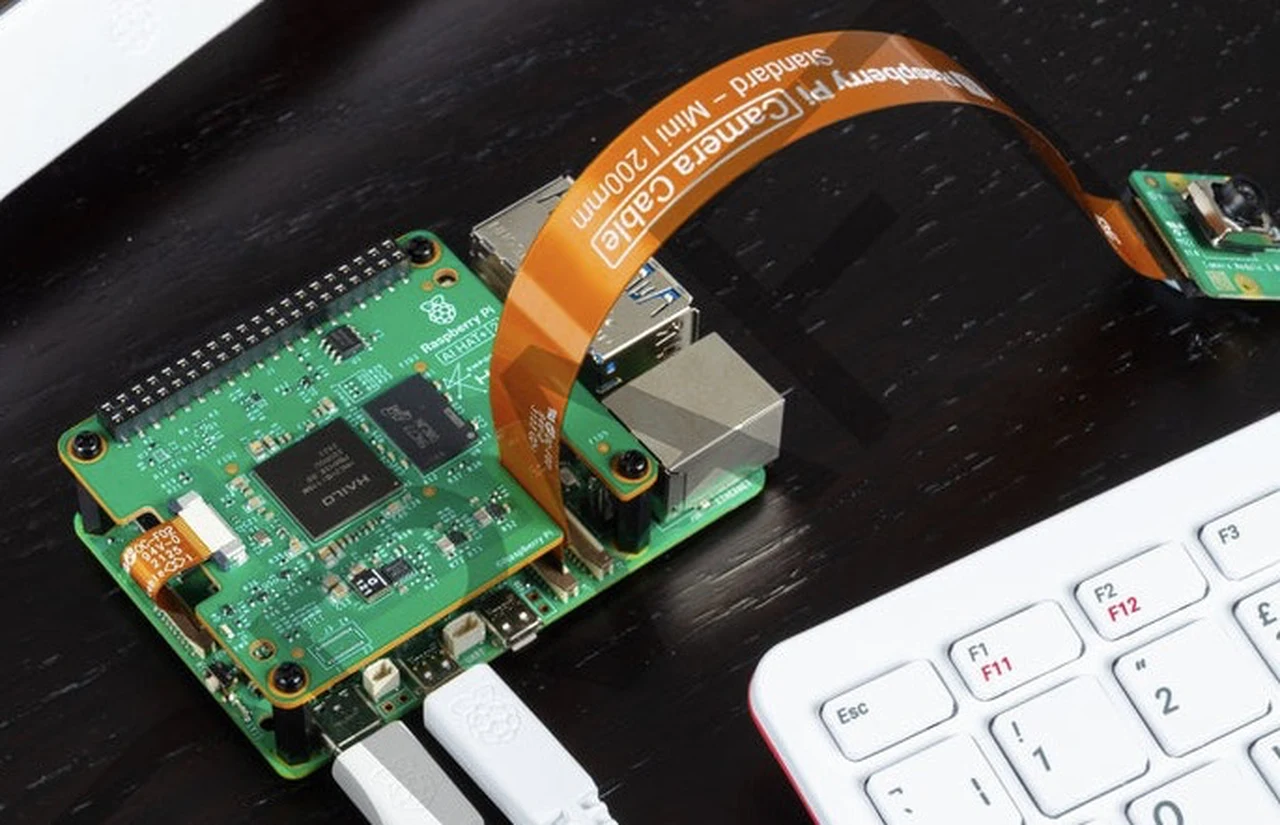
What if you could bring the power of AI to your Raspberry Pi without relying on the cloud? That’s exactly what the new Raspberry Pi AI HAT+ 2 promises to deliver. Jeff Geerling takes a closer look at how this $130 add-on transforms Raspberry Pi devices into localized AI workhorses, capable of handling tasks like real-time object detection and small language model processing. Equipped with 8GB of LPDDR4X RAM and the innovative Halo 10H chip, this device is designed to push the boundaries of what’s possible in constrained environments. But with its limited memory and power, does it live up to the hype, or is it too niche for most users?
In this overview, we’ll explore the AI Hat Plus 2’s standout features, such as its ability to enable machine vision in battery-powered robotics and its seamless integration into existing Raspberry Pi setups. You’ll also discover where it shines, and where it falls short, when it comes to balancing performance and cost. Whether you’re a developer working on specialized AI applications or just curious about the latest in Raspberry Pi innovation, this guide will help you decide if the AI Hat Plus 2 is the right fit for your next project.
Raspberry Pi AI HAT+ 2 Overview
TL;DR Key Takeaways :
- The Raspberry Pi AI HAT+ 2, priced at $130, features 8GB LPDDR4X RAM and the Halo 10H chip, allowing localized AI processing for small language models and computer vision tasks.
- It excels in specialized applications like battery-powered robotics, real-time object detection, and prototyping for constrained environments, but struggles with larger AI models and general-purpose workloads.
- Key hardware features include 40 TOPS INT4/26 TOPS INT8 performance, thermal management via a heat sink, and easy integration with Raspberry Pi setups.
- Challenges include limited software optimization, integration difficulties, and competition from lower-cost alternatives with similar functionality.
- While ideal for niche AI projects, its high price and narrow focus make it less appealing for general users or those seeking versatile AI solutions.
Key Hardware Features: Optimized for AI Processing
The Raspberry Pi AI HAT+ 2 introduces several hardware enhancements specifically designed to handle AI workloads. These features include:
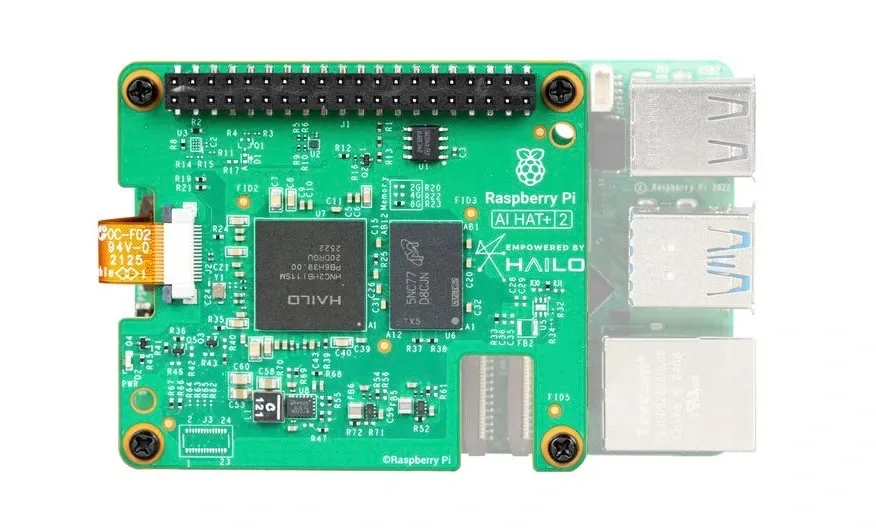
- 8GB LPDDR4X RAM: This memory capacity supports the local execution of small LLMs, allowing tasks such as basic translations, text-to-speech, and other lightweight AI functions without relying on cloud-based services.
- Halo 10H Chip: Offering 40 TOPS INT4 and 26 TOPS INT8 performance, this chip is optimized for small-scale AI tasks like real-time object detection and machine vision, making it suitable for embedded systems.
- Thermal Management: The inclusion of a heat sink ensures stable performance during intensive AI tasks by preventing overheating.
- Ease of Integration: The device comes with mounting screws, allowing seamless integration into existing Raspberry Pi setups, which simplifies the installation process for developers.
These hardware features make the AI Hat Plus 2 a practical choice for low-power, localized AI applications, particularly in scenarios where cloud dependency is impractical or undesirable.
Performance: Balancing Strengths and Limitations
The AI Hat Plus 2 demonstrates strong performance in specific, small-scale AI tasks. It is particularly effective in scenarios such as:
- Text-to-speech processing
- Basic language translations
- Real-time object detection for machine vision
However, the device’s 8GB RAM and processing power are insufficient for running larger AI models or handling general-purpose workloads. While the Halo 10H chip provides specialized processing capabilities, it lacks the versatility of the Raspberry Pi 5’s CPU, which is better suited for broader applications.
For machine vision tasks, such as allowing real-time object detection in battery-powered robotics, the AI Hat Plus 2 excels. Yet, its limited computational power and memory capacity make it less competitive for running more demanding AI workloads, such as advanced LLMs or complex neural networks. This positions the device as a niche solution rather than a universal AI tool.
New Raspberry Pi AI HAT+ 2

Enhance your knowledge on Raspberry Pi 5 by exploring a selection of articles and guides on the subject.
- Build an Offline AI Assistant on a Pi 5 Using a RLM AA50
- Raspberry Pi 5 Galactic aluminum case with integrated passive
- Awesome Raspberry Pi 5 Offline AI Chatbot Project : Whisper
- Raspberry Pi 5 M.2 SSD HAT+ PCIe Gen 3 board launches for $9
- Build Your Own 10″ Raspberry Pi 5 Tablet Running KDE Mobile
- Add a Raspberry Pi 5 SSD NVMe storage with ease
- Raspberry Pi 5 cooling fan vs passive heatsinks compared
- 7+ Raspberry Pi 5 operating systems compared and explored
- Raspberry Pi 5 features improved image processing
Use Cases: Designed for Specialized Applications
The AI Hat Plus 2 is best suited for developers and enthusiasts working on projects that require localized AI processing. Some of the most relevant use cases include:
- Battery-Powered Robotics: The device enables machine vision capabilities, such as object detection and navigation, making it ideal for robotics projects where energy efficiency is critical.
- Specialized AI Projects: Developers working on targeted AI tasks, such as environmental monitoring or industrial automation, can benefit from its localized processing capabilities.
- Prototyping: The AI Hat Plus 2 serves as a development kit for experimenting with AI applications in constrained environments, offering a platform for testing and refining small-scale AI models.
While the device is valuable for these specialized scenarios, its narrow focus limits its appeal for general-purpose users. Developers seeking a more versatile AI solution may find alternative setups more suitable for their needs.
Challenges: Compatibility and Software Support
Despite its hardware advancements, the AI Hat Plus 2 faces several challenges that may affect its usability and adoption:
- Software Optimization: The device relies on ongoing software development for compatibility with various AI tools and demos. This can lead to potential issues when running specific workloads or integrating with existing software ecosystems.
- Integration Difficulties: While the device is designed for seamless integration, users may encounter challenges when incorporating it into complex Raspberry Pi setups or when configuring it for specific AI tasks.
- Limited Advantages Over Alternatives: Competing AI hats or older models often provide similar functionality at a lower cost, making the AI Hat Plus 2 a less attractive option for budget-conscious users.
These challenges highlight the importance of carefully evaluating the device’s compatibility with your specific project requirements before committing to its purchase.
Cost Efficiency: Evaluating the Value Proposition
At $130, the AI Hat Plus 2 is priced higher than its predecessor ($110) and the AI camera module ($70). While its hardware upgrades, such as the Halo 10H chip and increased RAM, justify part of the price increase, its narrow use cases and limited performance may deter general users. For developers focused on running larger AI models or seeking more versatile solutions, alternative setups may offer better value at a similar or lower price point.
For those working on specialized AI projects, the AI Hat Plus 2 provides a capable and efficient tool. However, its cost may be difficult to justify for users who require broader functionality or higher performance levels. This makes it a device best suited for those with specific needs that align closely with its capabilities.
Final Thoughts: A Niche Tool for Targeted Applications
The Raspberry Pi AI Hat Plus 2 is a well-designed device for specialized tasks such as machine vision and localized AI processing. Its hardware features, including 8GB LPDDR4X RAM and the Halo 10H chip, enable it to handle small-scale AI workloads effectively. However, its limited performance, evolving software support, and relatively high price point restrict its appeal to niche applications.
For developers focused on battery-powered robotics or targeted AI projects, the AI Hat Plus 2 offers a valuable tool that can meet specific needs. However, for broader AI applications or general-purpose use, its cost and performance constraints make it less competitive compared to alternative solutions. Ultimately, this device is best suited for those with clearly defined project requirements that align with its specialized capabilities.
Media Credit: Jeff Geerling
Disclosure: Some of our articles include affiliate links. If you buy something through one of these links, Geeky Gadgets may earn an affiliate commission. Learn about our Disclosure Policy.
