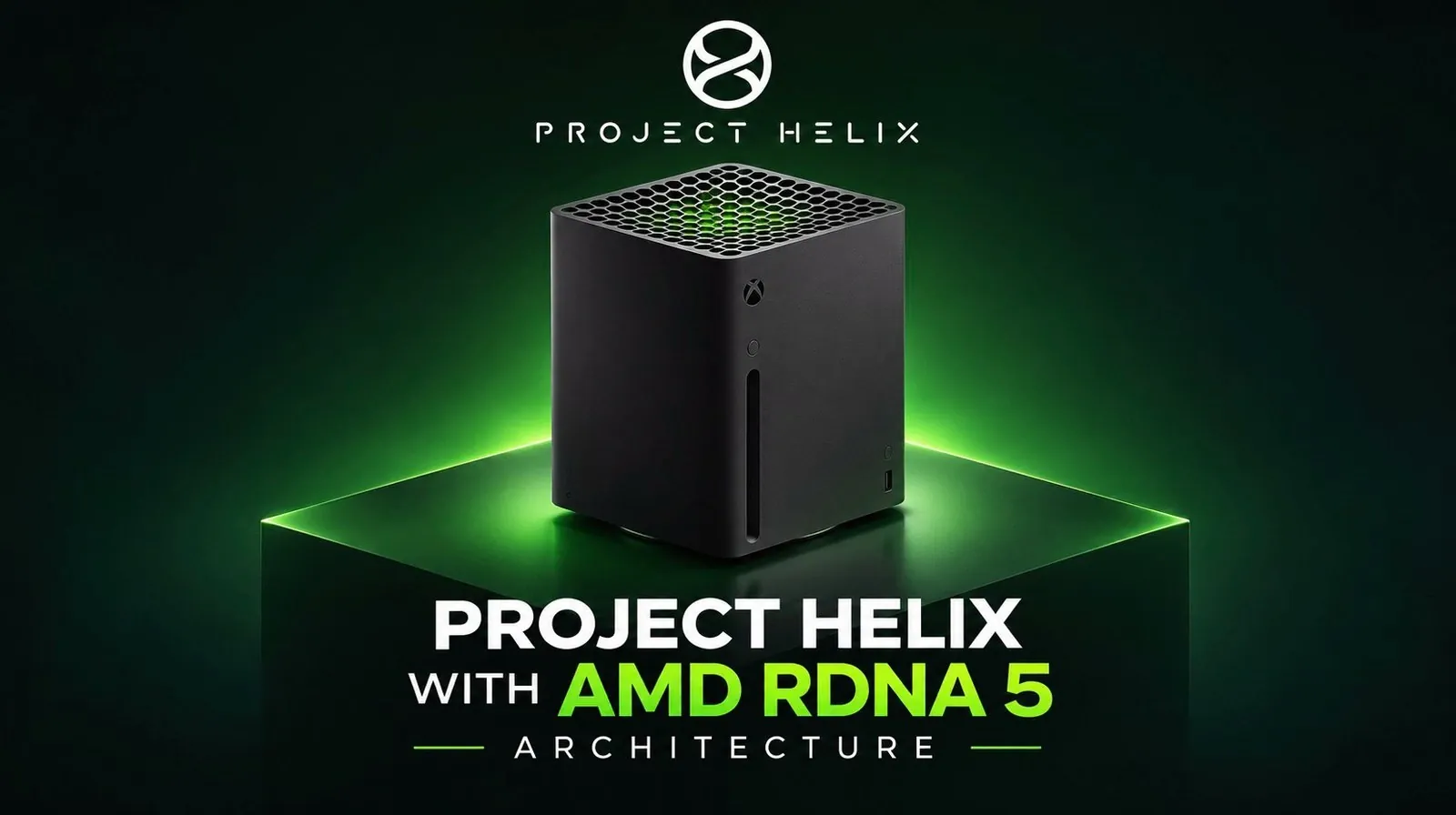
Microsoft’s ambitious Xbox Project Helix is shaping up to be a significant step forward in gaming technology. As detailed by Colt Eastwood, this next-generation console is designed to merge the best of PC and console gaming through advanced hardware and software integration. A key innovation tied to Project Helix is the introduction of “cluster geometry” in the latest DirectX12 update, which optimizes 3D rendering by breaking down complex models into smaller, reusable components. Early testing on AMD’s RDNA 5 architecture has shown dramatic performance improvements, including frame rate increases of up to 50 times and substantial reductions in ray tracing memory usage. These advancements could enable smoother gameplay at higher resolutions, even with demanding features like full path tracing.
Explore how Project Helix’s shared memory pool could reduce production costs while maintaining high-end performance, and gain insight into how the console’s unified ecosystem aims to streamline gaming across platforms. Learn about the potential hardware configurations, including a high-end model with up to 48 GB of GDDR7 RAM and a more affordable Helix S variant. Additionally, discover how the system’s universal Xbox dashboard and faster app updates could enhance usability for gamers. This overview provides a clear look at what to expect from Microsoft’s next-generation vision.
DirectX12 Update: A Potential Performance Boost
TL;DR Key Takeaways :
- Microsoft’s Xbox hardware team is reportedly developing Project Helix, a next-generation console aiming to merge PC and console gaming through advanced hardware, software updates, and a unified ecosystem. Specific release dates and pricing remain uncertain.
- A major update to DirectX12, tied to Project Helix, introduces “cluster geometry,” a graphics technology that reportedly improves 3D rendering performance significantly, with testing on AMD hardware showing frame rate increases of up to 50 times and reduced ray tracing memory usage by nearly 90%.
- Leaked details suggest Project Helix may feature AMD’s RDNA 5 architecture and up to 48 GB of GDDR7 RAM, with potential cost-saving variants reducing RAM to 36 GB or 24 GB, possibly lowering the console’s price to around $1,000 or less.
- Project Helix aims to create a unified gaming ecosystem across consoles, PCs, cloud platforms, and handheld devices, with reports of a handheld device that is reportedly 50% more powerful than the PlayStation 6 handheld and supports docked mode for enhanced performance.
- Speculation about the release timeline suggests a potential launch as early as late 2027, with pricing estimates ranging from $1,000 to $1,800 depending on configurations, though cost-saving measures are expected to make the consoles more accessible without significant performance compromises.
A significant update to Microsoft’s DirectX12 is closely tied to Project Helix. This update, described as the most substantial since DirectX12’s 2018 launch, introduces “cluster geometry,” a graphics technology that improves 3D rendering by breaking down complex models into smaller, reusable triangle clusters. Testing on AMD hardware, including the RX970 XT and RDNA 5 architecture, showed notable performance improvements. Frame rates reportedly increased by up to 50 times, while ray tracing memory usage dropped by nearly 90%.
For example, on an AMD 9070 XT GPU, full ray tracing frame rates rose from 1.2 fps to nearly 80 fps, with per-frame GPU acceleration improving from 788 milliseconds to 3.1 milliseconds. These advancements could allow smoother gameplay with full path tracing at 60 fps. However, in more demanding real-world scenarios, the performance gains may be less pronounced.
Cluster geometry also reduces memory overhead, potentially lowering VRAM requirements. While VRAM savings vary, sometimes slightly faster, other times up to 40% slower, the overall performance improvements are significant. This optimization aligns with Project Helix’s shared memory pool, which combines graphics RAM and system RAM, potentially cutting production costs.
Hardware Developments and Cost-Saving Strategies
Project Helix is expected to feature AMD’s RDNA 5 architecture, offering a significant performance upgrade over current Xbox consoles. Early leaks suggest the console might include up to 48 GB of GDDR7 RAM. However, reducing the shared memory pool to 36 GB, or 24 GB for a potential Helix S variant, could lower production costs without drastically affecting gaming performance.
Reducing RAM to 36 GB could bring the high-end Helix console’s price closer to $1,000, compared to earlier estimates of $1,200 to $1,500. A Helix S model with 24 GB of shared memory could provide a more affordable option while maintaining strong performance for modern gaming. This approach could make next-generation consoles more accessible while still delivering high frame rates, resolutions, and advanced ray tracing.

Take a look at other insightful guides from our broad collection that might capture your interest in Xbox Project Helix.
- Xbox Project Helix Confirmed for a November 2027 Launch
- Leaked Xbox Project Helix May Hit a $1,200 Price in Spring 2027
- Tariffs May Push Xbox Project Helix Pricing to a Steep $1,000
- Xbox Project Helix Reportedly Includes a Next-Gen Handheld
- New Xbox Project Helix Hardware Apparently Hits True 4K at 120 FPS
- Rumoured Massive 26-Teraflop Xbox Project Helix Pits It Against PlayStation 6
- Project Helix: How the Next Xbox Plays Both PC and Console Games
- Xbox Project Helix Consoles Scheduled to Launch in Nov 2027
- Rumored Xbox Project Helix Estimates Hit a Massive $1,800 Price
- Xbox Project Helix Offers Complete Backward Compatibility
A Unified Ecosystem Across Platforms
Project Helix aims to create a unified ecosystem that integrates gaming across consoles, PCs, cloud platforms, and handheld devices. The system will feature a universal Xbox dashboard operating system and user interface. A faster Xbox app, currently in testing, offers improved navigation, updated filters, and better game library organization. Reports suggest the app is 60% faster, enhancing usability.
The Helix family also includes a handheld device reportedly 50% more powerful than the PlayStation 6 handheld. Featuring energy-efficient Zen 6C processor cores and RDNA 5 integrated graphics, the handheld is expected to perform even better in docked mode. This device underscores Microsoft’s focus on high-performance gaming across multiple platforms. Additionally, Project Helix will allow users to access games from multiple PC storefronts and play console games they already own, adding to its versatility.
Efforts are also underway to improve the Xbox Game Bar, which connects users to social and party features, supporting a smoother gaming experience across devices.
Release Timeline and Pricing Speculation
While excitement for Project Helix grows, its release timeline remains speculative. Earlier rumors pointed to a holiday 2028 launch for the console, with handhelds arriving a year earlier. However, some reports suggest the next generation could begin as early as late 2027, with a potential reveal in summer 2027. These timelines are unconfirmed and subject to change.
Pricing for next-generation consoles is also speculative. Estimates range from $1,000 to nearly $1,800 in the U.S., but reducing storage and RAM could help make these systems more affordable. Cost-saving measures, such as lowering RAM, are expected to have minimal impact on performance, allowing the consoles to maintain high frame rates, resolution, and ray tracing capabilities while appealing to a wider audience.
Xbox Project Helix represents a significant leap in gaming technology, driven by updates to DirectX12 and advanced AMD hardware. While the release date and pricing remain uncertain, the prospect of a $1,000 next-generation console with exceptional performance is an exciting development for gamers.
Media Credit: colteastwood
Disclosure: Some of our articles include affiliate links. If you buy something through one of these links, Geeky Gadgets may earn an affiliate commission. Learn about our Disclosure Policy.
