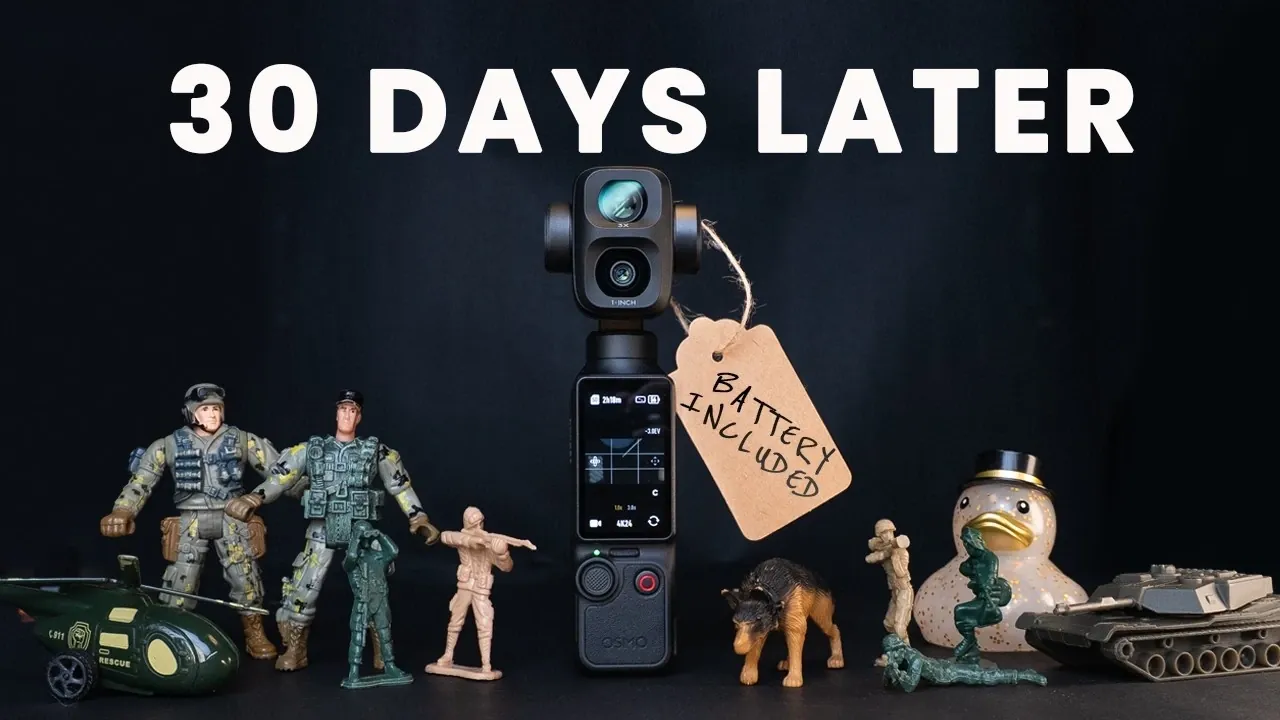
The Pocket 4P camera combines a compact form factor with features designed for creators who prioritize both quality and portability. Over a 30-day evaluation, The Film Alliance highlighted its integrated gimbal stabilization and 3X telephoto lens as standout features for achieving smooth, adaptable footage. However, the smaller sensor struggled in low-light conditions, making it more effective in well-lit scenarios. Overall, the camera proved capable of delivering sharp visuals and consistent performance for casual and semi-professional projects.
Dive into this review to examine the Pocket 4P’s slow-motion recording options, analyze its color profiles like D-Log 2 for post-production workflows and assess practical considerations such as battery life and internal storage. This detailed evaluation offers insights into the camera’s capabilities and limitations to help you make an informed decision.
Versatility for Everyday and Creative Use
TL;DR Key Takeaways :
- The Pocket 4K camera is a compact and versatile tool designed for casual and semi-professional filmmakers, bridging the gap between smartphones and high-end mirrorless cameras.
- Key strengths include excellent image quality, integrated gimbal stabilization, slow-motion capabilities and advanced color profiles like D-Log 2 and HDR 10-bit for creative flexibility.
- Its compact design, 3X telephoto lens and improved battery life enhance usability, making it suitable for various filming scenarios such as vlogging, product photography and cinematic b-roll.
- Drawbacks include low-light performance limitations on the telephoto lens, mandatory smartphone registration, lack of a protective case and screen sensitivity issues in cold weather.
- While it doesn’t replace professional mirrorless cameras, the Pocket 4K offers a practical middle ground for creators seeking quality and convenience without the complexity or cost of high-end equipment.
The Pocket 4K excels in its adaptability, making it suitable for a wide range of creative applications. Whether you’re capturing cinematic b-roll, vlogging, or shooting product photography, this camera adjusts seamlessly to meet your needs. Its compact design and integrated gimbal stabilization ensure portability and ease of use, even in tight spaces or during on-the-go filming. This makes it an excellent choice for creators who value mobility without sacrificing quality.
In terms of lighting, the Pocket 4K performs admirably across diverse conditions, from low light to harsh backlighting and golden hour settings. However, its 3X telephoto lens, which is equivalent to approximately 60mm, struggles in dim environments due to its smaller sensor. Despite this limitation, the camera remains a reliable option for capturing high-quality footage in most everyday scenarios, making it a versatile tool for both casual and creative projects.
Image Quality and Stabilization
One of the standout features of the Pocket 4K is its image quality, which rivals many smartphones and even some entry-level mirrorless cameras. The footage is sharp, vibrant and stabilized, making it suitable for a variety of filming styles. Its slow-motion capabilities further enhance its creative potential, allowing filmmakers to capture dynamic and visually engaging shots with ease.
The 3X telephoto lens is particularly effective for portraits, product shots and macro-like details, offering a level of versatility that many smartphones lack. However, its smaller sensor underperforms in low-light conditions, which may limit its usability in certain scenarios. Nevertheless, the overall image quality is a significant improvement over most smartphone cameras, particularly in challenging lighting environments, making it a valuable tool for creators seeking to elevate their visual storytelling.

Here is a selection of other guides from our extensive library of content you may find of interest on Pocket 4P.
- DJI Osmo Pocket 4P Global Launch is Finally Here
- Osmo Pocket 4P 1-Inch Sensor Beats iPhone 17 Pro for Video
- DJI Osmo Pocket 4P vs Insta360 Luna Ultra : Key Differences Explained
- DJI Pocket 4 vs Pocket 4P : Are the New Pro Features Worth the Upgrade?
- Why DJI Kept the Osmo Pocket 4P Specs a Secret at Cannes
- Why the DJI Osmo Pocket 4P Might Disappoint Social Media Creators
- Why the DJI Pocket 4P Might Disappoint Modern Social Media Creators
- Inside the Massive DJI Osmo Pocket 4P Upgrade : 17 Stops of Dynamic Range & More
- What the DJI Pocket 4P’s Dual-Camera System Means for Creators
- How the Insta360 Luna Ultra Challenges DJI’s Cinematic Dominance
Advanced Color Profiles for Creative Flexibility
The Pocket 4K offers a range of color profiles designed to cater to filmmakers with varying post-production needs. These include Standard, D-Log, D-Log 2 and HDR 10-bit. Among these, D-Log 2 stands out for its ability to capture a wider dynamic range, making it ideal for color grading and achieving professional-grade results. However, this profile is limited to the 1X camera, which may restrict its application in certain shooting situations.
The inclusion of HDR 10-bit is another valuable feature, allowing filmmakers to capture footage with enhanced color accuracy and depth. However, it requires a compatible monitor for accurate playback, which may be a consideration for those without access to advanced equipment. For creators who prioritize dynamic range and color precision, these profiles provide a robust foundation for achieving high-quality results in post-production.
Strengths That Enhance Usability
Several features make the Pocket 4K a practical and user-friendly choice for filmmakers seeking convenience without compromising quality. Key strengths include:
- Internal storage and improved battery life, which represent significant upgrades from its predecessor, the Pocket 3.
- The 3X telephoto lens, offering versatility for close-ups, creative angles and detailed shots.
- A compact design that facilitates filming in confined spaces and experimenting with unique perspectives.
- Integrated gimbal stabilization, making sure smooth and professional-looking footage without the need for additional equipment.
These features collectively enhance the camera’s usability, making it a valuable tool for both everyday content creation and semi-professional projects. Its thoughtful design and practical features cater to filmmakers who prioritize efficiency and quality.
Drawbacks and Limitations
While the Pocket 4K offers numerous advantages, it is not without its shortcomings. Some of the key limitations include:
- The lack of a protective case for the gimbal and screen, which increases the risk of damage during travel or storage.
- Mandatory smartphone registration, which raises privacy concerns for some users who prefer to avoid sharing personal data.
- Screen sensitivity issues, particularly in cold weather, where responsiveness can become inconsistent and hinder usability.
Although these drawbacks do not overshadow the camera’s overall performance, they are important considerations for potential buyers. Addressing these issues in future iterations could further enhance the Pocket 4K’s appeal and reliability.
Comparison to Smartphones and Mirrorless Cameras
When compared to smartphones, the Pocket 4K offers clear advantages in terms of image quality, stabilization, and its ability to adapt to various lighting conditions. Its dedicated features, such as advanced color profiles and slow-motion capabilities, provide a level of creative flexibility that smartphones often lack. However, it does not fully replace mirrorless cameras for professional use, as it lacks features like interchangeable lenses, dual card slots and advanced manual controls.
For casual and semi-professional projects, the Pocket 4K strikes a compelling balance between quality and convenience. It serves as a practical solution for creators looking to elevate their filmmaking without investing in high-end equipment. By bridging the gap between smartphones and professional cameras, it offers an accessible entry point for those seeking to enhance their visual storytelling.
Final Thoughts
The Pocket 4K is a capable and affordable camera that caters to filmmakers seeking a compact and versatile tool. Its strengths in image quality, stabilization, and usability make it a valuable addition to any filmmaker’s toolkit. While it does have its limitations, such as privacy concerns, screen sensitivity issues and low-light performance on the telephoto lens, these drawbacks are outweighed by its overall performance and practicality.
For everyday content creation and semi-professional projects, the Pocket 4K offers a high-quality solution that bridges the gap between smartphones and more advanced cameras. It is an excellent choice for creators looking to enhance their filmmaking without a significant financial investment, making it a standout option in its category.
Media Credit: The Film Alliance
Disclosure: Some of our articles include affiliate links. If you buy something through one of these links, Geeky Gadgets may earn an affiliate commission. Learn about our Disclosure Policy.
