What if you could send sound directly to a single person in a crowded room, without anyone else hearing it? This isn’t a scene from a sci-fi movie, it’s the reality of a new concept called the “sound laser.” In this guide, Electron Impressions explains how ultrasonic waves and clever engineering come together to create a device that delivers sound with pinpoint accuracy. By harnessing principles like wave interference and acoustic nonlinearity, this technology transforms sound from something that spreads in all directions into a focused beam, as precise as a laser. The result? A mesmerizing auditory experience where sound seems to materialize out of thin air, aimed exactly where you want it.
This overview dives into the fascinating mechanics behind the sound laser project, from the role of parametric arrays to the surprising way ultrasound becomes audible. Whether you’re a DIY enthusiast eager to build your own or simply curious about how this futuristic invention works, you’ll uncover the essential components and challenges involved in bringing it to life. Beyond the technical details, the possibilities are endless, imagine using this for immersive virtual reality, targeted messaging in public spaces, or even creating interactive art. The sound laser isn’t just a gadget; it’s a bold reimagining of how we experience and control sound.
Understanding Sound Laser Technology
TL;DR Key Takeaways :
- Sound lasers use ultrasonic waves and principles like wave interference and acoustic nonlinearity to deliver sound with pinpoint accuracy, appearing as if the sound originates midair.
- Parametric arrays, composed of multiple ultrasonic emitters, create focused sound beams through constructive and destructive interference, making sure precision and minimal noise dispersion.
- Acoustic nonlinearity allows ultrasonic waves to convert into audible sound, allowing targeted audio delivery without traditional speakers or headphones.
- Key components of a sound laser include a 555 timer circuit, Bluetooth audio amplifier, H-bridge module, and a parametric array of piezoelectric transducers, requiring precise engineering for functionality.
- Applications range from public spaces and virtual reality to art and design, with future advancements focusing on efficiency, portability, and expanded use cases.
How Ultrasound Enables Focused Sound
Sound naturally spreads in all directions, but ultrasound provides a way to focus it. Ultrasound refers to sound waves with frequencies above 20 kHz, beyond the range of human hearing. By using frequencies around 40 kHz, shorter wavelengths are achieved, allowing small emitters to produce highly directional sound beams. This directional property forms the foundation of the sound laser, allowing sound to be targeted to specific areas with minimal dispersion.
The focused nature of ultrasound is what makes this technology so effective. Unlike traditional speakers, which radiate sound broadly, a sound laser can deliver audio to a precise location without disturbing the surrounding environment. This capability has significant implications for both practical and creative applications.
The Role of Parametric Arrays and Wave Interference
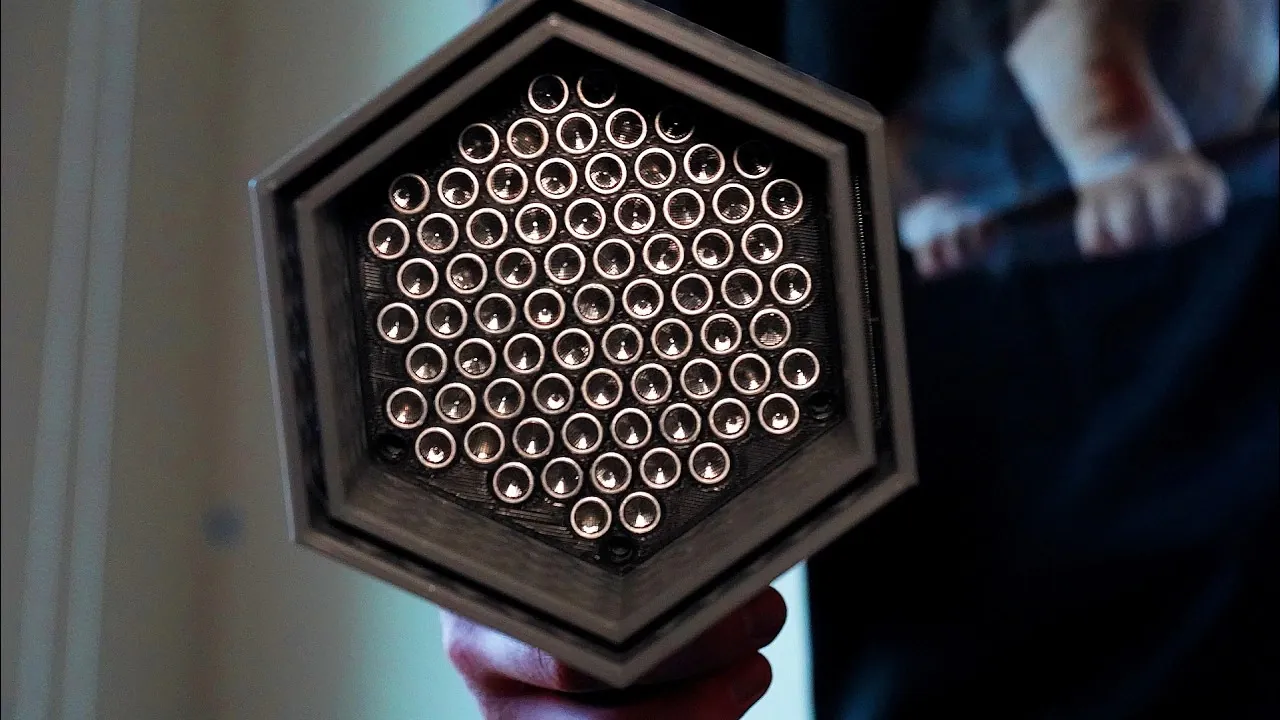
At the core of the sound laser lies a parametric array, a carefully designed arrangement of multiple ultrasonic emitters. These emitters are configured to work together, creating a unified wavefront. Through constructive interference, the sound waves amplify in the forward direction, while destructive interference minimizes sound in other directions. This process ensures that the sound beam is highly focused, resembling the precision of a laser.
Wave interference plays a critical role in achieving this precision. By aligning the emitters in a specific pattern, the sound waves reinforce each other in the desired direction while canceling out in others. This principle not only enhances the clarity of the transmitted sound but also reduces unwanted noise, making the sound laser an efficient and effective tool for targeted audio delivery.
DIY Handheld Ultrasonic Array for Precise, Target-Only Sound

Expand your understanding of sound hardware and tips with additional resources from our extensive library of articles.
- Secret iPhone Trick: Change Your Charging Sound! (iOS 18
- Casey Sound Wooden Smart Speaker Case
- How to Boost iPhone Volume and Sound Quality with iOS 26
- Beyerdynamic MMX 300 Pro gaming headset with studio sound
- New Creative Sound Blaster Audigy Fx V2 sound card
- DACBerry ONE Raspberry Pi Sound Card
- OXS Thunder True Dolby Atmos 7.1.2 gaming sound bar
- Acoustic Camera demonstrated locating and visualising sound
- HRT Digital Sound Processor Enhances Your Headphones Audio
- ElevenLabs Studio Now Features Sound Effects
Acoustic Nonlinearity: Turning Ultrasound Into Audible Sound
One of the most fascinating aspects of the sound laser is its ability to convert ultrasonic waves into audible sound through a phenomenon known as acoustic nonlinearity. As high-pressure ultrasonic waves travel through the air, they interact with the medium, causing distortion. This distortion demodulates the ultrasonic waves, effectively converting the high-frequency signal into audible sound.
The result is a unique auditory experience where the sound appears to originate directly in front of the target, even though the source is the handheld device. This effect is not only intriguing but also practical, as it allows sound to be delivered to a specific location without the need for traditional speakers or headphones.
Essential Components of a Sound Laser
Building a sound laser requires a combination of electronic components and precise engineering. The following are the key elements involved:
- 555 Timer Circuit: Generates the high-frequency ultrasonic carrier signal, which serves as the foundation for the sound laser’s operation.
- Bluetooth Audio Amplifier: Modulates the ultrasonic waves with audio signals, allowing the transmission of music, speech, or other sounds.
- H-Bridge Module: Powers and controls the piezoelectric transducers, making sure efficient operation and signal modulation.
- Parametric Array: A carefully arranged set of 73 piezoelectric transducers that emit the directional ultrasonic waves necessary for focused sound transmission.
Each component plays a vital role in the system, working together to produce and modulate ultrasonic waves for precise sound delivery. The careful integration of these elements is essential for achieving the desired performance and functionality.
Challenges in Building a Sound Laser
Creating a sound laser is not without its challenges. Grounding issues and circuit optimization often require meticulous attention during the prototyping phase. Making sure stable operation of the electronic components is critical, as even minor errors can disrupt the functionality of the device.
Testing the sound laser can also be complicated, particularly in indoor environments. Sound reflections off walls and objects can scatter the focused beam, making it difficult to evaluate its performance. Outdoor testing, however, has demonstrated the device’s long-range capabilities, showcasing its potential for practical applications. Overcoming these challenges requires patience, precision, and a thorough understanding of the underlying principles.
Applications and Future Possibilities
The sound laser opens up a wide range of possibilities across various fields. Its ability to deliver targeted audio makes it an innovative solution for numerous applications, including:
- Public Spaces: Directing sound to specific individuals or areas without disturbing others, such as in museums, airports, or retail environments.
- Virtual Reality: Enhancing immersive experiences by delivering sound from precise locations, adding a new dimension to VR technology.
- Art and Design: Creating unique auditory experiences by reflecting sound off surfaces, similar to how light interacts with mirrors.
Looking ahead, advancements in this technology could focus on improving efficiency, reducing power consumption, and enhancing portability. These improvements would make the sound laser even more versatile, expanding its potential applications and accessibility.
The Potential of Ultrasonic Sound Technology
The DIY sound laser represents a significant step forward in acoustic technology, demonstrating how ultrasonic waves, wave mechanics, and acoustic nonlinearity can be harnessed for precise sound delivery. Whether you’re interested in its practical applications or intrigued by its innovative capabilities, the sound laser offers a glimpse into the future of audio technology. By exploring its possibilities, you can discover new ways to use sound in targeted, creative, and impactful ways.
Media Credit: Electron Impressions
Disclosure: Some of our articles include affiliate links. If you buy something through one of these links, Geeky Gadgets may earn an affiliate commission. Learn about our Disclosure Policy.
