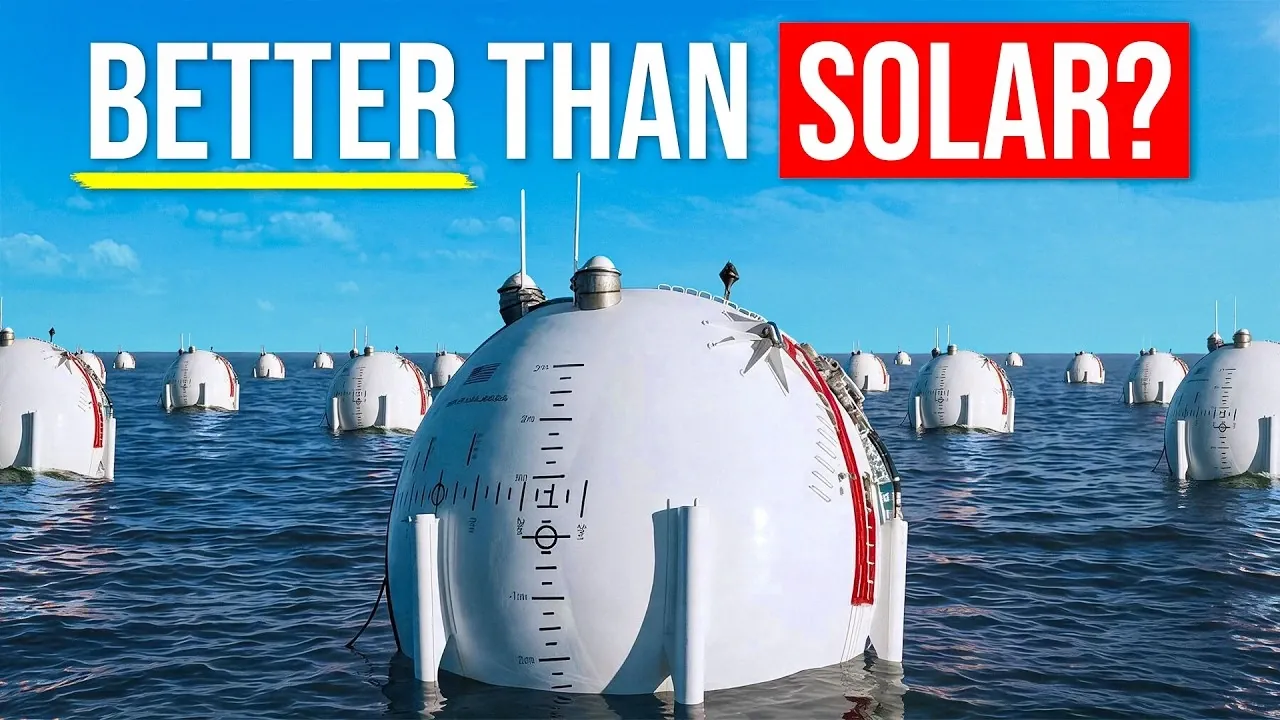
Harnessing the power of ocean waves has long been a goal for renewable energy innovators and Panthalassa’s floating spherical node offers a fresh approach to this challenge. This self-contained device converts wave motion into electricity using a simple yet effective mechanism: wave-driven movement pumps water into an upper reservoir, which then flows through a turbine to generate power. Unlike traditional systems, the node operates without anchors or cables, simplifying deployment and reducing costs. Ziroth explores how this design balances adaptability and efficiency while addressing the harsh realities of marine environments.
Dive into this breakdown to understand how the node’s modular ballast system adapts to varying wave conditions and why its corrosion-resistant materials are critical for durability. You’ll also discover the hurdles the technology must overcome, from increasing its current 2.5 kW power output to improving energy conversion efficiency. By the end, you’ll gain a clearer picture of the system’s potential applications and the steps needed to make wave energy a viable part of the renewable energy landscape.
How the Wave Energy System Works
TL;DR Key Takeaways :
- Panthalassa has developed an innovative floating spherical “node” that converts ocean wave motion into electricity, offering a potential breakthrough in renewable energy.
- The node’s unique design eliminates the need for anchors or cables, features adjustable ballast and tube configurations and is built for durability in harsh marine environments.
- Key challenges include low power output (currently 2.5 kW), limited energy efficiency (44%), restricted energy storage and unproven long-term durability in ocean conditions.
- Potential applications include powering offshore data centers and hydrogen production, though current limitations in efficiency and scalability hinder immediate feasibility.
- Future goals focus on improving energy conversion efficiency, scaling up power output to 200 kW–1 MW and making sure long-term reliability for commercial deployment.
At the core of this technology lies a buoyant, self-contained spherical node engineered to capture the kinetic energy of ocean waves. The system employs a straightforward yet effective mechanism to generate electricity:
- The floating sphere is connected to a submerged tube that facilitates energy transfer.
- As waves move the sphere, water is pumped into an upper reservoir within the node, storing potential energy.
- This stored energy is released as water flows back down through a turbine, converting it into electricity.
Unlike conventional wave energy systems, this design eliminates the need for anchors or cables tethered to the shore. This independence simplifies deployment, reduces infrastructure costs and allows for greater flexibility in placement. The node’s adjustable ballast and tube dimensions further enhance its adaptability, allowing it to optimize energy capture across varying wave conditions.
Key Design Features and Innovations
The floating node is carefully designed to withstand the harsh marine environment while maximizing energy production. Its construction incorporates several innovative features that set it apart from traditional wave energy systems:
- Durability: The node is built using materials specifically chosen for their resistance to saltwater corrosion and marine growth, addressing common issues that degrade ocean-based systems over time.
- Real-Time Monitoring: Advanced onboard computing systems continuously track and optimize energy production, even under rough sea conditions, making sure consistent performance.
- Modularity: The node’s ballast and tube configurations can be adjusted to accommodate specific wave heights and frequencies, enhancing its efficiency and adaptability across diverse marine environments.
These features make the system versatile, capable of operating effectively in both calm coastal waters and more turbulent offshore locations. By addressing key logistical challenges, the design aims to make wave energy a more practical and scalable renewable energy source.

Learn more about energy by reading our previous articles, guides and features :
- Proxima Fusion Plans the Alpha Stellarator for the Early 2030S
- How the Super Soaker Inventor Built a Heat Engine Without Moving Parts
- Best Phone Battery Life 2025: OnePlus 15, vivo X300 Pro, & iPhone 17 Pro Max
- SeaTwirl’s IKEA-Style Turbines Cut Deep-Water Energy Costs
- Apple Home vs Google Home: How iOS 27 Changes the Ecosystem
- Apple Silicon AI Performance: Local Al on Apple Silicon Uses 7X Less RAM
- Apple Watch Ultra 4 Leak Reveals Redesign and Health Features
- The Biggest Hidden Features Inside Apple’s iOS 27 Update
- What Makes the Seawater Battery a Breakthrough for Sustainability
- Google DeepMind CEO Says AGI Could Arrive in 3 to 5 Years
Challenges Facing the Technology
Despite its innovative design and potential, the floating node remains in its early stages of development and faces several significant challenges that must be addressed to achieve commercial viability:
- Low Power Output: Initial prototype tests have demonstrated a power output of only 2.5 kW, which is far below the target of 50 kW. Achieving higher power outputs is essential for scaling the technology to meet commercial energy demands.
- Energy Efficiency: The system’s current energy conversion efficiency stands at 44%, which is lower than that of traditional hydroelectric systems. Improving this efficiency is critical to its competitiveness.
- Limited Energy Storage: The height of the water drop within the node restricts its potential energy storage capacity, limiting its ability to provide consistent power output.
- Durability Concerns: While the node is designed to resist corrosion and marine growth, its long-term reliability in harsh ocean conditions remains unproven and requires further testing.
- Computing Stability: The onboard monitoring systems must demonstrate resilience in unpredictable marine environments, where extreme weather and wave conditions can pose significant challenges.
Overcoming these challenges will be pivotal to the technology’s success. Addressing these issues will not only improve performance but also build confidence in its long-term viability as a renewable energy solution.
Potential Applications
If refined and scaled effectively, this wave energy system could unlock a range of applications across various industries, offering innovative solutions to energy challenges:
- Offshore Data Centers: The nodes could power offshore data centers, using the ocean as a natural heat sink for cooling. This approach could significantly reduce the carbon footprint of these energy-intensive facilities while providing a reliable energy source.
- Hydrogen Production: The electricity generated by the nodes could be used to power electrolysis systems for hydrogen production. However, the system’s current low power output and efficiency limit its feasibility for this application in the near term.
These potential applications highlight the versatility of the technology. However, its practical implementation will depend on overcoming current limitations and achieving the necessary advancements in efficiency and scalability.
Testing and Future Goals
Panthalassa’s recent prototype testing, referred to as Ocean 2, has demonstrated the feasibility of the concept while also identifying areas for improvement. The company has set ambitious goals to enhance the system’s performance and scalability, aiming for power outputs ranging from 200 kW to 1 MW. Key areas of focus for future development include:
- Enhancing energy conversion efficiency to make the system more competitive with other renewable energy sources.
- Scaling the technology for larger deployments capable of meeting commercial energy demands.
- Making sure the system’s long-term durability and reliability in real-world ocean conditions.
These advancements will be critical for transitioning the technology from prototype to commercial deployment, allowing it to compete with established renewable energy solutions like wind and solar power.
Looking Ahead
Panthalassa’s floating spherical node represents a bold step forward in the pursuit of sustainable energy. By addressing many of the logistical and operational challenges associated with traditional wave energy systems, it offers a flexible and potentially cost-effective solution for harnessing the vast, untapped energy of ocean waves. However, significant engineering and operational hurdles remain, particularly in scaling up power output and proving the system’s reliability over time.
If these challenges can be successfully addressed, this technology could play a pivotal role in the global transition to renewable energy. For now, the focus remains on refining the design, improving efficiency and demonstrating its economic feasibility in real-world conditions. The journey ahead is complex, but the potential rewards, a cleaner, more sustainable energy future, make it a challenge worth pursuing.
Media Credit: Ziroth
Disclosure: Some of our articles include affiliate links. If you buy something through one of these links, Geeky Gadgets may earn an affiliate commission. Learn about our Disclosure Policy.
