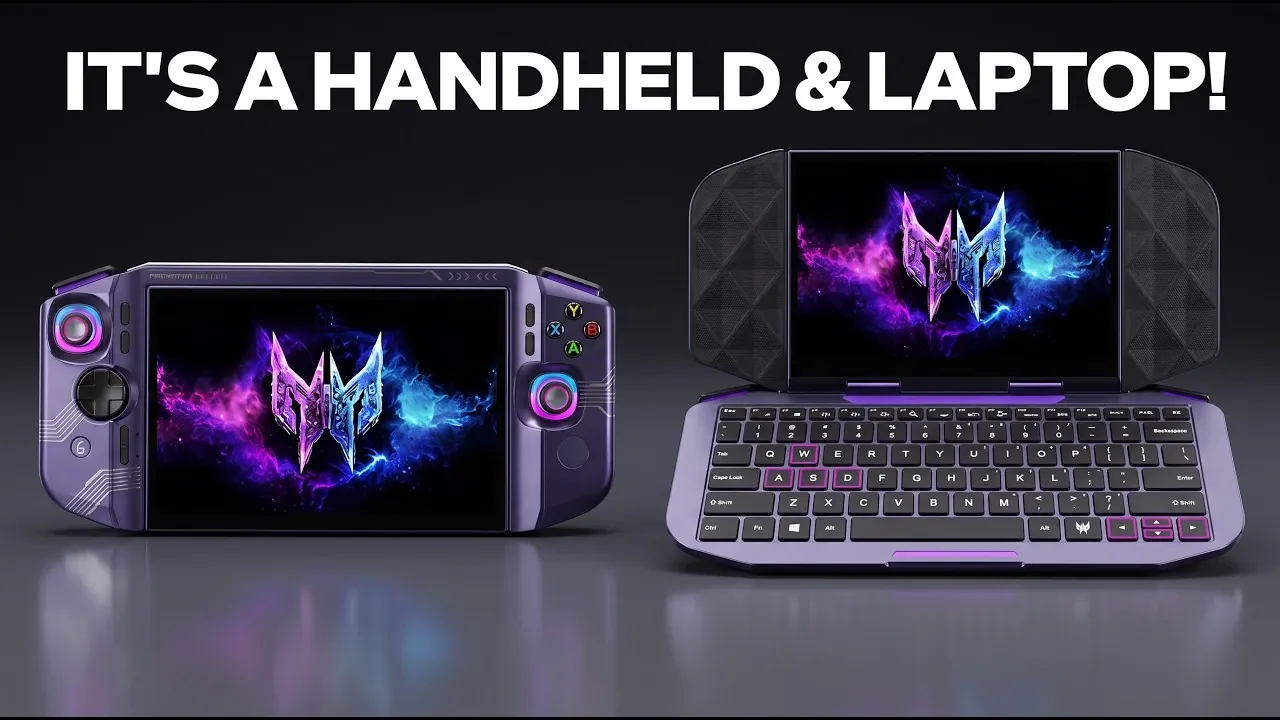
Acer has introduced two handheld devices at IFA 2026, signaling its interest in the portable gaming market. One of these, the Project Dual Play Mini, is a concept device that combines an 8-inch touchscreen, a built-in gaming controller, and a backlit keyboard. This design allows it to function as both a handheld gaming device and a compact laptop. While still in development, the device highlights Acer’s focus on creating adaptable solutions for users balancing entertainment and productivity. As detailed by ETA Prime, this concept reflects broader trends in portable technology.
Dive into the key features of the Project Dual Play Mini, such as its Thunderbolt connectivity and potential use of Intel-based hardware. Understand how Acer’s hybrid design could cater to gamers seeking both portability and functionality. Additionally, explore the challenges Acer faces in entering a competitive market, including addressing past hurdles and competing with established brands.
Predator Atlas 7: High-Performance Gaming on the Go
TL;DR Key Takeaways :
- Acer unveiled the Predator Atlas 7, a high-performance handheld gaming device with a 7-inch 1080p IPS touchscreen, 120 Hz VRR, Intel Arc G3 Extreme iGPU and up to 24 GB RAM, set to launch in Q4 2026.
- The Project Dual Play Mini, a hybrid concept device combining an 8-inch touchscreen, built-in gaming controller and backlit keyboard, showcases Acer’s vision for merging gaming and productivity.
- The Predator Atlas 7 features advanced gaming controls, dual Thunderbolt 4 ports, Wi-Fi 7 support, DTS X Ultra Sound and an 80 Wh battery for extended gaming sessions.
- Acer’s historical challenges in the handheld gaming market, including delays and competition, raise questions about its ability to sustain momentum with these new devices.
- The handheld gaming market’s competitive landscape demands innovation, affordability and reliability, with Acer aiming to carve a niche through innovative technology and hybrid designs.
The Predator Atlas 7 is designed to cater to gamers who demand powerful performance and portability. Equipped with a 7-inch 1080p IPS touchscreen, the device offers a 120 Hz variable refresh rate (VRR) and 500 nits of brightness, making sure vibrant visuals and smooth gameplay. This compact yet powerful device is built to deliver a premium gaming experience.
Under the hood, the Atlas 7 is powered by Intel’s Arc G3 Extreme iGPU, paired with up to 24 GB of RAM and a 1 TB Gen 4 NVMe SSD. This combination ensures seamless multitasking and the ability to handle demanding games with ease. The device also features an 80 Wh battery, promising extended gaming sessions and dual fan Aeroblade cooling, which keeps the system running efficiently even under heavy loads.
Key features of the Predator Atlas 7 include:
- TMR joysticks with anti-drift technology and hall-based analog triggers for precise control.
- Dual Thunderbolt 4 ports and Wi-Fi 7 support for fast connectivity.
- DTS X Ultra Sound for immersive audio experiences.
Running on Windows 11, the Atlas 7 is expected to launch in North America by Q4 2026. Positioned as a premium option in the handheld gaming market, it targets gamers who seek a balance between performance and portability, offering a compelling alternative to existing devices in the segment.
Project Dual Play Mini: A Hybrid Concept for Gaming and Productivity
Acer’s Project Dual Play Mini introduces a unique hybrid design that merges gaming and productivity into a single device. Featuring an 8-inch Windows-based touchscreen, the device includes a built-in gaming controller for handheld play and a backlit keyboard that transforms it into a miniature laptop. This dual-purpose design aims to appeal to users who value versatility, offering a solution for both gaming and productivity tasks.
Although specific hardware details remain limited, the Dual Play Mini is expected to include:
- Intel-based components for reliable performance and efficiency.
- Dual fan cooling to maintain optimal performance during extended use.
- Thunderbolt connectivity for fast data transfer and peripheral support.
As a concept device, the Dual Play Mini does not yet have a confirmed production timeline. However, it serves as a glimpse into Acer’s vision for the future of hybrid gaming devices. If brought to market, it could cater to a niche audience seeking a device that seamlessly transitions between gaming and productivity.

Below are more guides on handhelds from our extensive range of articles.
- Sony’s PlayStation 6 Details Leaks: First Look at the Next-Gen Console
- RG56 Pro Max First Look & Performance Guide: What Runs Well & What Struggles
- ASUS Releases Ally X Driver 26.6.1 for Forza Horizon 6
- $99 Android Handheld is a Retro Gaming Steal : Mangmi Air X
- Pricing for Acer Predator Atlas 8 Starts at £999 in the UK
- Intel Panther Lake Handheld PCs Expected at $599 To $799
- MSI Claw 8EX Ai+ Costs $1800 but Hits 70 FPS in Cyberpunk 2077
- What Happens When Handheld Consoles Rival Gaming Laptops In 2026
- KONKR Pocket Advance Hands-on: $89.99 Retro Android 12 Handheld
- PSPi Mod Fits Raspberry Pi Compute Module 4 in PSP 1000
Acer’s Track Record in Handheld Gaming
Acer’s history in the handheld gaming market has been marked by both ambition and setbacks. Previous attempts, such as the Nitro Blaze 8, Nitro Blaze 11, and Nitro 7, faced significant challenges, including delays, rebranding and outright cancellations. External factors such as tariffs, supply chain disruptions, and intense competition have historically hindered Acer’s ability to deliver on its promises.
The Predator Atlas 7 and Project Dual Play Mini represent Acer’s latest efforts to establish a foothold in this competitive market. However, the company must overcome its historical challenges and demonstrate its ability to deliver high-quality, reliable products to gain consumer trust and market share.
Opportunities and Challenges in the Handheld Gaming Market
The handheld gaming market is evolving rapidly, driven by advancements in technology and shifting consumer preferences. Rising hardware costs and limited innovation have led to higher price points, making it increasingly important for manufacturers to justify these costs with compelling features and performance. Devices like the Predator Atlas 7 showcase how innovative technology can enhance the gaming experience, but the market remains crowded with established players and new entrants vying for attention.
The Project Dual Play Mini stands out as a potential disruptor, offering a hybrid design that could appeal to gamers seeking flexibility. If Acer decides to commercialize this concept, it could carve out a unique niche in the market. However, success will depend on several critical factors, including:
- Balancing performance and affordability to appeal to a broad audience.
- Making sure availability and overcoming supply chain challenges.
- Delivering a reliable and polished user experience to build consumer trust.
As the handheld gaming landscape continues to evolve, manufacturers must navigate these challenges while capitalizing on emerging opportunities to stay competitive.
The Road Ahead for Acer
Acer’s announcements at IFA 2026 highlight its ambition to innovate and redefine the handheld gaming experience. The Predator Atlas 7 is a tangible product that promises to deliver high performance and portability, catering to gamers who demand the best of both worlds. Meanwhile, the Project Dual Play Mini offers a glimpse into the potential of hybrid devices, blending gaming and productivity in a compact form.
However, Acer’s ability to succeed in this space will depend on its capacity to address historical challenges, meet consumer expectations and navigate the complexities of the handheld gaming market. With competition intensifying and consumer demands evolving, Acer’s next steps will be crucial in determining whether these devices can make a lasting impact in the industry.
Media Credit: ETA PRIME
Disclosure: Some of our articles include affiliate links. If you buy something through one of these links, Geeky Gadgets may earn an affiliate commission. Learn about our Disclosure Policy.
