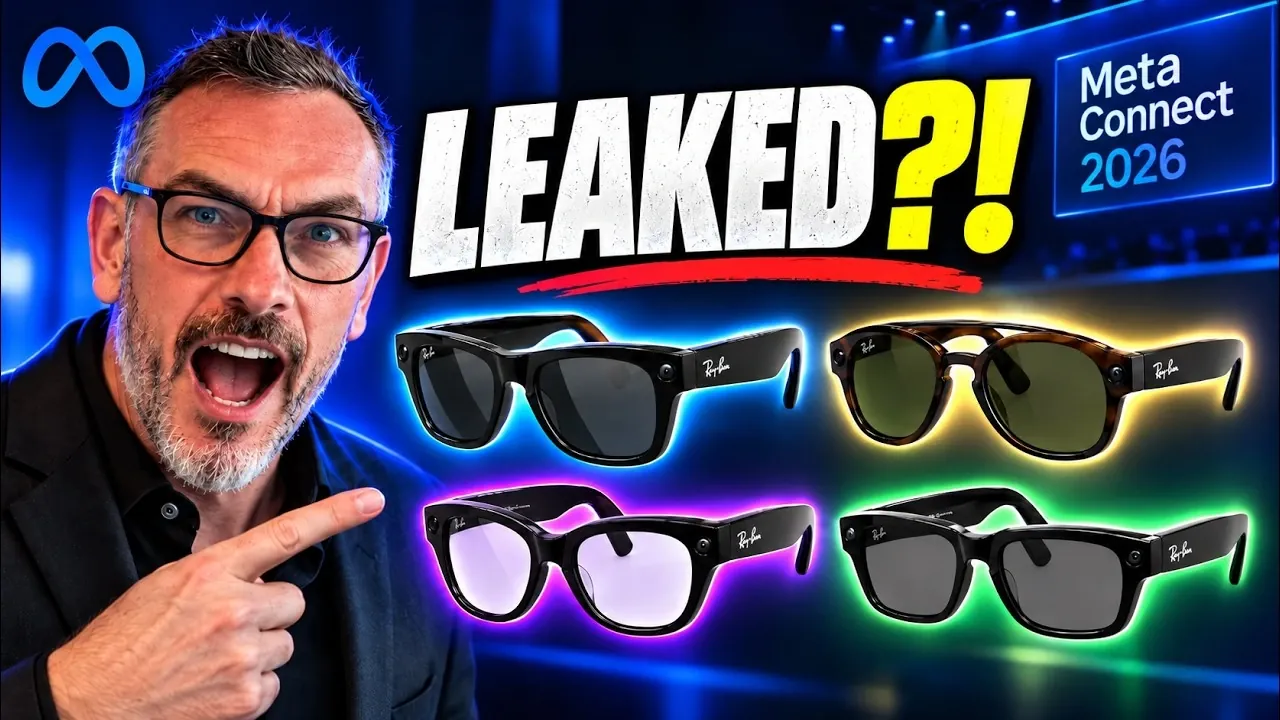
Meta’s upcoming smart glasses lineup has been revealed through recent leaks, showcasing four distinct models that cater to diverse user needs. Among these is the RW7004, a camera-free design that emphasizes privacy while still offering advanced audio and AI capabilities. The Smart Glasses Guy highlights how these glasses, developed in collaboration with Ray-Ban, combine style with functionality, featuring popular frame styles like Wayfarer and aviator. Additionally, electronically adjustable lenses powered by electrochromic technology promise improved usability by allowing users to control tint levels based on lighting conditions.
Explore how Meta’s expanded lineup addresses privacy concerns, integrates AI through the “Muse” virtual assistant and introduces lightweight mixed reality with the Project Phoenix headset. Gain insight into features such as tamper-proof hardware, controller-free operation and depth sensing, all designed to enhance both security and user experience. This revelation offers a detailed look at Meta’s vision for wearable technology, providing a glimpse into what might be unveiled at Meta Connect 2026.
Ray-Ban Collaboration: Style Meets Smart Features
TL;DR Key Takeaways :
- Meta is developing four new smart glass models, including stylish Ray-Ban designs and a camera-free option, addressing both functionality and privacy concerns.
- Electronically adjustable lenses using electrochromic technology allow users to control tint levels, enhancing usability in varying lighting conditions.
- Project Phoenix, a lightweight mixed reality headset, features advanced technologies like pass-through cameras, pancake lenses and controller-free operation, redefining immersive experiences.
- AI integration, led by the “Muse” virtual assistant, offers context-aware assistance for tasks like scheduling and travel, though it raises privacy concerns about data management.
- Meta emphasizes privacy with features like tamper-proof hardware and camera-free glasses, aiming to balance innovation with accountability and consumer trust.
Meta’s collaboration with Ray-Ban continues to evolve, with three new styles, Wayfarer, cat-eye and aviator, emerging in Federal Communications Commission (FCC) filings. These designs aim to seamlessly blend fashion with innovative technology, appealing to users who value aesthetics as much as functionality.
A particularly notable addition is the RW7004 model, which stands out for its lack of a camera. This camera-free option is likely to attract users who prioritize audio and AI capabilities but remain cautious about privacy risks associated with video recording. By diversifying its offerings, Meta is positioning itself to cater to a broader audience, balancing technological innovation with consumer concerns.
Electronically Adjustable Lenses: Practical Innovation
Among the most intriguing leaked features are electronically adjustable lenses, which allow users to manually control tint levels, toggling between clear, medium and dark settings. Powered by electrochromic technology, this feature promises faster and more precise adjustments compared to traditional transition lenses.
This innovation could significantly enhance usability in varying lighting conditions, making the glasses more practical for everyday wear. If confirmed, electronically adjustable lenses would represent a substantial advancement in wearable optics, combining convenience with advanced technology to improve the user experience.

Find more information on Meta smart glasses by browsing our extensive range of articles, guides and tutorials.
- Meta Adventurer Smart Glasses Unboxing and Hands-on First Look
- Why Meta Left Ray-Ban Behind for Its New $299 Meta Smart Glasses
- How Meta’s Ray-Ban Display Redefines Augmented Reality Wearables
- 11 Top Camera Glasses Ranked by Price and AI Features
- Meta Display AI Smart Glasses : Designed to Replace Your Smartphone
- How the Carina C2 Solves Meta Ray-Ban’s Biggest Flaw
- Meta Ray-Ban Glasses 6 Months Later: What Changed and What Still Fails
- Meta Ray-Ban Display Dual-Screen Smart Glasses Set to Launch in 2026
- Rokid AI Glasses Undercut Meta Ray-Bans with a $299 Price
- Rokid Air Glasses Style 10-Minute Video Beats Ray-Ban Meta Gen 2
Project Phoenix: Redefining Mixed Reality
Another highlight from the leaks is Meta’s Project Phoenix headset, a lightweight mixed reality device weighing just 110 grams. This ultra-light design is made possible by relocating the computing hardware and battery to an external “puck,” thereby reducing the weight on the user’s head and enhancing comfort during extended use.
Key features of Project Phoenix include:
- Pass-through cameras for seamlessly blending virtual and physical environments.
- Pancake lenses for sharper, more compact optics.
- Depth sensing for improved spatial awareness and interaction.
- Controller-free operation enabled by advanced eye and hand tracking technologies.
Expected to launch in 2026 or 2027, Project Phoenix could set a new benchmark for immersive wearable devices, offering users a glimpse into the future of mixed reality.
AI Integration: Smarter, Context-Aware Assistance
Central to Meta’s smart glasses ecosystem is AI integration, led by the introduction of “Muse,” a virtual assistant designed to simplify daily life. Muse can perform tasks such as sending emails, booking travel and managing schedules, providing a hands-free solution for busy users.
What makes Muse particularly compelling is its context-aware AI, which personalizes interactions based on user preferences. For instance, it can automatically make restaurant reservations or add events to your calendar. Experimental “super sensing” technology further enhances this capability by collecting and recalling contextual data from your activities. However, this raises critical questions about data privacy and how such sensitive information will be managed responsibly.
Privacy Features: Addressing Consumer Concerns
As wearable technology becomes increasingly integrated into daily life, privacy concerns remain a significant issue. Meta is taking proactive steps to address these challenges by offering camera-free glasses and incorporating tamper-proof hardware. For example, cameras on tampered devices are automatically disabled, reducing the risk of misuse.
These measures aim to reassure users concerned about covert recording and unauthorized data collection. However, the broader debate persists: should privacy safeguards rely primarily on hardware design, or does responsibility ultimately rest with users? By providing privacy-focused options, Meta seeks to strike a balance between technological progress and accountability.
Meta’s Vision: Building a Wearable Tech Ecosystem
Meta’s strategy for smart glasses reflects a broader ambition to create a cohesive wearable computing ecosystem. By expanding its product lineup to include stylish Ray-Ban models, camera-free options and advanced AI features, the company is catering to a diverse range of user needs.
The development of lightweight, immersive devices like the Project Phoenix headset further underscores Meta’s vision of seamlessly integrating technology into everyday life. This ecosystem is designed to enhance productivity, connectivity, and convenience, positioning Meta as a leader in the wearable tech industry.
What to Expect at Meta Connect 2026
Meta Connect 2026 is expected to showcase these new developments, including new Ray-Ban styles, camera-free glasses and advancements in AI capabilities. A preview of Project Phoenix and electronically adjustable lenses could also be on the agenda, offering a closer look at the future of wearable computing.
However, the rollout of “super sensing” technology may face delays due to unresolved privacy concerns. As Meta continues to push the boundaries of innovation, its ability to balance technological advancement with ethical considerations will be closely monitored by consumers and industry experts alike.
Media Credit: The Smart Glasses Guy
Disclosure: Some of our articles include affiliate links. If you buy something through one of these links, Geeky Gadgets may earn an affiliate commission. Learn about our Disclosure Policy.
