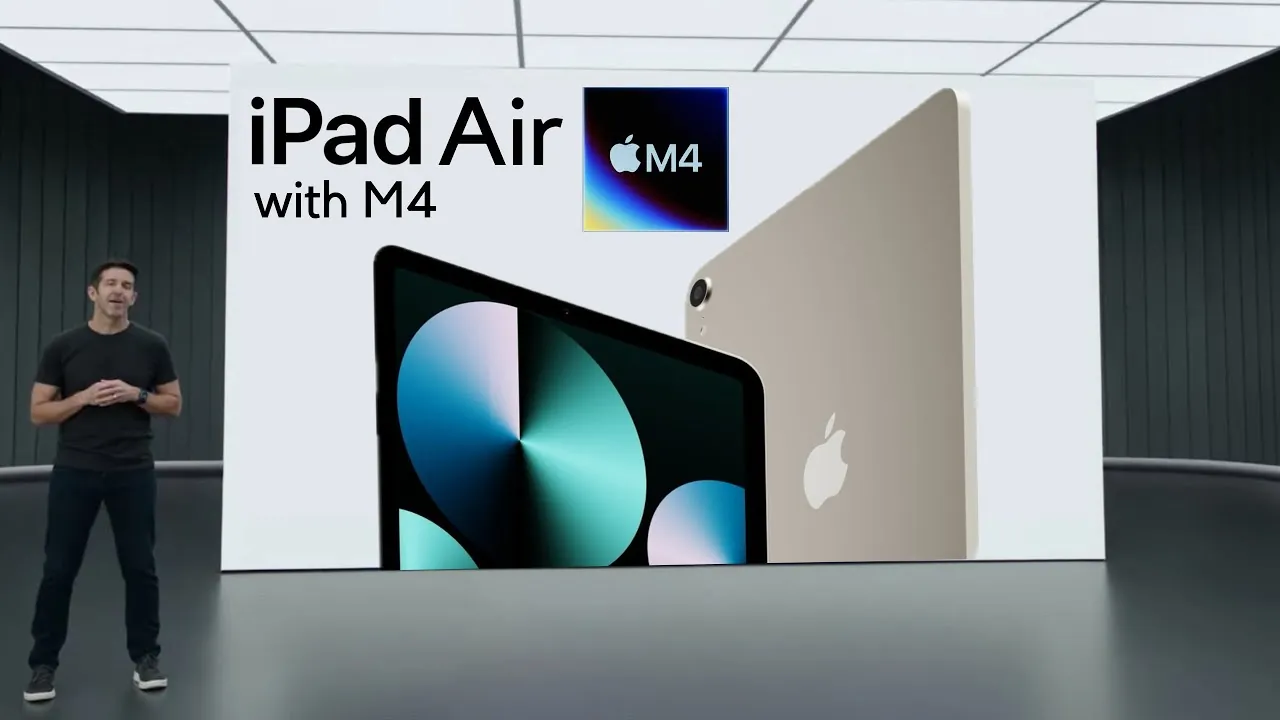
The M4 iPad Air is emerging as a compelling mid-range tablet for 2026. It is expected to offer a blend of performance enhancements and connectivity upgrades while retaining its familiar design. With a focus on incremental improvements, it appeals to users seeking a dependable and efficient device for everyday use. However, the absence of OLED technology until 2027 may influence whether you choose to upgrade when it launches next year or wait for future iterations.

Performance Boost: M4 Chipset and Battery Efficiency
At the heart of the M4 iPad Air is the M4 chipset, a significant upgrade that delivers improved performance across various tasks. This processor is engineered for efficiency, supporting advanced features such as ray tracing, which enhances graphics for gaming and creative applications. The inclusion of faster memory bandwidth ensures smoother multitasking and quicker app performance, making the device more responsive and capable of handling demanding workflows.
Despite these performance gains, the battery life remains consistent at approximately 10 hours, ensuring reliable all-day usage. This balance between power and efficiency makes the M4 iPad Air a practical choice for both casual users and professionals who require a dependable device for extended periods.
Enhanced Connectivity: 5G, Wi-Fi 7, and Bluetooth 6
The M4 iPad Air introduces significant advancements in connectivity, making it a versatile tool for modern users. Equipped with the C1X modem, the device offers 50% faster 5G speeds compared to its predecessor, allowing quicker downloads, seamless streaming, and improved online gaming experiences.
Support for Wi-Fi 7 ensures faster and more stable wireless connections, even in crowded environments where network congestion is common. Additionally, Bluetooth 6 enhances short-range communication, offering improved reliability and efficiency for connecting peripherals like keyboards, headphones, and other accessories. The inclusion of Thread support further strengthens its role as a hub for smart home devices, allowing for smoother integration into connected ecosystems.
Display and Design: LCD for Now, OLED on the Horizon
The M4 iPad Air retains its LCD display, which continues to deliver vibrant visuals and dependable performance. While LCD technology remains reliable, Apple’s roadmap includes the introduction of OLED displays to the iPad Air lineup in 2027, starting with the M5 model. This transition promises improved contrast, deeper blacks, and enhanced energy efficiency, elevating the visual experience for future users.
Interestingly, the iPad Mini is set to adopt OLED technology earlier, in 2026, serving as a testing ground for this advanced display. For now, the M4 iPad Air maintains its flat-edge design, which has become a hallmark of Apple’s tablet lineup. To refresh its aesthetic appeal, the M4 Air may introduce new color options, offering users more variety in personalizing their devices.
Pricing and Market Position
The M4 iPad Air is expected to maintain a price range similar to the current M3 models, making it an attractive option for those seeking a mid-range tablet with modern features. This pricing strategy positions the M4 Air as a cost-effective choice, particularly for users who prioritize performance and connectivity over innovative display technology.
As Apple gradually rolls out OLED technology, the introduction of these premium displays is likely to result in higher price points for future models. For budget-conscious buyers, this presents an opportunity to invest in the M4 Air now or take advantage of potential discounts on existing LCD models as newer devices enter the market.
Apple’s OLED Rollout Strategy
Apple is adopting a phased approach to OLED implementation, starting with the iPad Pro, followed by the iPad Mini, and eventually the iPad Air. This gradual rollout allows Apple to refine its OLED production processes while making sure a smooth transition for users. By introducing OLED technology incrementally, Apple balances innovation with reliability, giving each product line the opportunity to evolve without compromising quality.
This strategy reflects Apple’s commitment to maintaining a high standard of user experience while embracing new technologies. By the time OLED reaches the iPad Air lineup, users can expect a well-optimized display that meets Apple’s stringent quality benchmarks.
A Balanced Choice with Future Potential
The M4 iPad Air delivers meaningful upgrades in performance and connectivity, making it a reliable and versatile mid-range tablet. Its M4 chipset ensures smooth multitasking and enhanced graphics, while the improved 5G, Wi-Fi 7, and Bluetooth 6 connectivity features position it as a capable device for both work and leisure.
While the absence of OLED technology may deter some users, the M4 Air remains a strong contender for those who value efficiency and dependability over innovative features. For users prioritizing advanced display technology, waiting for the 2027 OLED models may be worth considering, though at a higher cost. Ultimately, the M4 iPad Air strikes a balance between innovation and consistency, appealing to a broad audience seeking a reliable, feature-rich tablet at a reasonable price point.
Here are more detailed guides and articles that you may find helpful on M4 Chipset.
- 2025 iPad Air: New Leaked Details Surface
- Apple’s M4 MacBook Air: Specs, Pricing, and Launch Insights
- M4 MacBook Air Leaks: You Won’t Believe This!
- Apple’s $749 M4 MacBook Air Is A Bargain
- Apple M4 Macs: Full Details on All Models
Source & Image Credit: SaranByte
Disclosure: Some of our articles include affiliate links. If you buy something through one of these links, Geeky Gadgets may earn an affiliate commission. Learn about our Disclosure Policy.
