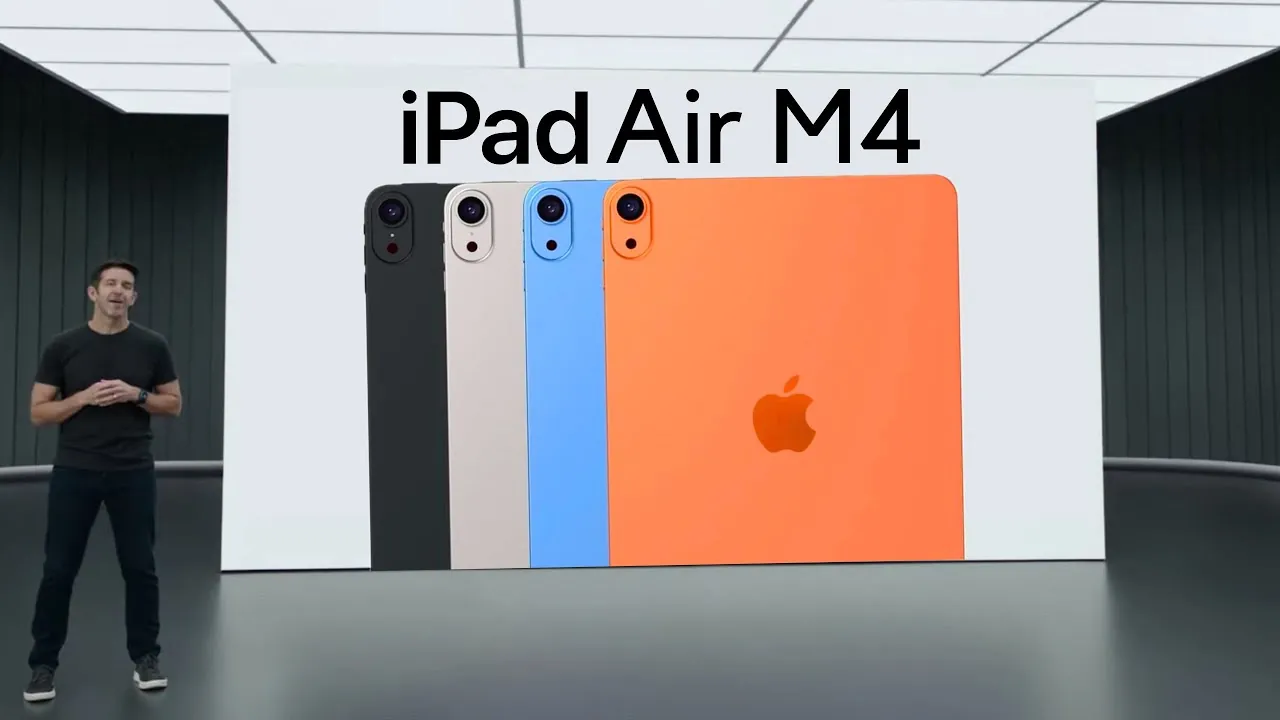
The 2025 iPad Air is poised to deliver notable enhancements to Apple’s mid-range tablet lineup, focusing on performance, usability, and maintaining its established design. Central to this update is the inclusion of the M4 chipset, a significant leap in processing power that aligns the iPad Air closer to the iPad Pro in terms of performance. Additional refinements, such as potential Magic Keyboard improvements and enhanced connectivity, aim to keep the device competitive in a rapidly evolving market. However, major design overhauls or the adoption of OLED displays are not expected until future iterations. The video below from SaranByte gives us more details about the leaked iPad Air.

M4 Chipset: A Performance Boost
At the core of the 2025 iPad Air lies Apple’s M4 chipset, a deliberate upgrade that bypasses the M3 entirely. This strategic move positions the iPad Air as a more powerful device, narrowing the gap between it and the iPad Pro. The M4 chip, already featured in other Apple products, delivers improved energy efficiency and enhanced processing capabilities.
For users, this translates to faster app performance, smoother multitasking, and better battery life. Whether you’re editing videos, running resource-intensive applications, or simply browsing the web, the M4 ensures a seamless and responsive experience. This upgrade is particularly beneficial for professionals and students who rely on their devices for demanding tasks.
Despite sharing the same chipset, the iPad Pro retains its premium edge with features like OLED displays and advanced design elements. Additionally, the adoption of the M4 chip streamlines Apple’s supply chain, potentially reducing production costs for older iPad models, which could benefit consumers indirectly.
Design: Familiar but Functional
The 2025 iPad Air retains the same design language introduced in 2020, offering no changes to its chassis, bezels, or overall form factor. While this consistency ensures a familiar user experience, it also means that slimmer or lighter design improvements are absent in this iteration.
The display remains an LCD panel, continuing to provide reliable performance but lacking the vibrant colors and deep contrast offered by OLED technology. OLED displays are expected to remain exclusive to higher-end devices like the iPad Pro until at least 2026 or 2027. For most users, the LCD display will suffice for everyday tasks, though it may fall short for those seeking superior visual quality for creative work or media consumption.
This design choice reflects Apple’s strategy of maintaining a clear distinction between the iPad Air and its Pro counterpart, making sure that each product line caters to specific user needs without overlapping excessively.
Magic Keyboard: Subtle Yet Useful Enhancements
The Magic Keyboard is set to receive updates that enhance productivity and usability. Leaks suggest that the new models, codenamed R307 and R308, will feature a thinner profile, a larger glass trackpad, and the addition of a dedicated function row. These refinements aim to make typing and navigation more intuitive, particularly for users who rely on their iPads for work or study.
Backward compatibility with older iPad models is likely, making sure that users upgrading to the 2025 iPad Air can continue using their existing accessories. However, premium features such as aluminum palm rests are expected to remain exclusive to the iPad Pro’s Magic Keyboard, reinforcing the distinction between the two product lines.
These enhancements, while subtle, contribute to a more seamless and efficient user experience, particularly for those who use their iPad Air as a laptop replacement.
Connectivity and Storage: Incremental Improvements
Connectivity upgrades are another area of focus for the 2025 iPad Air. Faster USB-C ports may be introduced, though they are unlikely to match the Thunderbolt speeds found in the iPad Pro. This improvement will benefit users who frequently transfer large files or connect external devices, though the difference may not be immediately noticeable for casual users.
The potential inclusion of Wi-Fi 7 compatibility is another noteworthy update. This feature promises faster and more reliable wireless connections, though its immediate impact may be limited due to the current lack of widespread Wi-Fi 7 network adoption. Over time, as the technology becomes more prevalent, this upgrade will prove increasingly valuable.
Storage options are expected to remain unchanged, with the base model starting at 128GB. This capacity should meet the needs of most users, though those requiring additional space for apps, files, or media can opt for higher-capacity configurations. By maintaining these storage tiers, Apple ensures that the iPad Air remains accessible to a broad audience.
Pricing and Release Expectations
Apple is expected to maintain its current pricing structure for the iPad Air, with the base model likely starting at $599 and the higher-tier configuration priced at $799. This pricing strategy ensures that the iPad Air continues to offer a compelling balance between performance and affordability, appealing to a wide range of users.
The 2025 iPad Air is anticipated to launch during Apple’s Spring event or through a press release, consistent with the company’s typical release schedule. This timeline provides potential buyers with ample time to evaluate whether the new features align with their needs and expectations.
Future Outlook: What’s Next?
While the 2025 iPad Air introduces meaningful updates, the most significant changes are reserved for future models. A major redesign and the adoption of OLED displays are expected in iterations slated for 2026 or 2027. These advancements will further narrow the gap between the iPad Air and iPad Pro, offering users more options tailored to their preferences.
For now, the inclusion of the M4 chipset ensures that the 2025 iPad Air remains a powerful and versatile device. Whether you’re a student, professional, or casual user, this update provides a solid foundation for productivity and entertainment, keeping the iPad Air competitive in an increasingly dynamic market.
Gain further expertise in M4 Chipset by checking out these recommendations.
- Apple M4 Macs: Full Details on All Models
- Apple M4 Mac Mini Exposed: Specs, Pricing, and Launch Timeline
- Apple’s M4 MacBook Air: Specs, Pricing, and Launch Insights
- M4 MacBook Air Leaks: You Won’t Believe This!
- Surprise! M4 MacBook Air Leaks Are Here
Source & Image Credit: SaranByte
Disclosure: Some of our articles include affiliate links. If you buy something through one of these links, Geeky Gadgets may earn an affiliate commission. Learn about our Disclosure Policy.
