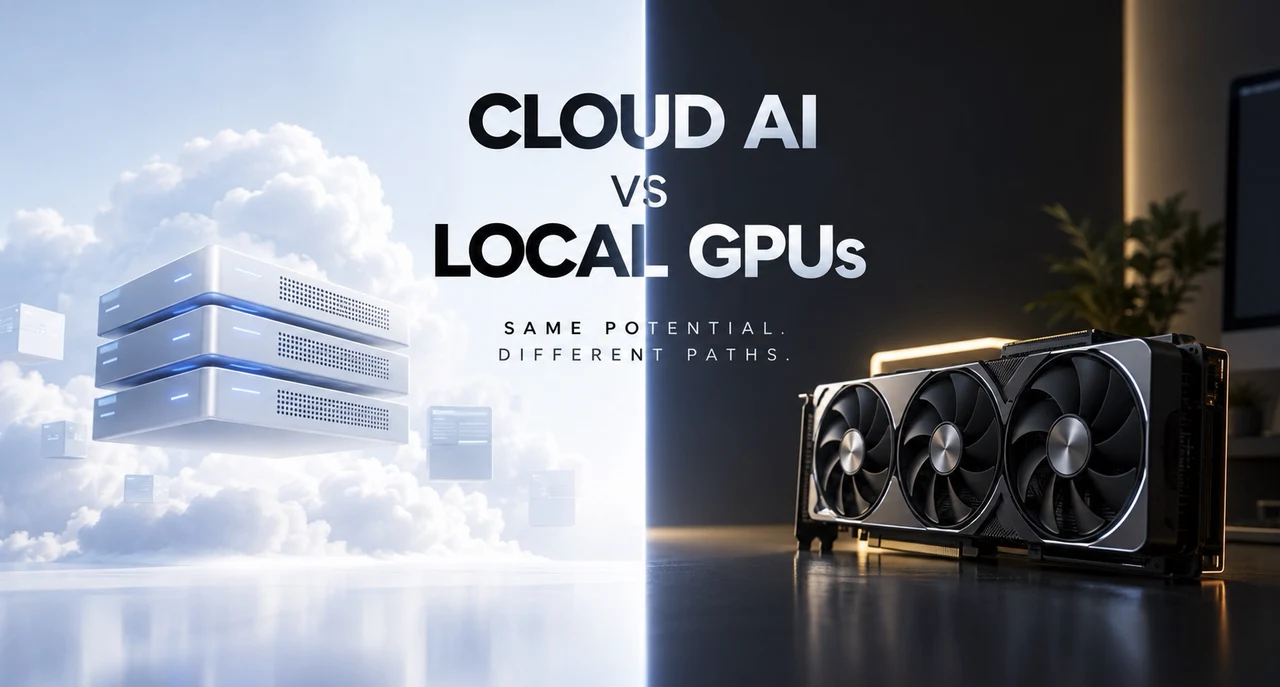
Investing in local AI hardware can seem like a straightforward solution for handling demanding AI workloads, but the decision is far more complex than it appears. As Kai explains, factors like depreciation, scalability and hidden costs often tip the scales against local hardware for many users. For instance, specialized devices like the Nvidia DGX Spark may offer impressive performance initially, but their rapid loss of value and limited adaptability can make them a risky choice. By contrast, commodity GPUs, such as the RTX 3090, not only provide better performance per dollar but also retain higher resale value, making them a more practical option for those seeking flexibility and long-term utility.
Explore how hosted AI services compare to local hardware in terms of cost efficiency, scalability and performance reliability. You’ll gain insight into why memory bandwidth often outweighs capacity for AI workloads and how cloud-based solutions eliminate maintenance and infrastructure expenses. Additionally, the overview highlights scenarios where local hardware remains essential, such as for strict data residency or privacy requirements. Whether you’re optimizing for budget, performance, or control, this breakdown offers actionable guidance to help you make an informed choice tailored to your needs.
Evaluating the Costs and Depreciation of Local AI Hardware
TL;DR Key Takeaways :
- Local AI hardware involves high upfront costs and risks of depreciation, with standard GPUs offering better resale value and flexibility compared to specialized appliances.
- Memory bandwidth is more critical than capacity for AI workloads, with high-memory GPUs providing better performance and retaining value over time.
- Hosted AI services are cost-effective and scalable, eliminating maintenance and infrastructure expenses while offering flexibility for intermittent or short-term needs.
- Local hardware is ideal for scenarios requiring strict data residency, privacy, or control, such as in sensitive industries or proprietary research.
- Choosing between local hardware and hosted services depends on specific needs, budget and long-term goals, with hosted services generally being more economical for most users.
Investing in local AI hardware often involves a substantial upfront expense. High-performance appliances, such as the Nvidia DGX Spark or Mac Studio, are designed for demanding AI workloads but come with significant financial risks due to rapid depreciation. For example:
- Specialized appliances with soldered memory lose value faster than commodity GPUs, which are more versatile and retain higher resale value.
- Commodity GPUs, such as the RTX 3090, deliver better performance per dollar, making them a more practical choice for many users.
To mitigate depreciation risks, opting for standard GPUs over specialized hardware is often a smarter investment. These GPUs not only offer better resale potential but also provide greater flexibility for a variety of AI tasks.
The Importance of Memory Bandwidth Over Capacity
In AI workloads, memory bandwidth—the speed at which data is processed, is often more critical than memory capacity. Commodity GPUs generally outperform soldered-memory appliances in terms of bandwidth per dollar, making them more efficient for tasks like training large language models or running inference. Key considerations include:
- High-memory GPUs (16 GB or more) are in high demand and often appreciate in value due to their ability to handle larger datasets and models.
- Lower-memory GPUs tend to depreciate quickly, offering less value over time.
Selecting hardware with strong memory bandwidth ensures better performance for computationally intensive AI tasks, making it a crucial factor in your decision-making process.

Take a look at other insightful guides from our broad collection that might capture your interest in local AI.
- Ollama Runs 32B Local AI Models on a $599 Mac via Quantization for Free
- How DeepSeek Fits a 284B Parameter AI Model on a Single Laptop
- Awesome DIY Raspberry Pi 5 Offline AI Companion Inspired by BMO from Adventure Time
- Beelink GTR9 Pro : The AMD Ryzen AI Max Plus 395 Mini PC Outperforming the Big Guys
- $40K Apple Mac Studio RDMA Setup: 1 TFLOP per Node, 3.7 TFLOPS Across Four
- New AMD’s $1,500 Strix Halo PC Runs 120B AI Models Locally
- New DeepSeek Harness Runs AI Workflows on Local Systems
- Apple Silicon AI Performance: Local Al on Apple Silicon Uses 7X Less RAM
- 128GB Ryzen AI Halo Replaces Cloud Servers for Local AI
- Why NVIDIA’s New 748GB Desktop is Replacing Enterprise Cloud AI Subscriptions
Adapting to Market Trends and Hardware Flexibility
The AI hardware market is evolving rapidly and staying ahead of trends is essential to avoid financial losses. High-memory GPUs are becoming increasingly valuable as AI models grow larger and more complex. In contrast, appliances with soldered memory lack the flexibility to adapt to changing demands, which can lead to significant depreciation. To minimize risks:
- Focus on standard GPUs with strong resale value and adaptability for various workloads.
- Avoid hardware that cannot scale with evolving AI requirements, as this limits its long-term utility.
By understanding these market dynamics, you can make smarter investment decisions that align with both current and future AI needs.
Hosted AI Services: A Cost-Effective and Scalable Alternative
The declining cost of hosted AI services has made them an attractive alternative to purchasing local hardware. Cloud-based solutions offer significant advantages, particularly for users with intermittent or short-term needs. Key benefits of hosted services include:
- Lower upfront costs compared to high-end GPUs, reducing the financial barrier to entry.
- Scalability to match your workload requirements, making sure you only pay for the resources you use.
- Elimination of maintenance, energy and infrastructure expenses, such as cooling systems or electrical upgrades.
For many users, hosted AI services provide a more economical and efficient way to access innovative AI capabilities without the long-term financial commitment of local hardware.
Performance and Reliability: Local Hardware vs Hosted Services
Local AI hardware often struggles with performance limitations, particularly when running large AI models. Tasks such as real-time decision-making or coding agents require high prefill speeds, which local devices may not consistently deliver. Hosted services, by contrast, offer:
- Faster and more reliable performance, making sure smoother workflows for demanding applications.
- Reduced latency, which is critical for real-time processing and decision-making.
If speed, reliability and scalability are priorities, cloud-based solutions are often the superior choice, especially for enterprise-level workloads.
Hidden Costs of Maintaining Local AI Hardware
Beyond the initial purchase price, local AI hardware comes with ongoing expenses that can significantly impact your budget. These hidden costs include:
- Idle power consumption and cooling requirements, which increase energy bills over time.
- Maintenance costs for hardware upkeep, including repairs and replacements.
- Infrastructure upgrades, such as enhanced cooling systems or electrical breakers, to support high-performance GPUs.
By contrast, hosted AI services eliminate these overheads, offering a streamlined and cost-effective alternative for accessing AI capabilities.
When Local Hardware is the Right Choice
Despite the advantages of hosted AI services, there are scenarios where local hardware is essential. These include:
- Applications requiring strict data residency or security, such as in military, healthcare, or financial sectors.
- Use cases where privacy and control outweigh cost considerations, such as proprietary research or sensitive data processing.
- Budget-friendly options for learners or hobbyists, such as the RTX 3060, which provide an accessible entry point for exploring AI on a smaller scale.
In such cases, the added control, privacy and independence of local hardware can justify the investment, particularly for organizations or individuals with specific requirements.
Making the Right Decision for Your AI Needs
Before committing to an AI infrastructure, it’s crucial to evaluate your specific needs, budget and long-term goals. For most users, hosted AI services offer a more cost-effective and scalable solution, particularly as token pricing continues to decline. However, if your use case demands strict data control, privacy, or long-term independence, investing in standard, high-memory GPUs with strong resale value may be the better option. By carefully analyzing your requirements and weighing the costs and benefits of each approach, you can make a decision that aligns with your objectives and ensures optimal performance for your AI workloads.
Media Credit: Kai
Disclosure: Some of our articles include affiliate links. If you buy something through one of these links, Geeky Gadgets may earn an affiliate commission. Learn about our Disclosure Policy.
