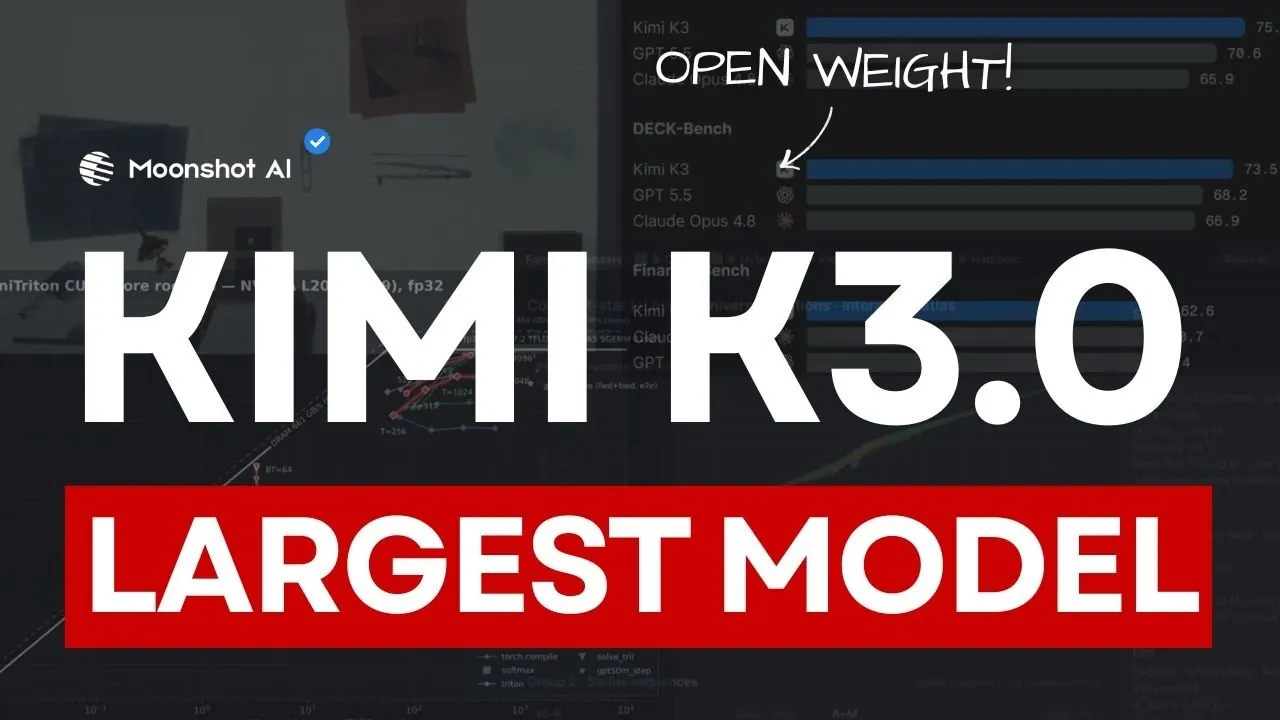
Kimi K3, the latest release from Moonshot AI, has officially launched as the largest open source AI model to date, boasting an impressive 2.88 trillion parameters. Built on a mixture of experts (MoE) architecture, Kimi K3 is designed to dynamically allocate computational resources, achieving 2.5 times the intelligence per compute unit compared to earlier systems. Universe of AI explores how this model’s standout features, including a 1-million-token context window and native multimodal capabilities, position it as a versatile option for tasks ranging from natural language processing to advanced visual analysis. The release also emphasizes accessibility, with licensing terms carefully crafted to balance inclusivity and responsible use.
Dive into this breakdown to uncover how Kimi K3’s architecture enables it to excel in processing large-scale, intricate inputs and multimodal reasoning. You’ll also gain insight into the open source resources provided by Moonshot AI, such as high-performance attention kernels and sandbox environments for safe experimentation. Additionally, the guide highlights Kimi K3’s performance benchmarks, which rival proprietary models like GPT 5.6 Soulmax and discusses its implications for the future of open AI innovation.
What Makes Kimi K3 Stand Out?
TL;DR Key Takeaways :
- Kimi K3, the first open source AI model in the 3-trillion-parameter class, features a mixture of experts (MoE) architecture with 2.88 trillion parameters, offering 2.5 times the intelligence per compute unit compared to earlier systems.
- Key features include a 1-million-token context window, native multimodal capabilities for text and visual data integration and optimized efficiency for tasks like natural language processing and advanced visual analysis.
- Moonshot AI provides open source tools such as high-performance attention kernels, communication libraries and sandbox environments to empower developers and researchers for customization and experimentation.
- The licensing framework balances accessibility and responsibility, offering free access for individuals and small organizations while requiring commercial licenses for larger entities, making sure ethical deployment and sustainability.
- Kimi K3 rivals top proprietary models like GPT 5.6 and Fable 5 Max in performance benchmarks, excelling in tasks requiring large context windows and multimodal reasoning, setting a new standard for open source AI innovation.
Kimi K3 is built on a mixture of experts (MoE) architecture, boasting an impressive 2.88 trillion parameters. This design enables the model to allocate computational resources dynamically, achieving 2.5 times the intelligence per compute unit compared to earlier systems. Its standout features include:
- A 1-million-token context window, allowing the model to process vast and intricate inputs with ease.
- Native multimodal capabilities, seamlessly integrating text and visual data for enhanced versatility.
- Optimized efficiency, making it suitable for tasks ranging from natural language processing to advanced visual analysis.
These innovations position Kimi K3 as a highly adaptable and powerful tool, capable of addressing complex challenges across diverse fields.
Open source Tools for Developers
Moonshot AI has complemented the release of Kimi K3 with a robust suite of open source tools designed to empower developers and researchers. These resources include:
- High-performance attention kernels and communication libraries to streamline training and inference workflows.
- Sandbox environments for safe experimentation and fine-tuning, allowing users to customize the model for specific applications.
By providing these tools, Moonshot AI underscores its commitment to fostering a collaborative ecosystem, encouraging innovation and allowing the global AI community to push boundaries.

Advance your skills in Kimi K3 by reading more of our detailed content.
- Leaked Kimi K3 Reportedly Beats GPT 5.6 Sol in Early Tests
- Kimi K3 a 2.8 Trillion Parameter Open Source ChatGPT 5.6 and Fable 5 Rival
- New Moonshot Kimi K3 AI Challenges Fable 5 and ChatGPT 5.6
- Combine Kimi K3 with Claude Code for Cheaper Coding
- Kimi K3 Open Source AI Rivals GPT 5.6 Sol with 2.8T Parameters
- Critics Say Kimi K3 Struggles with Complex Code Debugging
- Claude Opus 5 is Poised to Challenge GPT-5.6 in Token Efficiency
- Moonshot’s Kimi K3 Needs 64 Cores for Open Source AI
- Streamlined Kimi K3 AI Model Targets Mid-Scale Coding Tasks
- Moonshot’s Kimi K3 Features a 2.8 Trillion Parameter Scale
Licensing: Balancing Accessibility and Responsibility
The licensing framework for Kimi K3 is carefully crafted to balance accessibility with responsible use. Inspired by the MIT license, it incorporates specific conditions to ensure ethical deployment. Key aspects include:
- Free access for individuals and small organizations, promoting inclusivity and widespread access of AI technology.
- Commercial entities with over $20 million in annual revenue or more than 100 million users must obtain a commercial license.
- Attribution to Moonshot AI is mandatory for commercial use, making sure proper recognition of the model’s origins.
This approach ensures that innovative AI remains accessible while encouraging large-scale commercial users to contribute to the model’s ongoing development and sustainability.
Performance Benchmarks: A New Standard
Kimi K3 has undergone rigorous testing against industry benchmarks, delivering results that place it among the most advanced AI models available. Highlights of its performance include:
- Results that rival top proprietary models such as Fable 5 Max and GPT 5.6 Soulmax, demonstrating its competitive edge.
- Exceptional performance in tasks requiring large context windows and multimodal reasoning, showcasing its versatility and advanced capabilities.
These benchmarks highlight Kimi K3’s potential to drive advancements in both research and practical applications, setting a new standard for open source AI.
Open source Innovation: A Growing Trend
The release of Kimi K3 reflects a broader shift in the AI industry toward open source collaboration. This trend is particularly prominent in regions like China, where open access to innovative models and tools is accelerating innovation. By making advanced AI systems available to the global community, initiatives like Kimi K3 are fostering a more competitive and collaborative environment. This approach contrasts with the more closed strategies often adopted by Western labs, emphasizing the importance of transparency and shared progress in driving technological advancements.
Looking Ahead: The Future of AI
The AI landscape is evolving rapidly, with new models on the horizon promising even greater capabilities. Upcoming releases such as GPT-6, Deepseek 4G, and GLM 5.3/5.5 are expected to push the boundaries of AI performance further. Additionally, specialist models like Microsoft’s MAI Cyber 1 Flash are gaining traction, offering tailored solutions for niche applications. These developments signal a future where AI systems are not only more powerful but also increasingly specialized and adaptable, catering to a wide range of industries and use cases.
The Competitive AI Landscape
The global race for AI leadership is intensifying, driven by both established players and emerging innovators. Companies like SpaceX and Meta are introducing novel architectures and applications, raising the bar for performance and utility. This competitive environment offers unprecedented opportunities for developers and researchers to use innovative technologies, contribute to new advancements and shape the next wave of AI breakthroughs.
A Milestone in Open AI
The release of Kimi K3 represents a significant milestone in the evolution of open source AI. With its new architecture, extensive capabilities and accessible tools, it sets a new benchmark for what open AI systems can achieve. As the global AI landscape continues to evolve, models like Kimi K3 will play a crucial role in shaping the future of technology and innovation. Whether you’re a developer, researcher, or industry leader, this is an opportunity to engage with and contribute to the fantastic potential of AI.
Media Credit: Universe of AI
Disclosure: Some of our articles include affiliate links. If you buy something through one of these links, Geeky Gadgets may earn an affiliate commission. Learn about our Disclosure Policy.
