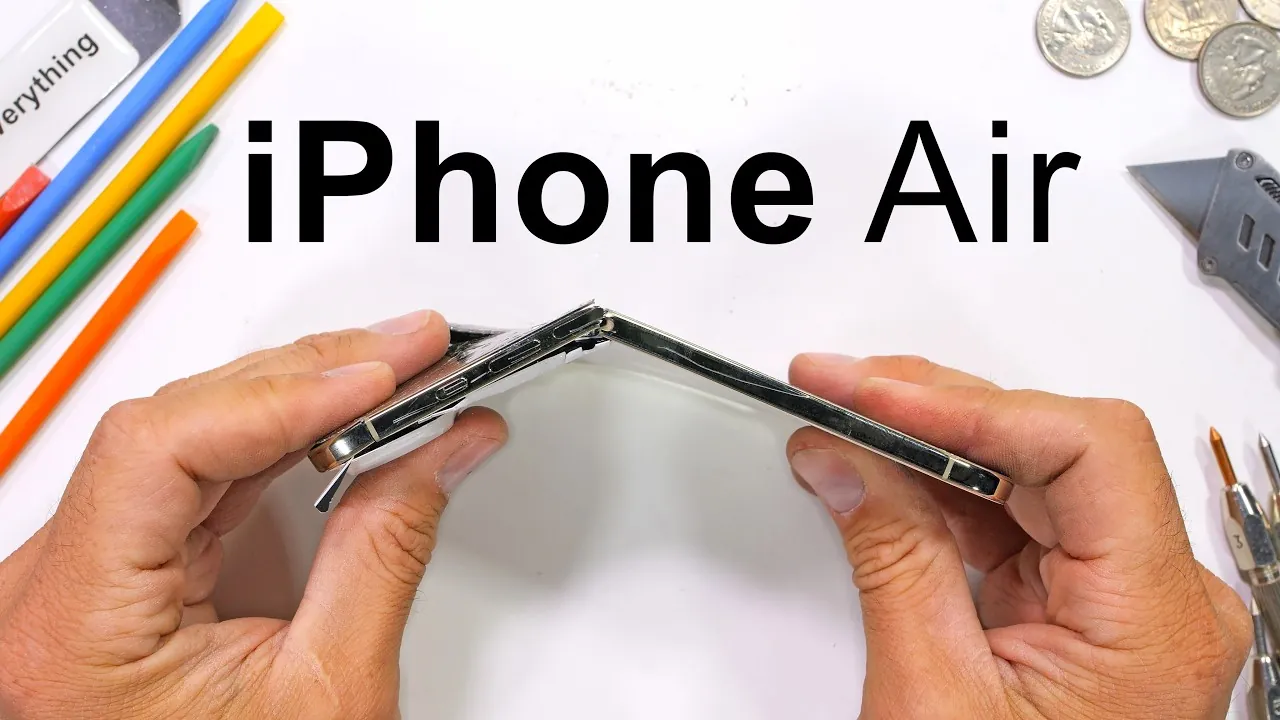
Apple’s iPhone Air, the company’s thinnest smartphone at just 5.6mm, has undergone a rigorous durability test to evaluate its design, build quality, and performance trade-offs. Constructed with grade 5 titanium and featuring the advanced Ceramic Shield 2, the device showcases remarkable resilience. However, its ultra-thin design introduces compromises in areas such as battery life, charging speed, and camera functionality, raising important questions about the balance between innovation and practicality. In the video below from JerryRigEverything, we get to find out just how durable the new iPhone Air is.

Design and Build: Aesthetic Meets Functionality
The iPhone Air’s defining feature is its ultra-thin, lightweight design. Crafted from 80% recycled grade 5 titanium, the device combines sustainability with strength, reflecting Apple’s commitment to eco-friendly practices. Its polished edges are a nod to the original iPhone, while the soft-touch etched glass back adds a premium, tactile feel. A single 48MP rear camera is seamlessly integrated into the design, emphasizing simplicity and elegance over complexity.
While the design is visually striking, the compact form factor introduces certain limitations. The slim profile, though elegant, may not appeal to users who prioritize extended battery life or advanced camera systems. Despite these trade-offs, the design underscores Apple’s dedication to merging aesthetics with sustainability, making it an attractive option for environmentally conscious consumers.
Durability: Built to Withstand
Durability is one of the iPhone Air’s standout qualities. The Ceramic Shield 2, an upgrade from previous iterations, provides enhanced scratch resistance, outperforming many competitors in the market. The titanium frame ensures structural integrity, withstanding up to 216 pounds of pressure before breaking. This robust construction makes the iPhone Air a reliable choice for users who value resilience in their devices.
However, the ultra-thin design introduces minor vulnerabilities. For example, the placement of buttons and other structural elements could slightly compromise the device’s overall strength under specific conditions. While these issues are not significant enough to overshadow its durability, they are worth considering for users who demand maximum robustness from their smartphones.
Performance Trade-offs: The Cost of Thinness
The iPhone Air’s slim design comes with notable performance compromises. Its smaller battery results in shorter usage times compared to Pro models, making it less suitable for heavy users. Charging speeds are also slower, with the device reaching only 50% charge in 30 minutes, which may frustrate those accustomed to faster charging technologies. Additionally, the mono speaker design, while functional, lacks the depth and clarity of stereo sound, which could disappoint audiophiles.
The camera system reflects similar trade-offs. The single 48MP camera, while capable for everyday photography, lacks the versatility of wide-angle or telephoto lens options. This limitation may deter photography enthusiasts who rely on advanced features for creative expression. While the device performs adequately for casual use, these compromises may leave some users longing for the enhanced capabilities of higher-end models.
Additional Observations: Small Details Matter
The iPhone Air includes an anti-reflective coating on its display, but its effectiveness is underwhelming compared to competitors. This could impact visibility in bright environments, a potential drawback for users who frequently use their devices outdoors. Furthermore, while the device’s sleek design is appealing, certain structural choices—such as button placement—may slightly affect its overall durability in specific scenarios.
These minor issues highlight the challenges of balancing design innovation with practical performance. For users seeking a device that excels across all areas, these details may warrant careful consideration. However, for those who prioritize aesthetics and portability, these drawbacks may be seen as acceptable trade-offs.
Environmental Impact: A Step Toward Sustainability
Apple’s commitment to sustainability is evident in the iPhone Air’s construction. The use of 80% recycled grade 5 titanium aligns with the company’s broader environmental goals, setting a benchmark for eco-friendly practices in the tech industry. This focus on sustainability not only reduces waste but also appeals to environmentally conscious consumers who value products with a lower ecological footprint.
By incorporating sustainable materials without compromising on durability, Apple demonstrates how innovation can align with environmental responsibility. For users who prioritize eco-friendly technology, the iPhone Air represents a meaningful step forward in sustainable smartphone design.
Balancing Innovation and Practicality
The iPhone Air exemplifies Apple’s ability to push the boundaries of design and materials. Its ultra-thin profile, durable construction, and sustainable approach make it a visually appealing and environmentally responsible option. However, the performance trade-offs—such as shorter battery life, slower charging, and limited camera functionality—may deter users seeking a more versatile, high-performance device.
Ultimately, the iPhone Air is best suited for those who prioritize design, durability, and sustainability over innovative features. For others, the compromises may outweigh the benefits, positioning the iPhone Air as a niche product that caters to a specific segment of the market. By understanding these trade-offs, potential buyers can make an informed decision about whether the iPhone Air aligns with their needs and preferences.
Check out more relevant guides from our extensive collection on the iPhone Air that you might find useful.
- Is the iPhone 17 Air Worth It? Pros, Cons, and Full Breakdown
- The iPhone 17 Air Is Coming: Here’s What to Expect
- iPhone 17 Air: Features, Specs, and Release Date
- iPhone Air vs iPhone 17 Pro: Key Differences Explained
- iPhone 17 Air: Specs, Features, and Release Date Revealed
Source & Image Credit: JerryRigEverything
Disclosure: Some of our articles include affiliate links. If you buy something through one of these links, Geeky Gadgets may earn an affiliate commission. Learn about our Disclosure Policy.
