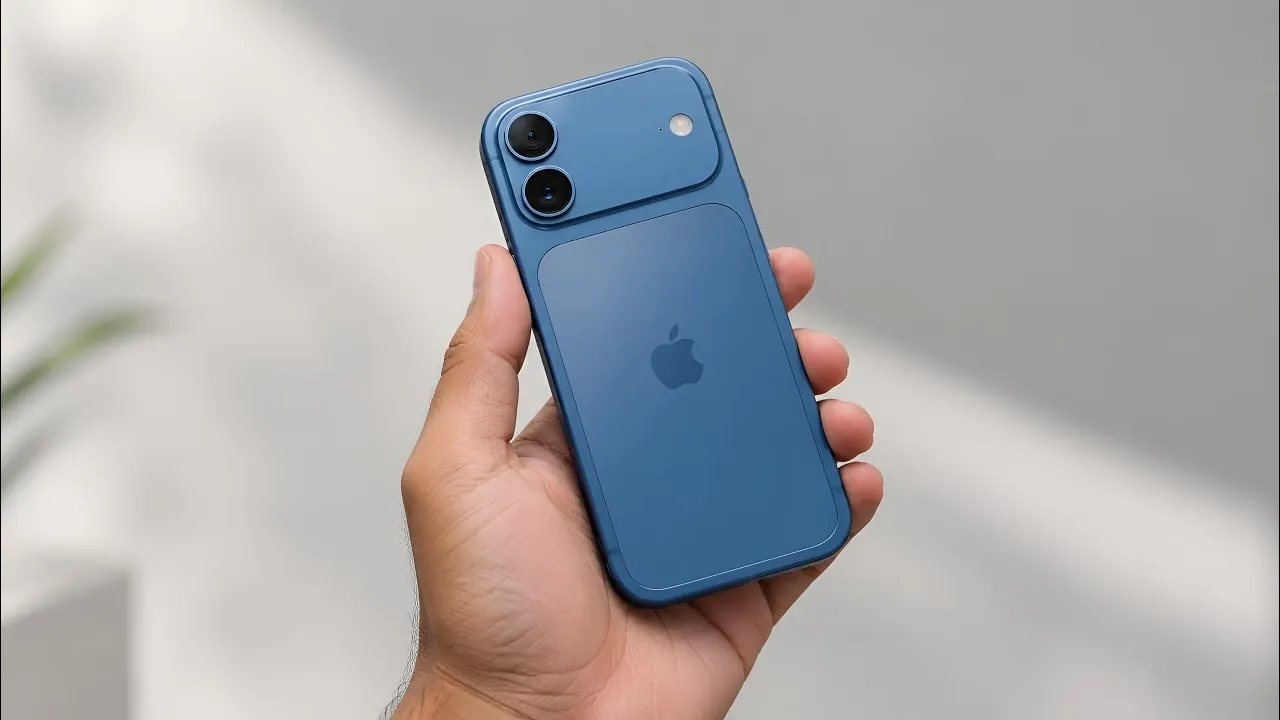
Recent leaks surrounding Apple’s upcoming A20 chip for the iPhone 18 have unveiled significant advancements in design and manufacturing. The A20 and its premium counterpart, the A20 Pro, are built using TSMC’s innovative 2nm N2 process, marking a major leap in semiconductor technology. While the A20 focuses on cost efficiency and balanced performance, the A20 Pro is tailored for users demanding top-tier computing power. These distinctions highlight Apple’s strategy to cater to a wide range of user needs while maintaining optimized production costs.

TSMC’s 2nm N2 Process: A Technological Milestone
Both the A20 and A20 Pro use TSMC’s advanced 2nm N2 manufacturing process, which delivers higher transistor density, improved energy efficiency, and enhanced overall performance. This process represents a significant step forward in chip fabrication, allowing Apple to achieve better performance metrics while reducing power consumption.
The A20 features a smaller die size, estimated at 70-80 mm², compared to the A20 Pro’s larger 98.8 mm². This smaller die size not only reduces production costs but also differentiates the standard A20 from its Pro counterpart. By adopting this approach, Apple aligns with its tiered product strategy, making sure that both casual users and power users find a suitable option within the iPhone 18 lineup.
Thermal Management and Packaging: Key Differences
Thermal management and packaging are critical factors that distinguish the A20 from the A20 Pro. The A20 employs a traditional package-on-package (PoP) memory design, which is cost-effective but less efficient at dissipating heat. This design is sufficient for everyday tasks but may face limitations under sustained heavy workloads.
In contrast, the A20 Pro utilizes Wafer-Level Chip-Scale Packaging (WL-CSP), a more advanced packaging method that significantly enhances thermal management. This allows the A20 Pro to sustain higher clock speeds without overheating, making it ideal for resource-intensive activities such as gaming, video editing and multitasking. The advanced packaging also contributes to the Pro model’s ability to deliver consistent performance under demanding conditions.
Performance: Clock Speeds and GPU Enhancements
The performance differences between the A20 and A20 Pro are substantial, reflecting their distinct target audiences. The A20 Pro is expected to achieve peak clock speeds of up to 4.93 GHz, offering exceptional processing power for high-performance applications. In comparison, the A20 operates at more conservative clock speeds, prioritizing energy efficiency and battery life, which are crucial for everyday users.
Graphics performance also sets the two chips apart. The A20 is likely to feature a 5-core GPU, similar to its predecessor, with moderate clock speeds designed for smooth performance in standard applications. On the other hand, the A20 Pro is rumored to include a 7-core GPU, delivering a significant boost in graphics capabilities. This makes the Pro model particularly appealing to users who prioritize gaming, augmented reality (AR), or other graphics-intensive tasks.
CPU Architecture and Cache Design
Both the A20 and A20 Pro share a similar CPU architecture, featuring two high-performance cores and four efficiency cores. However, the A20 scales back on cache resources to reduce production costs. The A20’s performance cores are expected to include 8 MB of L2 cache, while the efficiency cores will feature 4 MB. In contrast, the A20 Pro offers larger cache sizes, allowing it to handle more demanding workloads with ease.
Despite these reductions, the A20 benefits from an increased system-level cache, potentially rising to 16 MB from the A19’s 12 MB. This improvement is particularly advantageous for AI-driven tasks, where larger caches can enhance processing efficiency and responsiveness. The A20 Pro, with its expanded cache resources, is better equipped for handling complex multitasking scenarios and computationally intensive applications.
AI Capabilities: Neural Engine and Hardware
Artificial intelligence remains a central focus for both the A20 and A20 Pro. Both chips are equipped with a dual 16-core neural engine, paired with a dedicated 4 MB cache. This ensures that even the standard A20 can handle complex AI workloads, such as real-time language translation, advanced photo processing and voice recognition, without compromising performance.
Apple’s decision to maintain parity in AI hardware across both models underscores the growing importance of machine learning in modern smartphones. By standardizing these capabilities, Apple ensures that all iPhone 18 users, regardless of the model they choose, can benefit from innovative AI features.
Memory Interface and Bandwidth
The A20 and A20 Pro are expected to share a 96-bit memory bus, providing sufficient bandwidth for AI and machine learning tasks. This standardized memory interface ensures that even the more affordable A20 can meet the demands of data-intensive applications, delivering a seamless and responsive user experience. By adopting this approach, Apple strikes a balance between performance and cost, making sure that both chips remain competitive in their respective segments.
Balancing Cost and Performance
The A20 chip for the iPhone 18 exemplifies Apple’s ability to balance cost efficiency and performance. By scaling back on GPU cores, cache sizes and clock speeds, Apple has managed to keep production costs in check while retaining essential features like AI hardware and robust memory bandwidth. This makes the A20 an attractive option for everyday users seeking reliable performance without the premium price tag.
Meanwhile, the A20 Pro, with its enhanced GPU, larger cache and advanced packaging, caters to users who demand the highest level of performance. Whether it’s gaming, video editing, or running complex applications, the A20 Pro is designed to deliver a superior experience, making it the ideal choice for power users and enthusiasts.
Innovation Across Tiers
Apple’s A20 and A20 Pro chips highlight the company’s commitment to innovation across multiple product tiers. The A20 offers a compelling mix of performance and efficiency, making it suitable for a wide range of users. At the same time, the A20 Pro pushes the boundaries of high-end computing, delivering unparalleled performance for those who demand the best. Together, these chips ensure that the iPhone 18 lineup meets the diverse needs of its user base, from casual users to power enthusiasts, while maintaining Apple’s reputation for innovative technology.
Explore further guides and articles from our vast library that you may find relevant to your interests in iPhone 18.
- Early iPhone 18 Reports Point to Major Unconfirmed Shifts
- iPhone 18 Pro Max Leaks: 10 Massive Upgrades Coming to Camera, Screen, and Battery
- Early iPhone 18 Pro Max Leak Reveals the Upgrade We’ve Been Waiting For
- Apple’s Spring 2027 Surprise: iPhone 18 and iPhone 18e Detailed
- Just Leaked: 10 Huge Upgrades for the iPhone 18 Pro Max
- Early First Look at the Expected iPhone 18 Pro Design
Source & Image Credit: Demon’s Tech
Disclosure: Some of our articles include affiliate links. If you buy something through one of these links, Geeky Gadgets may earn an affiliate commission. Learn about our Disclosure Policy.
