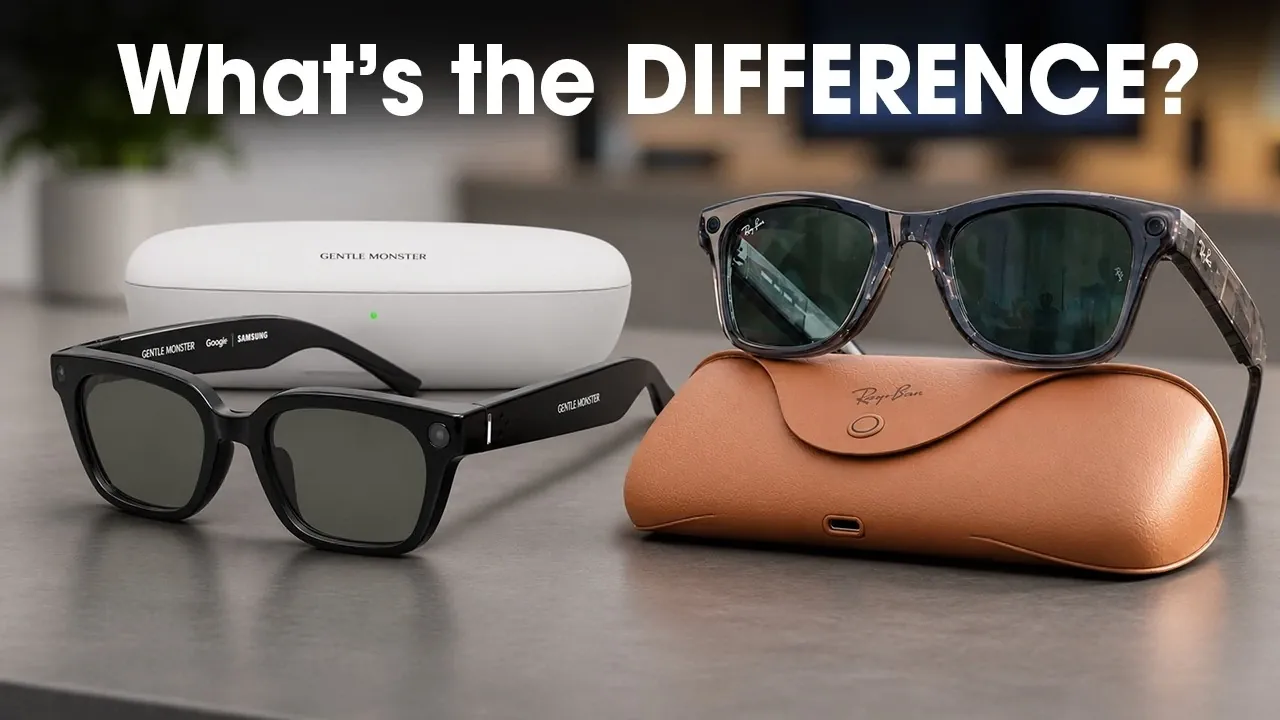
Smart glasses can take photos, play audio and provide hands-free assistance while you go about your day. Intelligent Eyewear uses Google’s Gemini, while Ray-Ban Meta Gen 3 uses Meta AI. The two ranges differ in their connected services, recording options and supported phones, and Intelligent Eyewear’s everyday performance remains to be established, according to TechAvid.
Compare prices and frame choices across Warby Parker, Gentle Monster and Ray-Ban, along with the phone compatibility requirements that could narrow your options. You can also see how the glasses differ in video modes and storage, and weigh their translation services and privacy controls when deciding which pair better suits your routines.
Prices and Availability
TL;DR Key Takeaways :
- Warby Parker Intelligent Eyewear starts at $395, Gentle Monster versions cost $449–$489, and Ray-Ban Meta Gen 3 starts at $449. Intelligent Eyewear is available for pre-order; Ray-Ban Meta Gen 3 is already available.
- Both have 12-megapixel ultrawide cameras and record 3K video at 30 fps. Intelligent Eyewear has autofocus, HDR and 64 GB of storage; Ray-Ban Meta Gen 3 has more video modes and 32 GB.
- Both advertise up to nine hours of use per charge. Intelligent Eyewear claims up to 72 hours with its case, compared with around 59 hours advertised by Meta.
- Intelligent Eyewear uses Google Gemini and supports translation in more than 70 languages; Ray-Ban Meta Gen 3 uses Meta AI and supports 20 languages, six of which can be downloaded for offline use.
- Intelligent Eyewear offers more frame shapes and lighter frames, but has a more restrictive phone compatibility list and is initially limited to the US and South Korea. TechAvid sees no clear winner yet because Intelligent Eyewear’s everyday performance has not been established.
Intelligent Eyewear brings Google’s Gemini assistant to smart glasses designed by Gentle Monster and Warby Parker. The glasses are available for pre-order, while Ray-Ban Meta Gen 3, which uses Meta AI, is already available. Both offer cameras, open-ear audio and hands-free assistance, but differ in recording options, connected services, frame designs and device compatibility.
Prices depend on the collection. Warby Parker Intelligent Eyewear starts at $395, while Gentle Monster versions range from $449 to $489. Ray-Ban Meta Gen 3 starts at $449, matching the entry price of the Gentle Monster collection.
Cameras and Internal Hardware
Both pairs have 12-megapixel ultrawide cameras and record 3K video at 30 frames per second. Intelligent Eyewear adds autofocus and HDR for photos, plus video HDR at up to 2K. Both support video stabilization, although the available modes differ.
Ray-Ban Meta Gen 3 has more recording options: it can also capture 1080p video at 60 frames per second and 720p slow motion at up to 120 frames per second. Intelligent Eyewear’s internal specifications include:
- Processor: Snapdragon AR1 Gen 1 from Qualcomm.
- Memory: 2 GB of RAM.
- Storage: 64 GB, twice the 32 GB in Ray-Ban Meta Gen 3.
- Wireless: Wi-Fi 6E and Bluetooth 5.4.
Meta lists Wi-Fi 6 and Bluetooth 5.3 for Ray-Ban Meta Gen 3. Intelligent Eyewear gives you more storage space on the glasses, while Meta offers more video modes.

Gain further expertise in Ray-Ban Meta Gen 3 and rivals by checking out these recommendations.
- 5 Smart Glasses Under $450 That Beat the $579 Ray-Ban Meta Gen 3
- Ray-Ban Meta Gen 3 Upgrades Camera to 3K Resolution Video
- Skip the $449 Ray-Ban Meta Gen 3 If You Own the Gen 2 Glasses
- Meet Google’s New Screenless Gemini Smart Glasses
- Leaked Samsung Smart Glasses Beat Meta Ray-Ban with 64GB
Audio and Battery Life
Intelligent Eyewear has four microphones and two open-ear speakers. Ray-Ban Meta Gen 3 has a six-microphone array and open-ear speakers with adaptive volume. Meta claims its microphone system can block up to 90% of street noise during calls.
The microphone count gives Meta an advantage on paper, although real-world use is needed to establish how much difference it makes.
Both products advertise up to nine hours of use on one charge. Intelligent Eyewear claims up to 72 hours including its charging case, compared with around 59 hours advertised by Meta with its case. Actual battery life for either pair depends on how often you use the camera, speakers and AI features.
AI Assistants and Translation
Both Gemini and Meta AI can answer questions, interpret what is in front of you, translate conversations and assist with everyday tasks. Their connected services differ. Intelligent Eyewear connects Gemini with Google Maps navigation and Google productivity features, including capturing whiteboards and summarizing information.
Meta AI can also provide navigation directions and manage everyday tasks. Ray-Ban Meta Gen 3 belongs to an established product line with a mature software ecosystem. On Ray-Ban Meta Gen 3, you can use voice commands to send messages, retrieve message summaries and interact with services including WhatsApp and Instagram.
Google supports more than 70 languages for translation, compared with 20 for Meta. You can download six of Meta’s languages for offline use; the remaining 14 require an internet connection.
Privacy and Accessibility
Both glasses have recording indicators and a physical switch that turns off the camera, microphones and respective AI features. Intelligent Eyewear also automatically redacts bystanders’ faces during Gemini visual queries. Google says it does not use visuals from those queries for AI training or ad targeting.
Meta has privacy safeguards as well, but it can use certain AI-processed photos from Ray-Ban Meta Gen 3 to improve its services.
For accessibility, Intelligent Eyewear brings Google’s Guided Vision and Aira integration, with AI-powered visual descriptions and access to trained human interpreters. Meta offers detailed responses and live assistance through Be My Eyes, giving blind and low-vision users hands-free help with everyday tasks.
Frames, Fit and Compatibility
Gentle Monster and Warby Parker offer around 30 Intelligent Eyewear variations across nine frame designs. These include rounded, oval, rectangular and more traditional shapes, with more variety in frame shapes and styling than Ray-Ban Meta Gen 3. Ray-Ban Meta Gen 3 comes in Wayfarer, Aviator and Zena cat-eye styles, with 27 color and lens combinations tied more closely to Ray-Ban’s existing designs.
Intelligent Eyewear frames weigh approximately 40 to 44 g, depending on the model, while the standard Ray-Ban Meta Gen 3 Wayfarer weighs around 51.5 g. The difference is noticeable on paper, though comfort depends on frame design and fit.
Both platforms support iPhones, Google Pixel and Samsung Galaxy devices, but their supported models and software requirements differ. Intelligent Eyewear has a more restrictive compatibility list. Meta supports a wider range of devices within those ecosystems, making phone compatibility a potential deciding factor for many buyers.
TechAvid says Intelligent Eyewear’s wider choice of frame shapes could be an advantage for people seeking more variety in styling. Ray-Ban Meta Gen 3 is available in more markets, while Intelligent Eyewear is initially limited to the US and South Korea. TechAvid also notes that phone compatibility could decide the choice, as Intelligent Eyewear has a more restrictive list. TechAvid sees no clear winner yet because Intelligent Eyewear’s everyday performance has not been established.
Media Credit: TechAvid
Disclosure: Some of our articles include affiliate links. If you buy something through one of these links, Geeky Gadgets may earn an affiliate commission. Learn about our Disclosure Policy.
