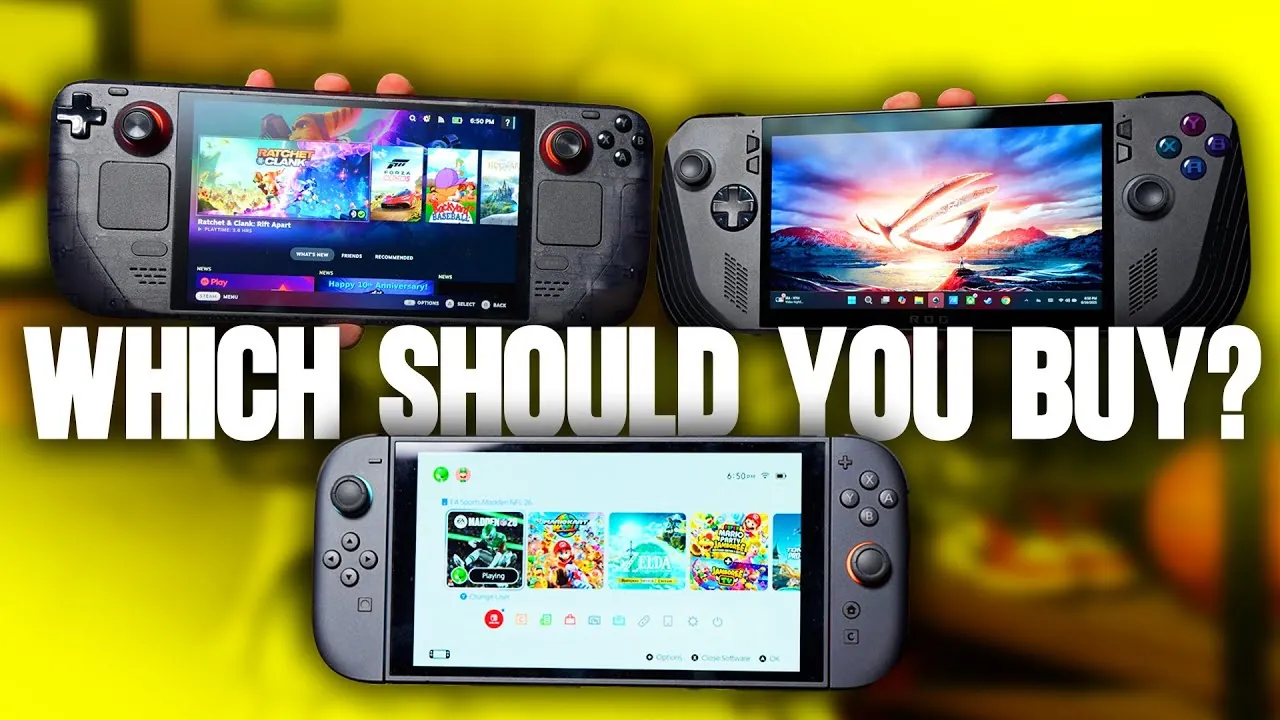
What if your next gaming device could redefine how, where, and what you play? The handheld gaming market has exploded in recent years, offering a dazzling array of options that cater to every type of gamer. From the family-friendly charm of the Nintendo Switch 2 to the raw power of the MSI Claw 8AI Plus, each device brings something unique to the table. But with so many choices, ROG Ally X, Steam Deck OLED, Lenovo Legion Go, and more, how do you decide which one deserves a spot in your hands? The stakes are high: pick the right one, and you’ll unlock endless hours of immersive gaming. Choose poorly, and you might find yourself stuck with a device that doesn’t quite fit your needs.
In this comprehensive breakdown, Tech Fowler explore the strengths, weaknesses, and standout features of today’s top handheld gaming devices. Whether you’re drawn to the exclusive game library of the Switch 2, the versatility of Windows-based systems like the Legion Go, or the innovative AI optimization of the MSI Claw 8AI Plus, there’s a perfect match waiting for you. But which one offers the best balance of performance, portability, and ecosystem compatibility? By the end of this coverage, you’ll have the insights you need to make an informed decision, and maybe even discover a new favorite way to game. After all, the right device isn’t just a gadget; it’s a gateway to unforgettable adventures.
Top Handheld Gaming Devices
TL;DR Key Takeaways :
- The handheld gaming market offers diverse options, including the Nintendo Switch 2, Steam Deck OLED, Lenovo Legion Go, MSI Claw 8AI Plus, and Asus ROG Ally X, each catering to different gaming needs and preferences.
- The Nintendo Switch 2 excels in portability and exclusive games like The Legend of Zelda and Mario Kart, making it ideal for family-friendly and social gaming, though it lacks high-end graphics performance.
- The Steam Deck OLED provides seamless integration with the Steam ecosystem and enhanced visuals through its OLED display, but it may face compatibility issues with certain games.
- Devices like the Lenovo Legion Go and MSI Claw 8AI Plus prioritize performance and flexibility, with the former offering dual operating systems and the latter focusing on AI-optimized high-end gaming, albeit at higher price points.
- Portability-focused devices like the Asus ROG Ally X balance performance and convenience, making them suitable for gamers on the go, while the choice of ecosystem and compatibility remains a key factor in selecting the right device.
Nintendo Switch 2: Exclusive Games in a Compact Package
The Nintendo Switch 2 builds on the success of its predecessor, offering improved hardware and a robust library of exclusive titles. Games like The Legend of Zelda and Mario Kart remain key attractions, drawing in both casual and dedicated gamers. Priced at an accessible $449, the Switch 2 is an excellent choice for family-friendly and social gaming experiences. Its compact design and focus on multiplayer games make it a favorite for gatherings and on-the-go entertainment. However, its hardware limitations mean it struggles to deliver the high-end graphics found in more powerful devices. If you’re a fan of Nintendo’s ecosystem and value its exclusive games, this device is a strong contender.
Steam Deck OLED: A Seamless Experience for Steam Users
The Steam Deck OLED caters to gamers deeply invested in the Steam ecosystem. With its native Steam OS, it provides seamless access to your existing Steam library, making sure a smooth and familiar gaming experience. The OLED display enhances visuals with vibrant colors and sharp contrasts, elevating the overall gameplay experience. Available in configurations ranging from $550 to $650 depending on storage, the Steam Deck OLED offers a comfortable design and decent battery life. However, compatibility issues with certain games due to Steam OS limitations may frustrate those seeking a more versatile device. If your gaming revolves around Steam and you prioritize visual quality, this device is a natural fit.
ROG Ally X vs Switch 2 vs Steam Deck vs Legion Go vs MSI Claw 8AI

Here is a selection of other guides from our extensive library of content you may find of interest on handheld games consoles.
- PyGamer open source handheld games console $39.95
- RG35XX H mini handheld games console
- Retroid Pocket 4 Pro retro handheld games console
- Retroid Pocket 4 Pro handheld games console preorders open from
- Ayaneo Next Lite upcoming AMD Ryzen handheld game console
- Raspberry Pi handheld games console
- Framework news and modular handheld games console
- AYANEO Slide handheld games console from $699 hands-on review
Lenovo Legion Go: Flexibility with Dual Operating Systems
The Lenovo Legion Go stands out for its versatility, offering two distinct versions: one running Steam OS and another with Windows. The Steam OS version provides a more powerful alternative to the Steam Deck, while the Windows version supports a broader range of PC games, making it a flexible choice for diverse gaming needs. Starting at $599, the Legion Go appeals to gamers who value adaptability. However, reports of fan noise and occasional optimization issues may detract from the overall experience. For those willing to invest more, a premium version priced at $830 includes additional features. If you prioritize flexibility and the ability to switch between ecosystems, the Lenovo Legion Go is a compelling option.
MSI Claw 8AI Plus: High Performance with AI Optimization
The MSI Claw 8AI Plus is a powerhouse designed for gamers who demand top-tier performance. Using Intel architecture and AI optimization, it delivers exceptional speed and responsiveness. Its large screen and innovative technology make it ideal for immersive gaming experiences. However, with a starting price of $999, it is one of the most expensive options on the market. Additionally, its limited availability and relatively short battery life may pose challenges for some users. Despite these drawbacks, the MSI Claw 8AI Plus is a strong choice for gamers who prioritize raw power and advanced features over portability.
Asus ROG Ally X: A Balanced Choice for Gamers on the Go
The Asus ROG Ally X offers a well-rounded gaming experience, balancing performance and portability. Featuring a compact 7-inch screen, it is designed for gaming on the move. Priced at $800, it delivers solid performance and respectable battery life, making it a practical choice for frequent travelers. While it is slightly less powerful than the MSI Claw 8AI Plus, its affordability and the promise of an upcoming Xbox version with enhanced features make it a compelling option. If you’re looking for a device that combines portability with reliable performance, the ROG Ally X is worth considering.
Ecosystem and Compatibility: Choosing the Right Platform
When selecting a handheld gaming device, the ecosystem and compatibility are critical factors to consider. Each device offers unique advantages based on its platform:
- Nintendo Switch 2: Perfect for fans of Nintendo-exclusive titles and social gaming experiences.
- Steam Deck OLED: Ideal for gamers with extensive Steam libraries who value seamless integration.
- Windows-based devices (ROG Ally X, MSI Claw 8AI Plus): Provide broader compatibility for PC games and enhanced flexibility.
Your choice should align with the types of games you enjoy and the platform you are most comfortable navigating.
Performance vs. Portability: Finding the Right Balance
Handheld gaming devices often require a trade-off between performance and portability. Larger devices like the MSI Claw 8AI Plus and Lenovo Legion Go deliver superior performance, making them ideal for gamers who prioritize high-end graphics and processing power. However, their size and weight can make them less convenient for travel. On the other hand, smaller devices like the Asus ROG Ally X and Nintendo Switch 2 emphasize portability, making them better suited for gaming on the go. Consider your gaming habits and decide whether you value power or convenience more when choosing your device.
The Future of Handheld Gaming
The handheld gaming market continues to evolve rapidly, with manufacturers introducing new models and innovative features. Advances in display technology, battery life, and processing power are reshaping the landscape, offering gamers more options than ever before. Staying informed about these developments will help you make the best choice when upgrading or purchasing your first handheld gaming device. As competition intensifies, the future promises even more exciting possibilities for gamers worldwide.
Media Credit: Tech Fowler
Disclosure: Some of our articles include affiliate links. If you buy something through one of these links, Geeky Gadgets may earn an affiliate commission. Learn about our Disclosure Policy.
