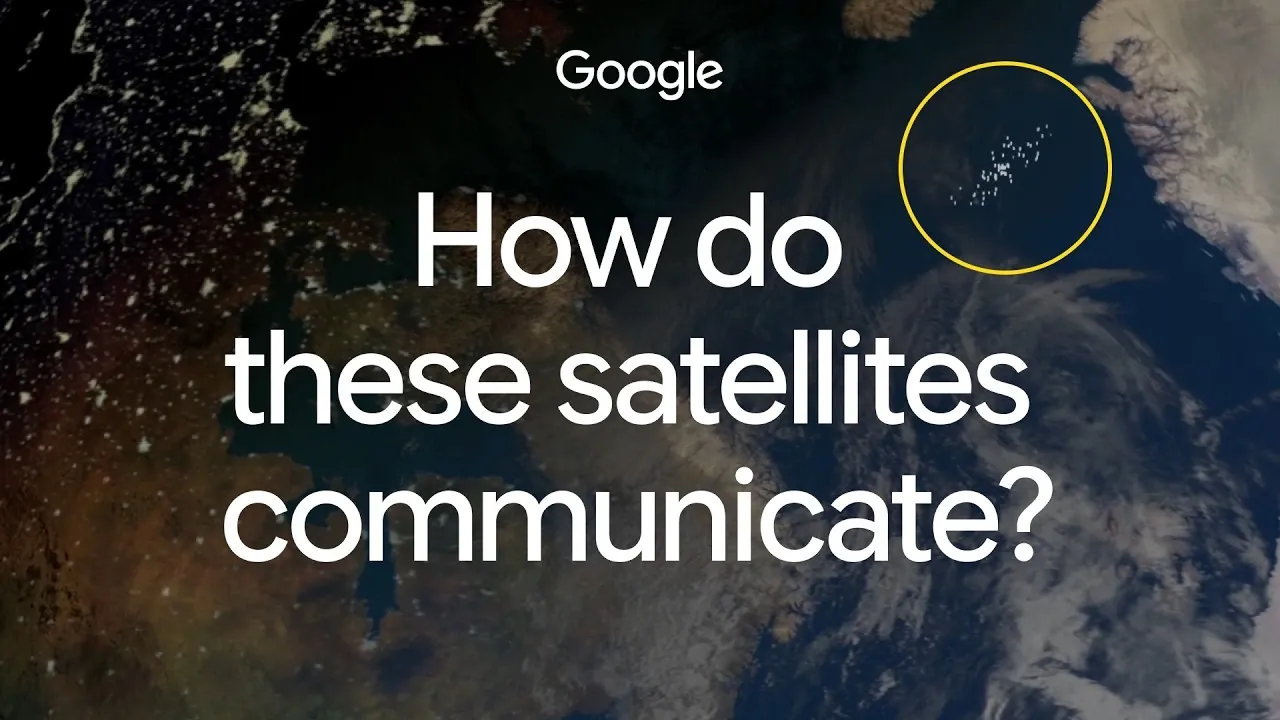
Laser communication is becoming essential for allowing high-speed, low-latency connections between satellites, as highlighted by Google’s Project Suncatcher. This project aims to establish solar-powered data centers in space, using the constant availability of solar energy in orbit to meet the increasing computational demands of artificial intelligence (AI). Traditional radio frequency systems fall short in bandwidth and speed, limiting their ability to support real-time data processing. Laser communication addresses these challenges by offering faster transfer rates and enhanced reliability, with the project targeting 800 Gbps bidirectional communication as a key benchmark.
Discover how laser systems are being engineered to operate in the harsh conditions of space, including the development of optical transceivers capable of withstanding extreme temperatures and radiation. Learn about the successful implementation of high-speed bidirectional data transfer and the steps being taken to ensure precise, interference-free communication over long distances. This overview examines the practical advancements shaping the future of satellite connectivity and the infrastructure needed for space-based AI systems.
Project Suncatcher: Unlocking Space for AI
TL;DR Key Takeaways :
- Project Suncatcher aims to establish solar-powered data centers in space, using abundant solar energy to scale AI systems and reduce Earth’s energy consumption.
- Laser communication technology is critical for achieving high-speed, low-latency data transfer, allowing seamless communication between satellites and Earth.
- Space-based data centers could optimize global data processing, reduce latency for certain applications and minimize the environmental impact of terrestrial data centers.
- Terrestrial technologies, such as optical transceivers, are being adapted for space by enhancing durability, reducing power consumption and optimizing performance for zero-gravity environments.
- A major milestone was the successful demonstration of 800 Gbps bidirectional data transfer using laser communication, validating the feasibility of space-based data centers and advancing AI scalability.
Project Suncatcher is built on the innovative concept of establishing solar-powered data centers in space. Space provides an abundant and uninterrupted supply of solar energy, free from the limitations imposed by Earth’s atmosphere and weather conditions. This energy can power the massive computational demands of AI systems, allowing them to scale in ways that were previously unattainable.
Beyond scalability, relocating data centers to orbit could significantly reduce energy consumption on Earth, alleviating the environmental impact of terrestrial data centers. Additionally, the unique positioning of space-based centers could optimize global data processing by reducing latency for certain applications. Project Suncatcher represents a bold step forward in addressing the growing demands of AI while harnessing the untapped potential of space.
Overcoming the Communication Challenge
While the vision of space-based data centers is compelling, it faces a major challenge: making sure seamless communication between satellites and with Earth. High-bandwidth, low-latency connections are essential for real-time AI operations and data processing. Unfortunately, traditional radio frequency communication systems are unable to meet the speed and capacity requirements of such advanced tasks.
Laser communication technology offers a solution. By transmitting data using light, lasers operate at much higher frequencies than radio waves, allowing faster and more efficient data transfer. This technology is not only faster but also more reliable, as it is less prone to interference. For Project Suncatcher, laser communication is the cornerstone of achieving the ambitious goal of 800 Gbps bidirectional communication, a critical requirement for the project’s success.

Here is a selection of other guides from our extensive library of content you may find of interest on Google.
- Google Pixel 11 Pro Teaser Unveils the Pixel Glow Camera Bar
- 55% Charge in 5 Minutes: New Google Pixel 11 Pro XL Leak
- Google Pixel 11 Pro vs Google Pixel 10 Pro: Expected Updates
- Google Preps Gemini 4 Pro Content Creation for October 2026
- Sneak Peek at the Unconfirmed Google Pixel 11 Pro Smartphone
- Google Rebrands NotebookLM to Gemini Notebook with Drive Sync
- Massive Google Pixel 11 Leak Reveals Every Major Specification
- Leaked Google Pixel 11 Pro XL Renders Show a Radical Camera Bar Redesign
- Google Pixel 11 Pro: Leaks, Specs, Tensor G6, and Everything We Know
- Google Pixel 11 Pro XL: Everything We Know So Far
How Laser Communication Powers the Vision
Laser communication systems rely on light to transmit data between satellites. Unlike radio waves, which spread out over large areas, laser beams can be precisely focused, allowing for highly efficient and targeted data transmission. This precision is achieved using telescopes that direct the laser beams, making sure stable links even across vast distances in space.
The higher frequency of lasers enables significantly faster data transfer rates, making them ideal for the demanding requirements of space-based data centers. Additionally, laser communication systems are less susceptible to interference from other signals, making sure consistent and reliable performance in the challenging environment of space. These advantages make laser technology a critical component of Project Suncatcher’s mission to transform AI scalability and global connectivity.
Adapting Terrestrial Technology for Space
A crucial aspect of Project Suncatcher involves modifying existing terrestrial technologies for use in space. Optical transceivers, commonly used in Earth-based data centers, have been reengineered to withstand the harsh conditions of orbit. These adaptations include:
- Enhancing durability to endure extreme temperatures and radiation in space.
- Reducing power consumption to align with the energy constraints of space-based systems.
- Optimizing performance for zero-gravity environments to ensure reliable operation.
By repurposing proven technologies and tailoring them for space applications, Project Suncatcher minimizes development costs while maximizing efficiency. This approach not only accelerates the project’s timeline but also demonstrates the potential for using existing innovations in new and challenging environments.
Milestones and Proof of Concept
A significant milestone in Project Suncatcher’s journey was the successful demonstration of bidirectional data transfer at 800 Gbps using laser communication technology. This achievement validated the technical feasibility of the project’s core components and provided a strong foundation for scaling the system to support fully operational space-based data centers.
The proof of concept highlights the potential of combining advanced laser technology with optical systems to meet the demands of modern AI infrastructure. It also underscores the project’s readiness to transition from experimental phases to practical implementation, bringing the vision of space-based data centers closer to reality.
Shaping the Future of AI and Connectivity
The implications of Project Suncatcher extend far beyond its immediate objectives. By integrating space-based and terrestrial technologies, the initiative has the potential to redefine global data processing and connectivity. Laser-linked satellites could enable low-latency global networks, facilitating faster and more efficient data transfer across the world.
As the project evolves, it could unlock new applications, such as real-time Earth observation, enhanced global communication networks and even support for emerging technologies like autonomous systems and advanced robotics. By bridging the gap between space and terrestrial technologies, Project Suncatcher represents a fantastic step toward a more connected and efficient future.
Media Credit: Google
Disclosure: Some of our articles include affiliate links. If you buy something through one of these links, Geeky Gadgets may earn an affiliate commission. Learn about our Disclosure Policy.
