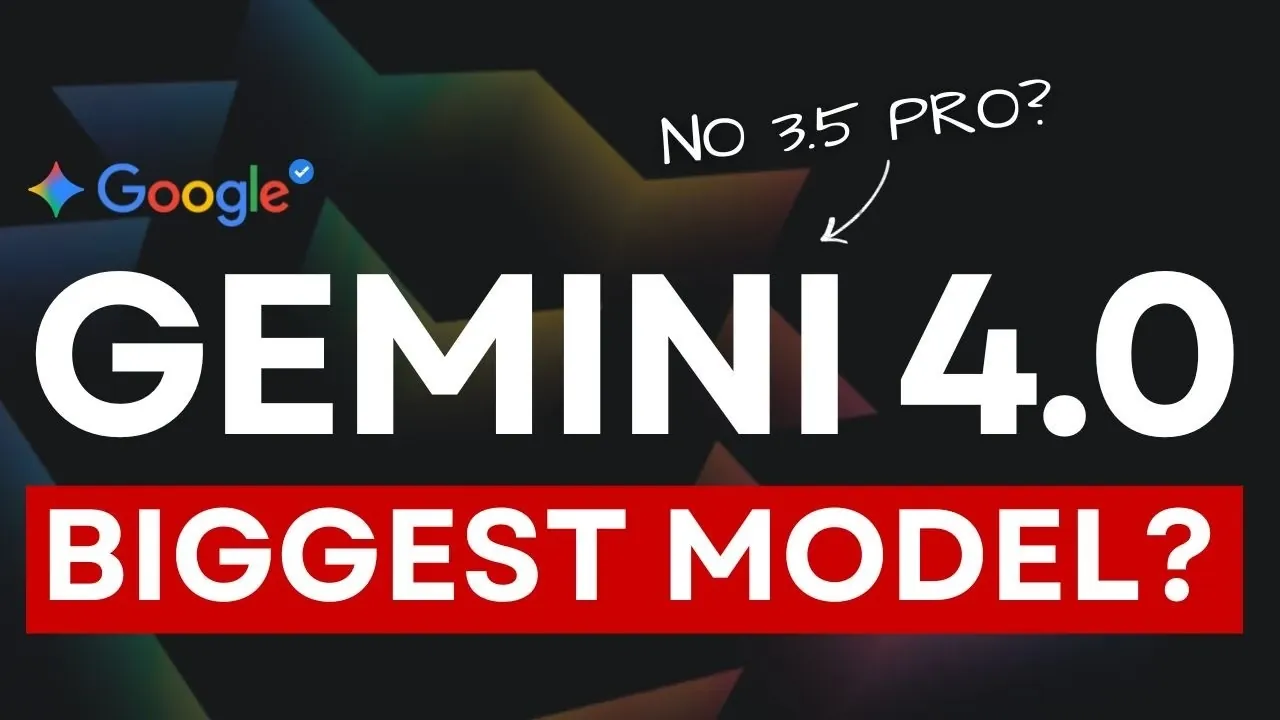
Google DeepMind’s Gemini 3.5 Pro has faced challenges in areas like coding efficiency and creative problem-solving, trailing behind competitors such as Kimi K3 and Opus 5. This has led to growing attention on the anticipated release of Gemini 4, which, according to Universe of AI, is expected to focus on improving autonomous systems and coding capabilities. These updates could address specific gaps observed in Gemini 3.5 Pro, signaling a strategic effort by DeepMind to adapt to the demands of a competitive AI landscape.
Discover how Gemini 4 plans to approach autonomous task management and refine its coding processes to meet industry needs. Gain insight into how competing models like Opus 5 are influencing standards in fields such as game development and creative design. This overview will also examine the broader implications of these advancements for AI applications across various sectors.
July 2026: A Month of Breakthrough AI Models
TL;DR Key Takeaways :
- The AI sector in July 2026 saw the release of advanced models like Kimi K3, GPT 5.6 Sol, Luna, Terra and Opus 5, which are reshaping industries with innovative capabilities.
- Google DeepMind’s Gemini 3.5 Pro faced significant setbacks, underperforming in key areas, prompting a strategic pivot toward the ambitious Gemini 4 project.
- Anthropic’s Opus 5 is transforming game development and 3D rendering by allowing lifelike environments and characters with minimal human input.
- OpenAI’s GPT 5.6 Sol, Luna and Terra models showcase advancements in natural language processing, creative problem-solving and autonomous systems.
- The competitive AI landscape is driving rapid innovation, with breakthroughs in 3D modeling, game development and autonomous systems shaping the future of technology.
The AI landscape has been transformed this month by the release of several new models, each bringing unique capabilities to the forefront. These innovations highlight the diverse applications of AI and its growing influence across industries.
- Kimi K3 by Moonshot AI: This model has gained attention for its balance of cost-efficiency and robust performance, making it a practical choice for businesses seeking scalable AI solutions.
- Opus 5 by Anthropic: A leader in game development and 3D rendering, Opus 5 excels at creating lifelike environments and characters with minimal human input, setting a new standard for creative AI applications.
- GPT 5.6 Sol, Luna and Terra by OpenAI: These models demonstrate significant advancements in natural language processing, creative problem-solving and autonomous systems, further solidifying OpenAI’s position as a leader in the field.
These releases illustrate the growing versatility of AI, from enhancing business operations to driving innovation in creative and technical domains.
Challenges and Setbacks for Google DeepMind
While competitors have made significant strides, Google DeepMind has encountered notable challenges with its Gemini 3.5 Pro model. Initially positioned as a major upgrade, the model has underperformed in critical areas such as coding efficiency and internal benchmarks. A subsequent update, Gemini 3.6 Flash, failed to address these issues, leaving the model unable to compete effectively with its peers.
This underperformance has fueled speculation that DeepMind is redirecting its focus toward Gemini 4, an ambitious project aimed at redefining AI capabilities. If successful, this strategic pivot could help the company regain its competitive edge and reestablish its reputation as a leader in the AI space.

Advance your skills in Gemini 4 by reading more of our detailed content.
- Gemini 4 Flash Leaks Show Strong SVG Focus but Weak Logic
- Google Delays Gemini 3.5 Pro to July 17 to Upgrade Math
- 3 New Google Gemini AI models released
- Gemini 3.5 Pro Leaks Reveals Context Window Fits 2 Million Tokens
- What the Claude Orbit and Gemini 3.2 Flash Leaks Reveal About AI’s Next Move
- Leaked ChatGPT 6 Tests Reveal Critical Sandbox Vulnerabilities
- Google Just Dropped a Major Gemini Redesign and It Looks Amazing
- Gemma 4 vs Gemini 3.1 : Which Google AI is Right for You?
- Stopgap Gemini 3.6 Flash May Launch During Gemini 3.5 Pro Delay
- Why Running Google’s Gemma 4 Locally Is Easier Than You Think
Gemini 4: Aiming to Redefine AI Capabilities
Gemini 4 is being positioned as a fantastic project for Google DeepMind, with the potential to address the shortcomings of its predecessor and set new standards for AI performance. According to company statements, Gemini 4 will prioritize advancements in several key areas:
- Coding Efficiency: Enhancing the ability to write, debug and optimize code autonomously, reducing the need for human intervention.
- Autonomous Systems: Expanding capabilities in self-directed problem-solving and decision-making, allowing the model to tackle complex tasks independently.
- Creative Problem-Solving: Developing innovative approaches to address challenges across industries, from healthcare to engineering.
This focus reflects the growing demand for AI systems capable of managing intricate tasks with minimal oversight. If Gemini 4 delivers on its promises, it could not only restore DeepMind’s competitive standing but also set a new benchmark for what AI can achieve.
AI’s Expanding Role in Game Development
One of the most exciting areas of AI innovation lies in game development, where models like Anthropic’s Opus 5 are pushing the boundaries of what is possible. These advancements are transforming the industry by allowing faster, more efficient creation of immersive gaming experiences.
- Developing detailed 3D models and environments with minimal input from human designers, significantly reducing production timelines.
- Designing entire gaming experiences, including first-person shooters, multiplayer games and complex simulations, with unprecedented speed and accuracy.
These capabilities not only enhance the gaming experience but also open new opportunities for creative industries to use AI in storytelling, design and interactive media. By automating labor-intensive processes, AI is empowering developers to focus on innovation and creativity.
The Competitive Landscape of AI in 2026
The rapid pace of AI innovation has created a fiercely competitive environment, with leading companies racing to develop models that excel in key areas. This competition is driving unprecedented advancements and raising expectations for what AI can achieve.
- 3D Modeling and Rendering: AI is allowing the creation of hyper-realistic environments and characters, transforming industries such as gaming, architecture and film.
- Game Development: Models like Opus 5 are setting new standards for efficiency and creativity, reshaping the way games are designed and produced.
- Autonomous Systems: AI is advancing in self-directed problem-solving, with applications ranging from robotics to logistics and beyond.
This intensifying competition is not only driving innovation but also expanding the possibilities for AI applications across technical and creative fields.
Anticipating the Future of AI
As the AI industry continues to evolve, all eyes are on Gemini 4 and its potential to redefine the capabilities of AI models. Success with this project could reshape Google DeepMind’s position in the market and set new benchmarks for innovation. Meanwhile, the growing role of AI in creative industries, particularly gaming, underscores the fantastic potential of these technologies.
With advancements in areas such as 3D modeling, coding efficiency and autonomous systems, the future of AI promises to be dynamic and full of possibilities. Whether you’re a developer, researcher, or enthusiast, the developments unfolding in 2026 are poised to leave a lasting impact on the field, shaping the way we interact with technology and the world around us.
Media Credit: Universe of AI
Disclosure: Some of our articles include affiliate links. If you buy something through one of these links, Geeky Gadgets may earn an affiliate commission. Learn about our Disclosure Policy.
