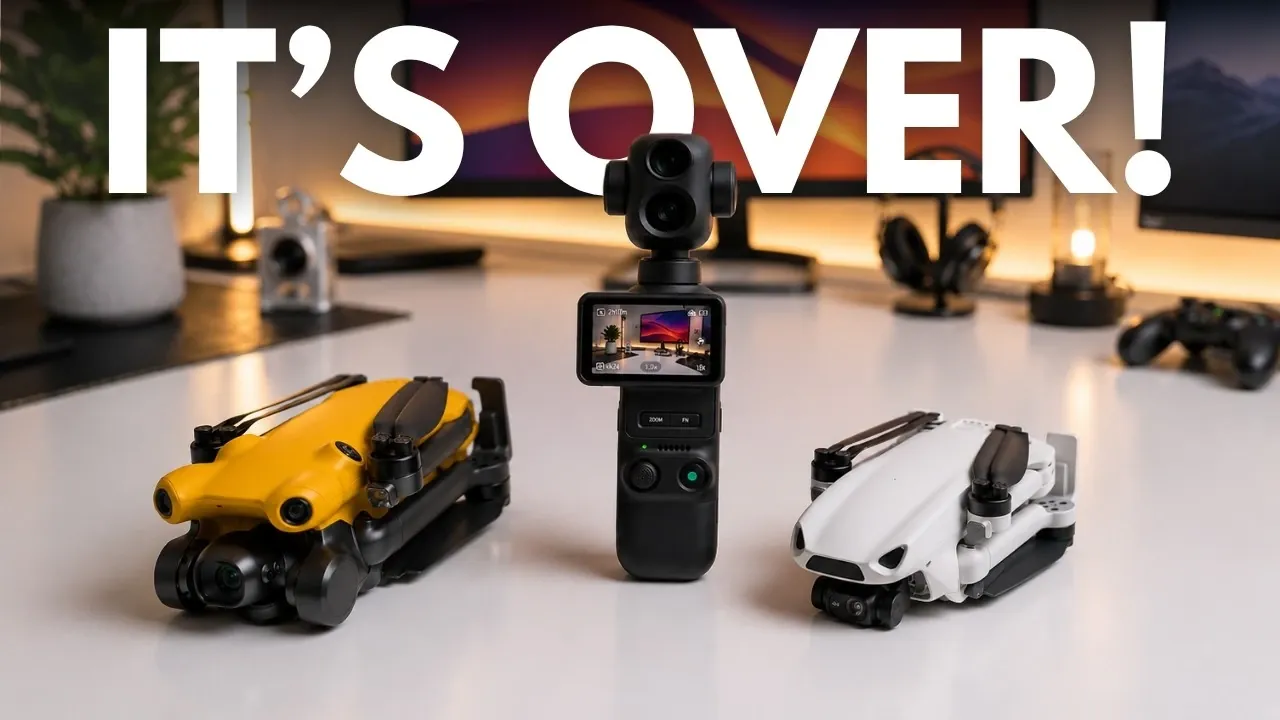
The Federal Communications Commission (FCC) has taken its most aggressive step yet toward closing the loophole that has allowed DJI-derived products to reach the U.S. market under unfamiliar brand names. In a Public Notice issued on 17 July 2026, followed by a wider announcement on 21 July, the agency proposed prohibiting the continued importation and marketing of previously authorised equipment from nine companies it says are linked to entities on its Covered List. If adopted, the rules would pull products off shelves that the FCC itself had already certified, a power the Commission granted itself in an October 2025 vote and has never used until now.
Gain insight into how these proposed changes could affect the availability of drones, cameras and related technologies in the U.S. market. Explore the potential challenges consumers may face, such as limited access to repairs, replacement parts, or software updates for affected devices. Understand the ripple effects this decision could have on market competition, pricing and innovation, as well as the tension between national security concerns and regulatory transparency.
TL;DR Key Takeaways :
- The FCC has issued a Notice of Proposed Rulemaking targeting nine companies it says are linked to entities on its Covered List, seeking to block continued imports and sales of equipment it previously authorised.
- This would be the first retroactive use of the ban authority the Commission adopted in October 2025, raising questions about how durable an FCC certification actually is.
- Eight of the nine companies were already hit with proposed $25,000 fines earlier in July for ignoring formal Letters of Inquiry.
- Consumers may face difficulty sourcing repairs, replacement parts and software updates for affected drones and cameras, with knock-on effects for choice, pricing and innovation.
- The public has 30 days from Federal Register publication to file comments, and critics argue the evidence underpinning the restrictions has not been made public.
What’s in the FCC Proposal?
The proposal follows the FCC’s decision of 22 December 2025, which added uncrewed aircraft systems and UAS critical components produced abroad to the Covered List. That decision blocked new foreign-made drones from obtaining the equipment authorisations required for U.S. sale, but left previously certified models on shelves. Regulators now appear to believe that some manufacturers responded by changing company names rather than changing products. The nine companies named in the proposal are:
- Cogito Tech
- Fikaxo Technology
- Lyno Dynamics
- Skyhigh Tech
- Spatial Hover
- SZ Knowact Robot Technology
- WaveGo Tech
- Xtra Technology
- XAG
The FCC’s stated basis is not that every company on the list is a rebadging operation, but that each may be connected to entities already on the Covered List and therefore poses what the agency calls an unacceptable risk to national security. That distinction matters, because the nine are not all the same kind of business. WaveGo Tech and SZ Knowact are both associated with the Sky Rover X1, a close analogue of the DJI Mini 4 Pro at a substantially lower price. Xtra Technology sells the Muse line of pocket gimbal cameras that has stood in for DJI’s blocked Osmo Pocket rollout. Cogito Tech’s Specta Air has been publicly torn down and compared component by component against the DJI Air 3. XAG, by contrast, is an established agricultural drone manufacturer with its own product line, and it was the one company not fined in the earlier enforcement round.
That earlier round came on 10 July, when the FCC proposed $25,000 penalties against eight of the nine for failing to respond to Letters of Inquiry asking whether they were marketing radio equipment tied to Covered List entities. The current proposal escalates from penalties for non-response to a substantive ban on the products themselves.
How Could This Affect Consumer Electronics?
The proposed restrictions could have far-reaching consequences for the availability and support of drones and cameras in the U.S. market. Consumers who own products tied to the targeted companies may encounter several challenges, including:
- Difficulty obtaining replacement batteries or parts
- Limited access to repairs and warranties
- Potential loss of software updates
For instance, owners of Sky Rover drones or Xtra Muse cameras may find it increasingly difficult to maintain or upgrade their devices. This raises concerns about the long-term usability of products that were previously approved but could now face restrictions.
Moreover, the uncertainty surrounding these products may discourage consumers from investing in similar technologies, potentially slowing the adoption of drones and related devices. The ripple effects could extend to other sectors, such as photography, agriculture and logistics, where drones play a critical role.

Expand your understanding of DJI with additional resources from our extensive library of articles.
- Why the DJI Osmo Pocket 4P is Launching Under a Completely Different Name in the U.S.
- Why the DJI Pocket 4 Pro’s 1-Inch Sensor is a Game-Changer for Creators
- DJI Pocket 4 Pro Leaks with a 6K Dual-Camera, but US Buyers Might Miss Out
- DJI Osmo Pocket 4P Global Launch is Finally Here
- DJI Osmo Pocket 4 vs Insta 360 Luna Ultra : Everything You Need to Know
- Why the DJI Pocket 4 Pro’s New Dual-Lens System is a Massive Deal
- DJI Pocket 4 vs Pocket 4P : Are the New Pro Features Worth the Upgrade?
- Everything We Know About the DJI Pocket 4 Pro Sensor Upgrade
- How the Half-Priced DJI Lito X1 Drone Outperforms the Mini 5 Pro
- Why Insta360’s Unreleased Luna Ultra is Already Beating DJI
Consumer Trust and Market Challenges
The proposal has introduced a layer of uncertainty for both consumers and industry stakeholders. The central issue is whether an FCC equipment authorisation means anything durable if it can be withdrawn after the fact. Every product covered by this proposal passed through the certification process and was legally imported and sold. Removing that status retroactively is a different proposition from refusing new approvals, and it changes the risk calculation for any importer building a business on FCC-certified hardware.
The FCC has moved on several fronts at once. On the same day it announced the nine-company proposal, the agency opened proceedings to revoke two equipment authorisations granted to Odyssey Robot over allegedly false “Made in USA” claims, the first revocation proceeding brought against a drone company accused of evading the December rules. The agency has also taken enforcement action against a certification laboratory involved in approving some of the products now under scrutiny, which suggests the Commission views the problem as extending into the certification chain itself.
Additionally, the restrictions could reduce consumer choice and drive up prices. With fewer alternatives available, consumers may face higher costs for drones and cameras. The lack of domestic options offering DJI-level technology at comparable prices further complicates the situation, leaving a gap in the market that U.S. manufacturers are not yet equipped to fill.
For manufacturers, the proposal presents logistical and financial challenges. Companies may need to reassess their supply chains, product designs and marketing strategies to comply with the new regulations. This could stifle innovation and limit the diversity of available technologies, ultimately affecting the competitiveness of the U.S. tech industry.
National Security vs Transparency
The FCC’s actions are largely driven by national security concerns. DJI and its affiliates have faced sustained scrutiny over potential data privacy risks, with critics alleging that their products could compromise sensitive information. These concerns have been amplified by broader geopolitical tensions, particularly between the U.S. and China.
However, the Commission has not published the evidence underpinning its conclusion that these specific companies act as intermediaries for Covered List manufacturers. It cites material gathered during its investigations alongside publicly available information, but the investigative material is not in the public record. Critics argue that without visible justification, the restrictions look like regulatory control exercised ahead of demonstrated harm.
This tension between national security and transparency underscores the complexity of the issue. While addressing potential risks is essential, doing so without clear evidence could erode public trust in regulatory institutions. Striking the right balance will be critical to making sure that security concerns are addressed without unfairly disadvantaging consumers or manufacturers.
What This Means for the Drone Market
If implemented, the proposed restrictions could significantly reshape the U.S. drone market. Foreign consumer drones and related products may gradually disappear, creating a gap that domestic manufacturers are not yet prepared to fill. This could lead to reduced competition, higher prices and fewer options for consumers.
The obvious alternatives are thinner than they appear. Autel Robotics is itself a Chinese manufacturer and was swept up in the December 2025 Covered List decision alongside DJI, and it has an Application for Review pending before the Commission under ET Docket 26-23. DJI filed a parallel Petition for Reconsideration under ET Docket 26-22. Skydio remains the most prominent U.S.-built option, but its product line is priced for enterprise and public safety buyers rather than the consumer and creator segment these bans affect most directly. The restrictions may also discourage new entrants from investing in the U.S. drone market, further limiting innovation and diversity.
For consumers, the changes could mean fewer affordable options and reduced access to innovative technology. For manufacturers, the proposal represents a call to action to develop competitive alternatives that can meet the needs of the U.S. market. However, achieving this will require significant investment in research, development and production capabilities.
What’s Next?
The proposal is not a final decision. Interested parties have 30 days from publication in the Federal Register to file comments through the FCC’s Electronic Comment Filing System, and the Commission will weigh those submissions before acting. Filings are public record, so anything submitted, including contact details, becomes searchable by anyone.
Nothing changes overnight for anyone who already owns one of these products. Existing devices continue to function, and the proposal addresses importation and marketing rather than personal use. The practical risk sits further out, in parts availability, warranty support and firmware updates over the life of the hardware.
Navigating the balance between national security, regulatory transparency and market competition will define how this proceeding lands. Whether you are a drone enthusiast, a manufacturer, or simply a consumer weighing a purchase, the comment window is the point at which the decision is still open to input.
Media Credit: Tech Court
Disclosure: Some of our articles include affiliate links. If you buy something through one of these links, Geeky Gadgets may earn an affiliate commission. Learn about our Disclosure Policy.
