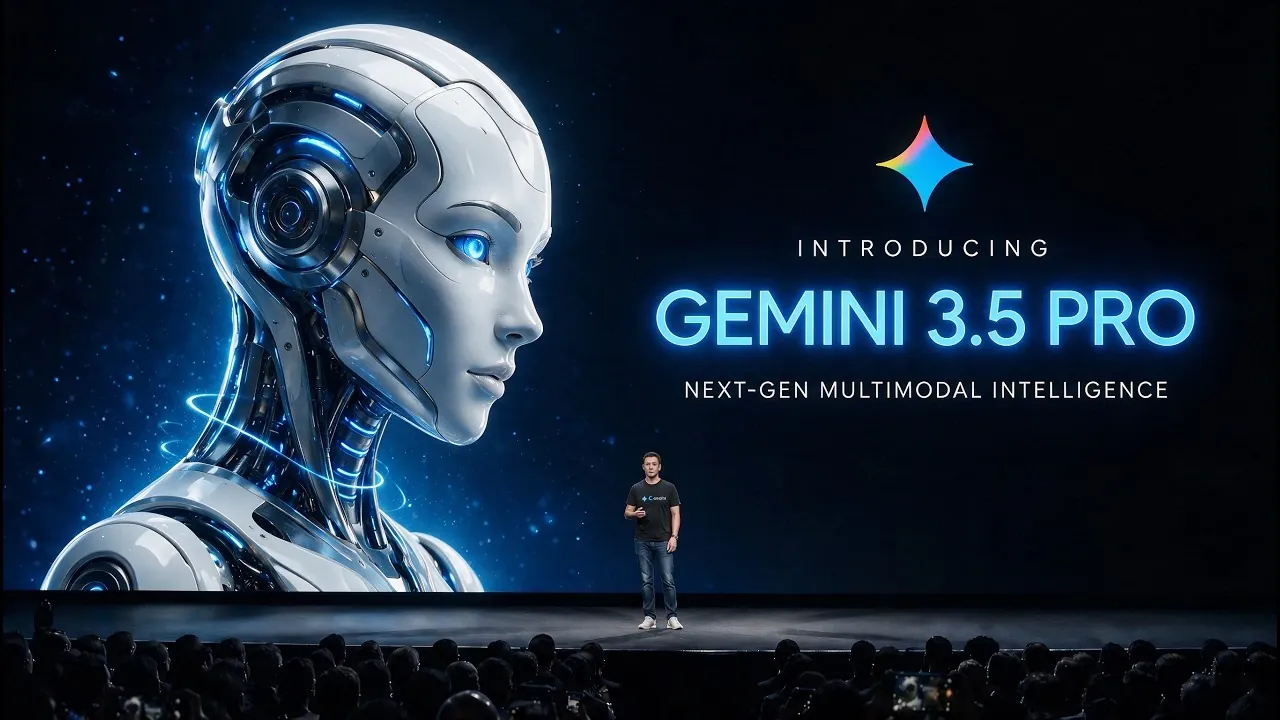
Google’s Gemini 3.5 Pro introduces a significant update in the AI landscape, focusing on addressing challenges in generative AI and multimodal capabilities. AI Grid highlights one standout feature: a 2-million-token context window, which allows the model to process extensive datasets and manage intricate tasks. This enhancement has potential implications for areas like legal document analysis and large-scale research, though its ability to maintain accuracy and efficiency at this scale remains a critical consideration.
Dive into how Gemini 3.5 Pro approaches coding benchmarks, a known area of difficulty for earlier versions. Discover its efforts to enhance generative user interfaces for more adaptable interactions and examine how performance metrics, such as SWEBench Pro, will shape its evaluation. This leak breakdown provides a detailed look at the technical strides and hurdles facing Google’s latest AI model.
Can Google Regain Momentum?
TL;DR Key Takeaways :
- Google’s Gemini 3.5 Pro aims to lead in generative AI, multimodal capabilities and user interface innovation, but faces pressure to address performance gaps and meet high market expectations.
- The model’s success hinges on closing coding performance gaps and excelling in benchmarks like reasoning and multimodal tasks to compete with rivals like OpenAI and Anthropic.
- Gemini 3.5 Pro introduces a new 2-million-token context window, allowing analysis of larger datasets, but its efficiency and practical utility remain to be proven.
- Generative user interfaces (UI) are a key feature, aiming to enhance user interaction, though early feedback highlights inefficiencies that Google must address for real-world applicability.
- Speculation suggests Gemini 3.5 Pro may launch alongside ecosystem updates, potentially strengthening Google’s AI platform and signaling a commitment to integrated solutions.
Release Timeline
Google has faced mounting criticism for its slower release schedule compared to its rivals. While OpenAI recently launched GPT 5.6 and Anthropic introduced Claude Fable 5, Google’s last major AI update occurred in May 2026. This delay has placed significant pressure on Gemini 3.5 Pro to deliver substantial advancements and reestablish Google’s competitive edge. The timing of this release will be critical, as the AI landscape continues to evolve rapidly, leaving little room for stagnation.
Addressing Performance Gaps in Coding and Beyond
One of the most pressing challenges for Gemini 3.5 Pro lies in its ability to close performance gaps, particularly in coding benchmarks. Previous iterations of the Gemini series demonstrated only modest improvements in coding tasks, leaving Google trailing behind competitors who have excelled in this area. To stand out, Gemini 3.5 Pro must showcase robust performance across a wide range of technical benchmarks, including coding, reasoning and multimodal tasks. Success in these areas will be essential for the model to gain credibility and attract a broader user base.

Discover other guides from our vast content that could be of interest on Gemini 3.5 Pro.
- Leaked Gemini 3.5 Pro Details Reveal Why Google is Falling Behind AI Rivals
- Google Gemini 3.5 Pro Leaks with 2 Million Context Window
- Google Delays Gemini 3.5 Pro to July 17 to Upgrade Math
- What Early Tests Reveal About Gemini 3.5 Flash and Pro
- Why Google’s Gemini 3.5 Flash Might Not Be Enough to Beat OpenAI
- Fable 5 Breach Leaks Cryptic AI Chain of Thought Shorthand
- Why Google’s New NotebookLM 2.0 Update is a Massive Game Changer
- What Google’s New NotebookLM 2.0 Update Means for Coders and Researchers
- Google Just Dropped Gemini 3 Flash in Arena : Here’s What It Can Actually Do
- New Gemini 3.5 Flash is Changing App Development with Vibe Coding
Generative UI: A Bold Step Forward
A key feature of Gemini 3.5 Pro is its focus on generative user interfaces (UI), which aim to create adaptable and intuitive interfaces tailored to user needs. This innovation has the potential to redefine how users interact with AI systems, offering more personalized and efficient experiences. However, early feedback on generative UI technology has been mixed. Critics have pointed out that some outputs appear inefficient or overly complex, raising questions about its practical utility. For this feature to succeed, Google must refine its implementation to ensure it delivers tangible benefits and aligns with real-world user expectations.
Breaking Barriers with a 2-Million-Token Context Window
Gemini 3.5 Pro is set to introduce a new 2-million-token context window, the largest among major AI models to date. This feature could enable the model to process and analyze significantly larger datasets, offering deeper insights and more comprehensive outputs. Such a capability holds promise for applications requiring extensive data analysis, such as legal document review, research synthesis and large-scale project management. However, the true value of this feature will depend on the model’s ability to handle complex tasks efficiently and deliver meaningful, actionable results without compromising speed or accuracy.
Benchmark Testing: The Decisive Factor
Benchmark testing will serve as the ultimate proving ground for Gemini 3.5 Pro. Metrics such as SWEBench Pro and Terminal Bench scores will be critical in determining the model’s capabilities and competitiveness. While Google’s expertise in multimodality could provide an edge, achieving consistent performance across diverse benchmarks remains a significant challenge. Success in these tests will not only validate the model’s technical prowess but also influence its adoption across various industries.
Market Speculation and Competitive Pressures
Leaked reports suggest that Gemini 3.5 Pro faces significant hurdles in matching or surpassing the performance of its competitors. Despite these challenges, Google’s extensive resources and history of innovation provide a foundation for optimism. The model’s ability to deliver practical utility and competitive performance will be key to its success. Market expectations are high and any misstep could further widen the gap between Google and its rivals.
Potential Ecosystem Enhancements and Strategic Moves
Speculation is rife that Gemini 3.5 Pro may launch alongside broader ecosystem updates, such as a potential V4 platform upgrade. If true, this strategy could strengthen Google’s position by offering a more integrated and comprehensive AI solution. A simultaneous release would also signal Google’s commitment to advancing its AI ecosystem and addressing user needs holistically. Such an approach could enhance the model’s appeal by providing users with a seamless and interconnected experience.
The Road Ahead: Challenges and Opportunities
As the AI landscape grows increasingly competitive, Gemini 3.5 Pro represents a pivotal opportunity for Google to reassert its position as a leader in the field. To achieve this, the model must deliver competitive performance across benchmarks, refine innovative features like generative UI and offer practical applications that resonate with users. While delays in release timelines have raised questions about Google’s ability to keep pace, the company’s expertise and resources suggest the potential for impactful advancements. The success of Gemini 3.5 Pro will ultimately depend on its ability to meet the demands of a rapidly evolving market and deliver solutions that address real-world challenges.
Media Credit: TheAIGRID
Disclosure: Some of our articles include affiliate links. If you buy something through one of these links, Geeky Gadgets may earn an affiliate commission. Learn about our Disclosure Policy.
