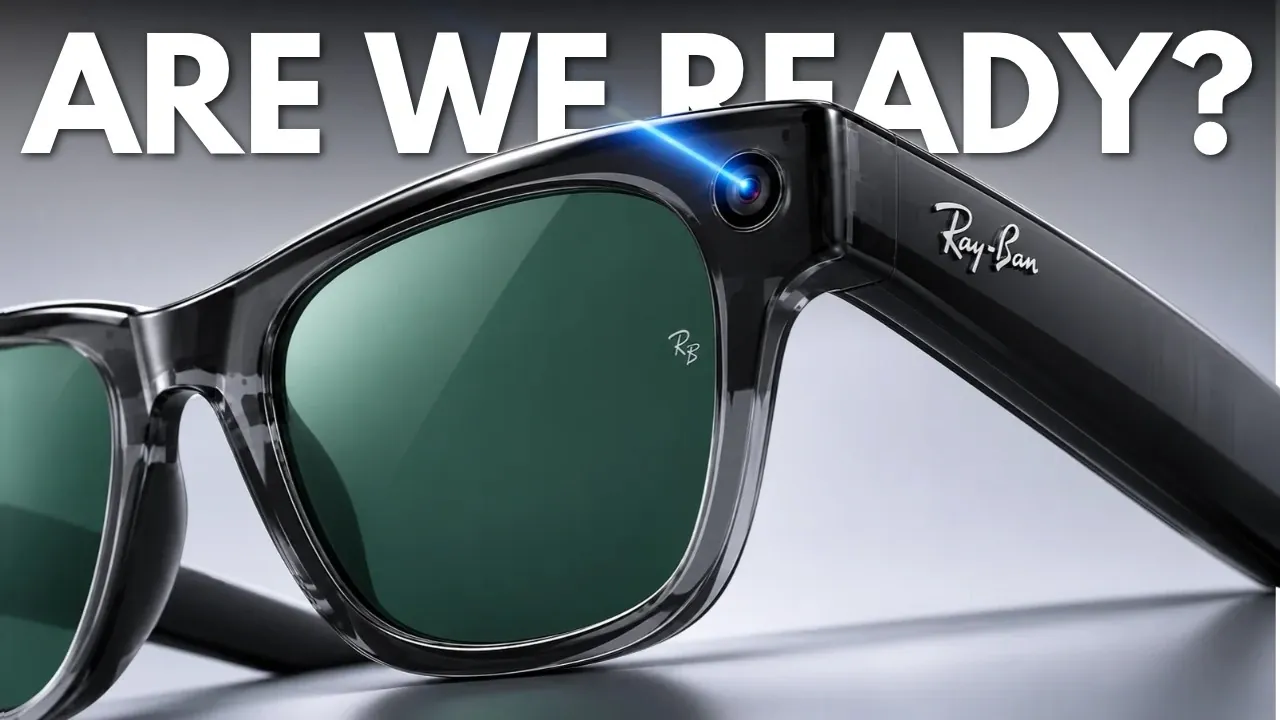
Google’s new Intelligent Eyewear camera glasses are built to stop taking photos and video if someone covers the recording light. Tech Court reports that Google says these camera glasses also blur nearby faces before images reach its Gemini assistant. You can ask about what you see without lifting a phone, while a physical off switch adds another privacy control. Find out what the recording light tells people nearby and how Google says it handles images captured for the assistant.
Google Intelligent Eyewear: Privacy Protections for Camera Glasses
TL;DR Key Takeaways :
- Google’s Intelligent Eyewear combines a camera and Gemini without an in-lens display, with general retail availability scheduled for December 10, 2026.
- A recording light flashes for photos and pulses during video, and a physical off switch provides another privacy control.
- Google is designing the glasses to block capture if the light is covered or tampered with, though its product lead acknowledges detection is imperfect.
- Google says it blurs nearby faces before images reach Gemini and prohibits apps from using the camera for facial recognition.
- Google says Gemini scene-analysis images are not saved to the wearer’s Gemini history or used for training or advertising.
Intelligent Eyewear brings a camera and Google’s Gemini assistant to glasses that look more like ordinary eyewear and have no in-lens display. The glasses follow Google Glass, which failed to win public trust after its camera drew objections from bystanders, despite its technological advances.
Google developed the new glasses with Samsung, which engineers the hardware, and frame designers Warby Parker and Gentle Monster. General retail availability is scheduled for December 10, 2026, with prices starting at $395.
A Recording Light Signals Photos and Video
An outward-facing recording light flashes when you take a photo and pulses during video. Google is designing the glasses to block photos and video if someone covers or tampers with the light, though Juston Payne, who leads product management for Google’s XR glasses, acknowledges that detection is not perfect.
In 2025, 404 Media documented a hobbyist charging $60 to disable the recording LED on Ray-Ban Meta glasses, and similar services spread across the United States. Meta took roughly a year and a half and several attempts to close the loophole, and has since disabled cameras on thousands of tampered pairs.
Google’s signal is intended to make capture more visible than it was with the original Google Glass, when people around wearers could not tell whether they were being recorded. The 5-Point cafe in Seattle banned Google Glass a month before its first users received it in April 2013, and other bars and restaurants followed. Some strangers confronted wearers over their face-mounted cameras and called them “Glassholes.” Google ended the consumer program in January 2015.

Browse through more resources below from our in-depth content covering more areas on Google’s 2026 smart glasses.
- Google Smart Glasses Undercut Ray-Ban Meta Gen 3 At $395
- Samsung and Google Smart Glasses Launch at a $395 Base Price
- Google’s 2026 Smart Glasses Comeback Faces a Massive Uphill Battle
- Google I/O : Google and Samsung Are Changing Smart Glasses Forever
- Google’s New AI Smart Glasses Are Leaving Meta Behind
Face Blurring and Camera Restrictions Limit Gemini Use
The camera also supports Gemini scene analysis: you can ask what you are looking at, and the glasses capture and process the scene so the assistant can answer. Google distinguishes this brief analysis from recording photos or videos to the wearer’s gallery. The recording light is tied to those saved photos and videos, so a scene the assistant only looks at may not set it off.
Google says it blurs nearby faces before images reach Gemini. It also says it does not save those images to the wearer’s Gemini history or use them for training or advertising, and that apps cannot use the glasses’ camera for facial recognition.
Tech Court points out that reading a street sign differs from analyzing people in public and combining visual information with other data. In 2024, two Harvard students streamed video from an ordinary pair of Ray-Ban Meta glasses, ran the faces through a public face search engine and used AI to pull up strangers’ names, addresses and phone numbers. They did not release their code, but they showed how easily an ordinary-looking camera can become part of a more powerful system.
A physical off switch provides another privacy control. Tech Court notes that Google has treated privacy as a design issue from the outset, though the protections still have to hold up in everyday use.
A Visible Signal Does Not Mean Consent
Tech Court argues that concerns about recording are even more relevant today. The distinction between a photo or video saved to the gallery and a scene briefly processed by Gemini may matter little to someone standing in front of the camera, even if the image is not saved to the wearer’s history.
A camera in glasses points wherever you look, without the visible gesture of lifting and aiming a phone, making it convenient for wearers but potentially uncomfortable for bystanders. Even when the recording light works perfectly, it provides transparency rather than consent: people nearby may not notice it, may not know what it means or may not agree to being filmed.
The most telling choice, in our view, is that the glasses are built to stop capturing when the light is covered. A safeguard the device enforces itself is sturdier than one that relies on strangers noticing a small light and knowing what it means. We would weigh the privacy promises as Google’s own word, not settled fact. Google acknowledges that tamper detection is not perfect. Before wearing them around other people, check what the light actually covers, because quick AI analysis of a scene may not trigger the signal strangers rely on.
Google’s Intelligent Eyewear could give you hands-free help with your surroundings, but using that assistance also brings other people into the camera’s view. Independent testing after launch is the next thing to watch, since the privacy protections still have to hold up in everyday use. If you want glasses that help you read unfamiliar text or navigate without holding a phone, Google’s Intelligent Eyewear is worth watching as release approaches.
Media Credit: Tech Court
Disclosure: Some of our articles include affiliate links. If you buy something through one of these links, Geeky Gadgets may earn an affiliate commission. Learn about our Disclosure Policy.
