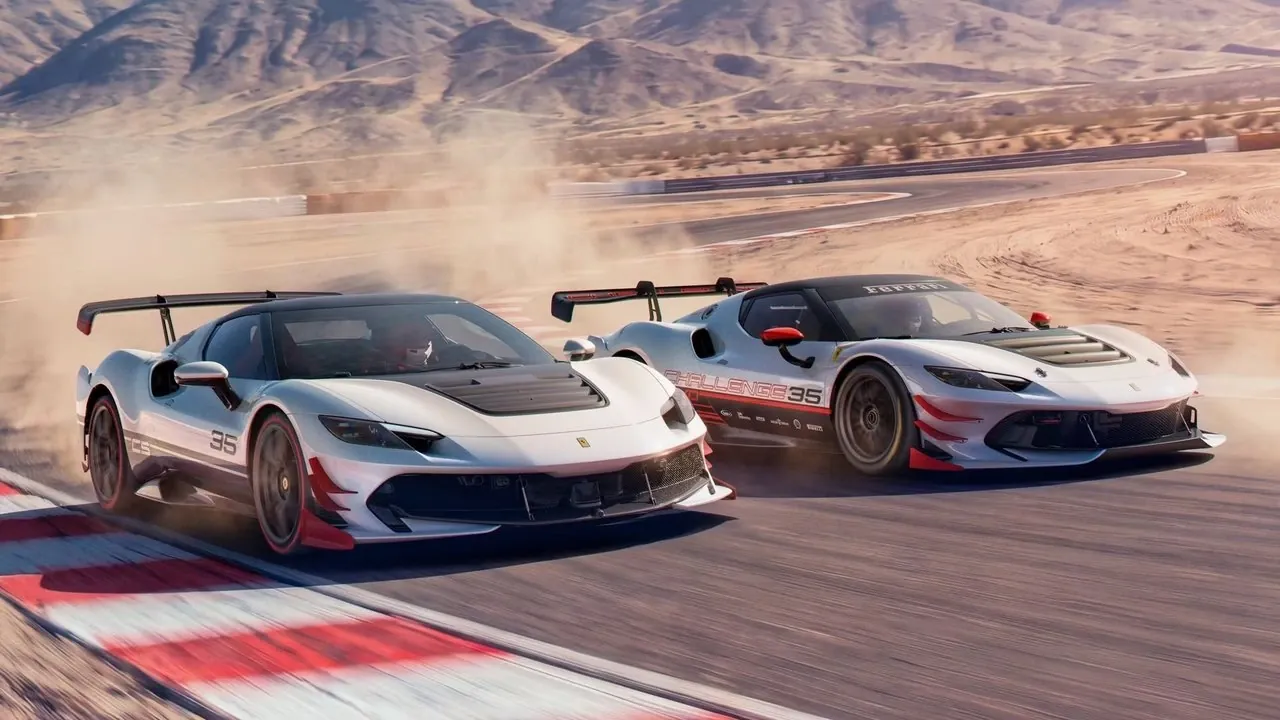
Ferrari has unveiled the new 296 Challenge Stradale and 296 Challenge Evo, two V6 performance cars that go without hybrid assistance. The Evo delivers 700 hp from its engine alone, while the Stradale gives you race-derived gearshift control alongside equipment such as adaptive cruise control. Their differences go beyond engine output, with distinct gearbox calibrations, aerodynamic setups and braking controls shaping how each responds to its driver. You’ll discover how those choices bring racing character to the Stradale and give Evo drivers more ways to adapt to different circuits.
Ferrari 296 Challenge Stradale and Evo: Road and Race
TL;DR Key Takeaways :
- Road and race: Ferrari developed the road-legal 296 Challenge Stradale alongside the 296 Challenge Evo race car.
- Engine output: Both use a non-hybrid 2,992 cc twin-turbo V6, producing 670 hp in the Stradale and 700 hp in the Evo.
- Stradale performance: Ferrari rates the Stradale for 0-100 km/h in 2.8 seconds.
- Stradale downforce: The Stradale produces 617 kg of downforce at 250 km/h, 72% more than the 296 GTB.
- Evo debut: The Evo is expected to debut in Europe and North America in 2027, with regional series following in 2028.
Ferrari developed the road-legal 296 Challenge Stradale alongside the 296 Challenge Evo, a race car for the Ferrari Challenge Trofeo Pirelli. The Evo builds on the 296 Challenge, which has competed since 2024, while the Stradale adapts its racing relative’s design for road-car safety and practical requirements.
Both cars were unveiled on November 21, 2026 at the Ferrari Finali Mondiali in Montmeló, Spain.
A Shared V6 Takes Two Different Forms
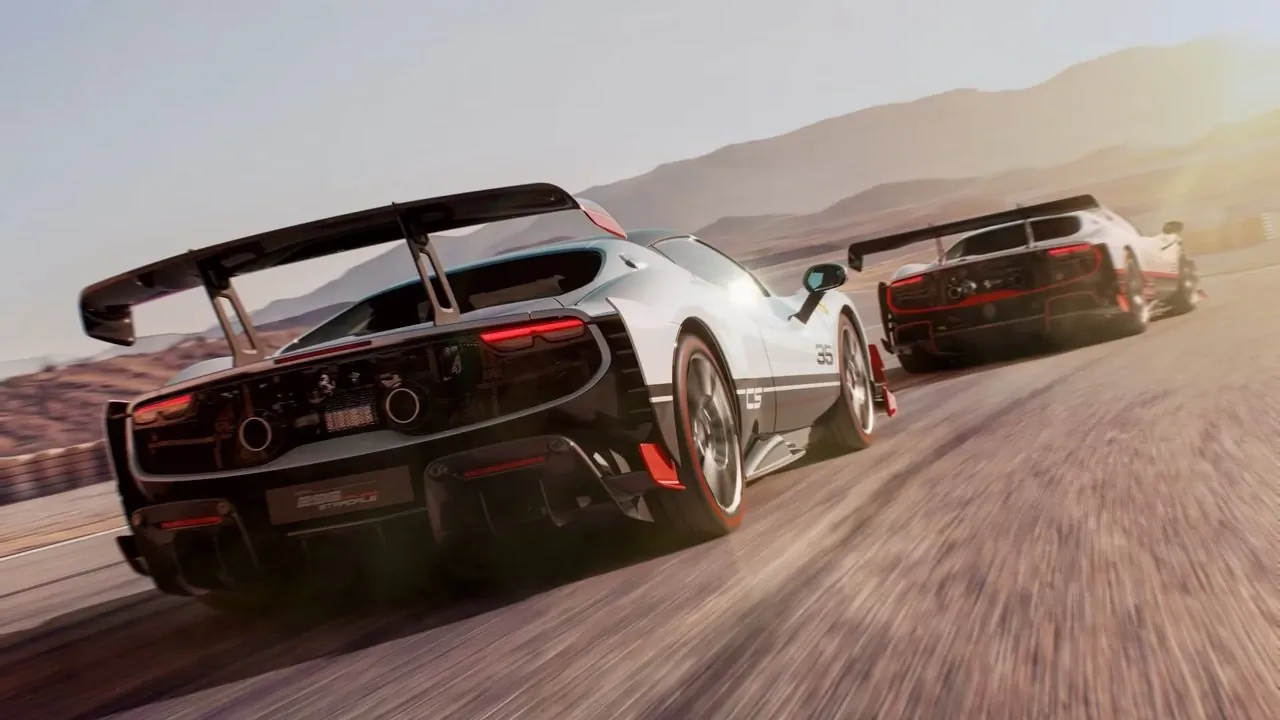
Both cars use a 2,992 cc twin-turbo V6 with a 120-degree layout and no hybrid assistance. The Stradale drives its rear wheels through an eight-speed dual-clutch gearbox, while the Evo uses a seven-speed dual-clutch transmission.
- Stradale output: 670 hp at 8,000 rpm.
- Evo output: 700 hp at 7,500 rpm.
- Stradale torque: 740 Nm at 6,250 rpm.
- Evo torque: 740 Nm at 6,000 rpm.
- Dry weight: 1,330 kg for each car; the Stradale figure includes optional equipment.
At 140 kg less than the 296 GTB’s stated dry weight, the Stradale has a weight-to-power ratio of 1.98 kg/hp. Ferrari rates it for 0-100 km/h in 2.8 seconds, 0-200 km/h in 7.9 seconds and a top speed above 300 km/h.
The Stradale Adapts Racing Hardware for the Road
The Stradale’s engine and turbochargers draw on the 296 Challenge. Ferrari says revised boost and valve-timing management increases dynamic torque by more than 32% over the 296 GTB for the same maneuver, while enlarged exhaust outlets reduce back pressure.
At high loads and revs, race-derived gearbox logic delivers upshifts in around 170 milliseconds; at low and medium revs, a different calibration shifts in around 250 milliseconds. A system carries engine pressure waves into the cabin, and Ferrari offers a separate exhaust for track use that dealerships can fit and remove.
Downforce Gives the Stradale a Race-Car Profile
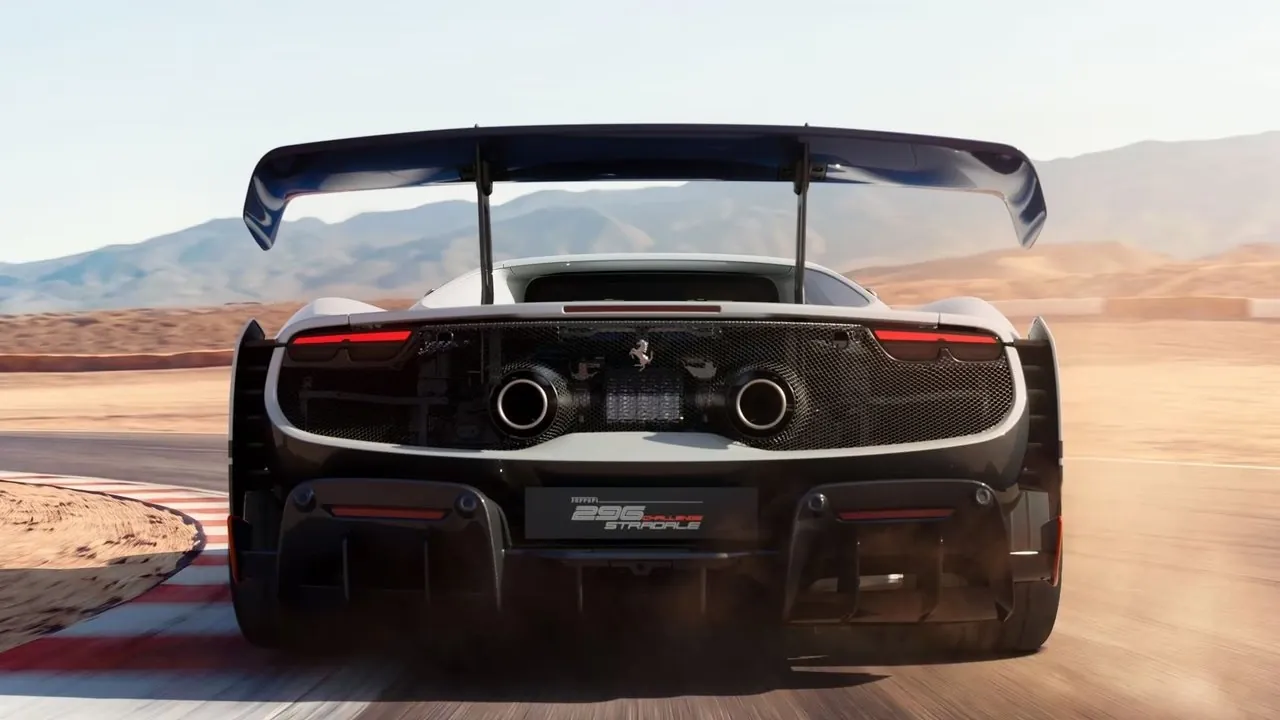
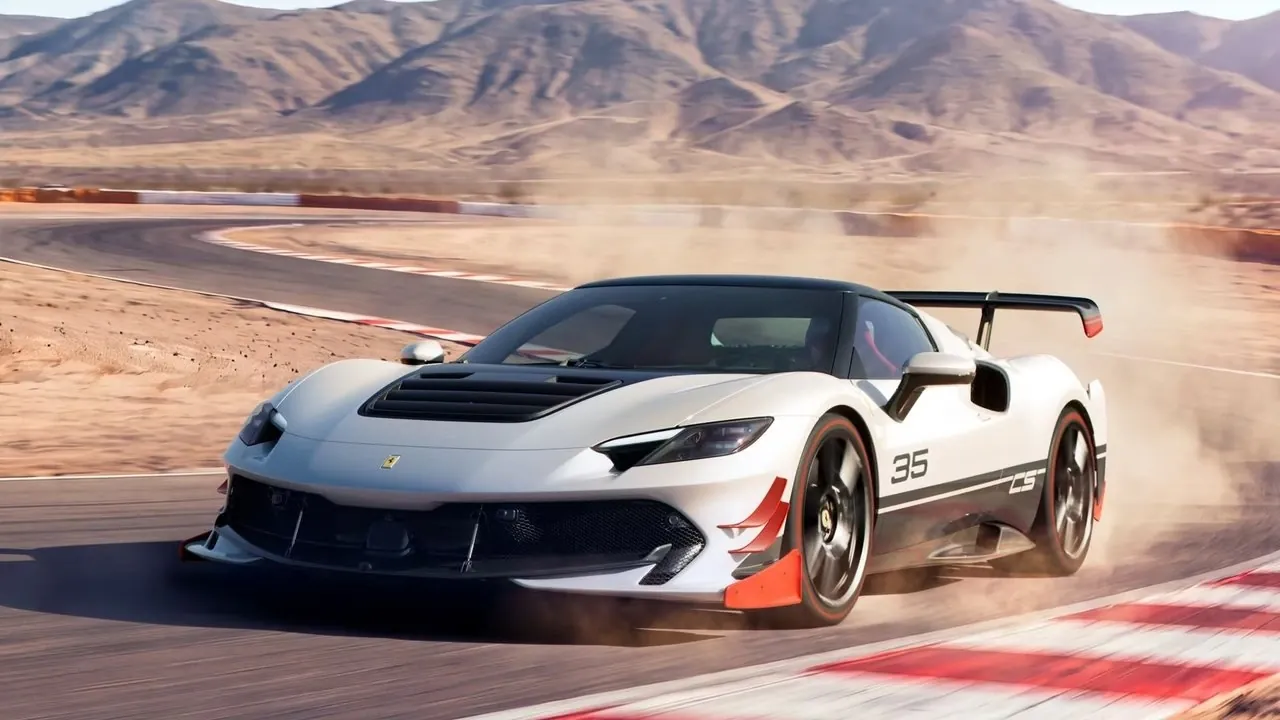
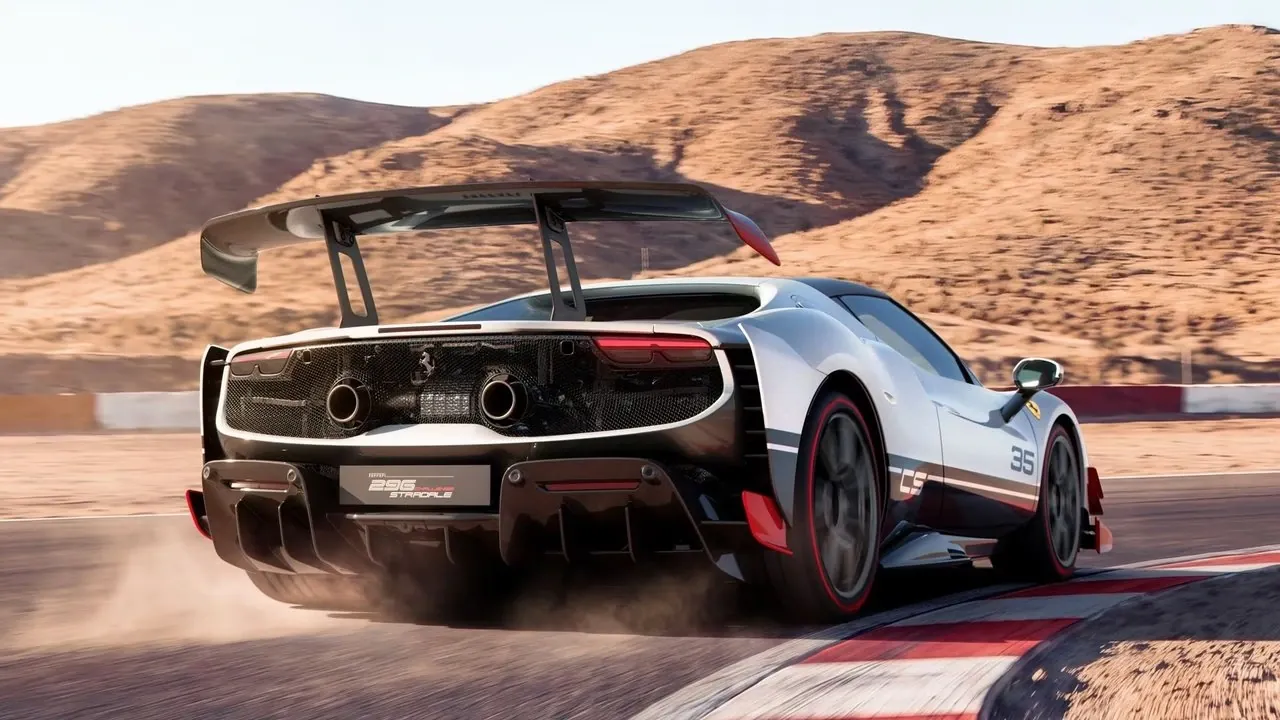
The Stradale produces 617 kg of downforce at 250 km/h, 72% more than the 296 GTB. Its fixed rear wing contributes 270 kg at that speed, working with a splitter, enclosed underbody, diffusers, and vortex generators.
Road use, including speed bumps, shaped the front underbody, while ducts called aerodampers reduce changes in downforce as the car pitches. Radiators ahead of the front wheels send hot air out through the bonnet and toward the windscreen and roof.
The Stradale Adds Track-Focused Controls and Brakes
Ferrari says the Stradale’s suspension setup increases maximum lateral performance by 7%, improves stability by 34% and reduces roll gradient by 68% compared with the 296 GTB. Semi-active dampers control changes in ride height and balance, and Pirelli developed P Zero R and P Zero Trofeo RS tires specifically for the car.
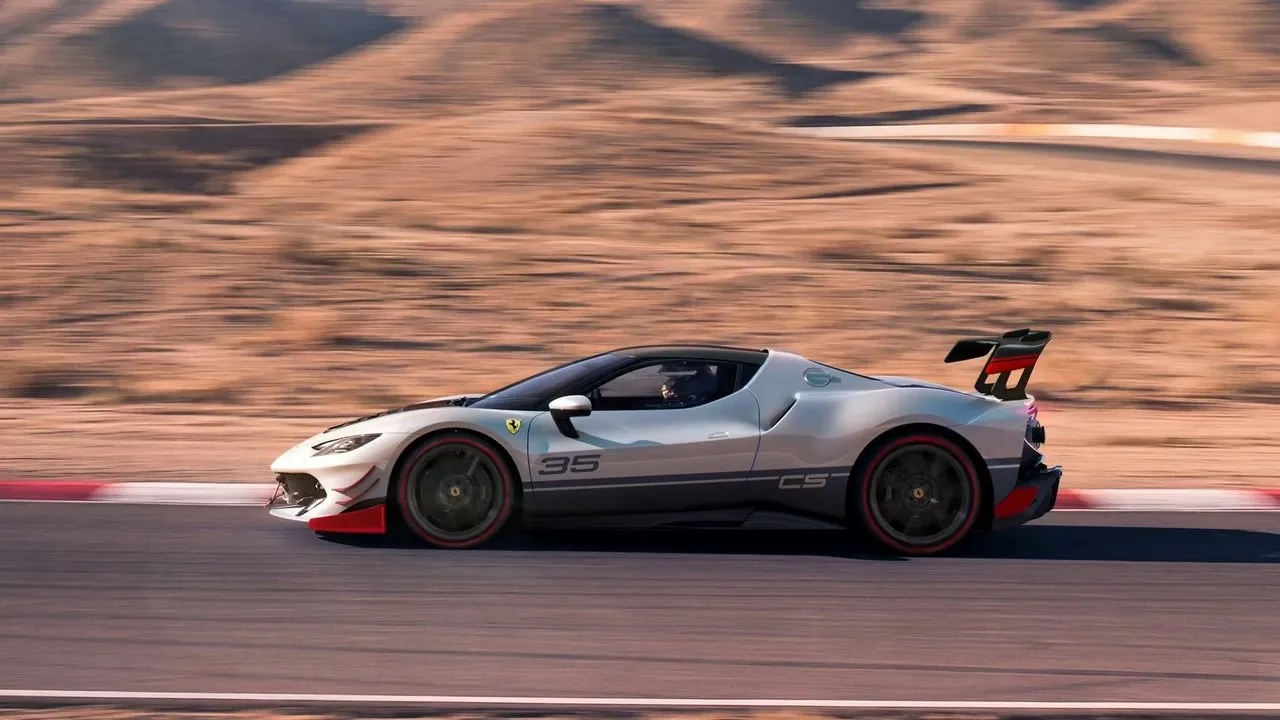
ABS Evo uses sensor data to guide braking across all grip conditions and Manettino settings, which range from Wet to ESC Off. Braking calibration changes from Race mode onwards, while suspension calibration becomes more performance-focused from Sport.
Carbon-ceramic discs measure 398 × 38 mm at the front and 380 × 34 mm at the rear. Ferrari designed the brake pedal to evoke the Evo’s feel, with reduced travel under heavy deceleration.
The Stradale Keeps Road Equipment in a Lighter Cabin
You can specify the cabin with trim removed beneath the seats and center console, exposing part of the chassis. Optional carbon-fiber tubular seats weigh 25% less than standard racing seats, while optional forged wheels reduce unsprung mass by approximately 11.9 kg.
Road equipment includes adaptive cruise control, lane assistance, blind-spot detection and automatic emergency braking for vehicles, pedestrians and cyclists. Front and rear cameras assist maneuvering, and assistance functions can be configured through the instrument cluster.
The Evo Offers High-Downforce and Low-Drag Setups
Ferrari says the Evo produces 12% more maximum downforce than the 296 Challenge, equivalent to an extra 100 kg at 250 km/h. Its Low Drag configuration reduces drag by 4%, using a lower rear-wing angle and removing front aerodynamic elements.
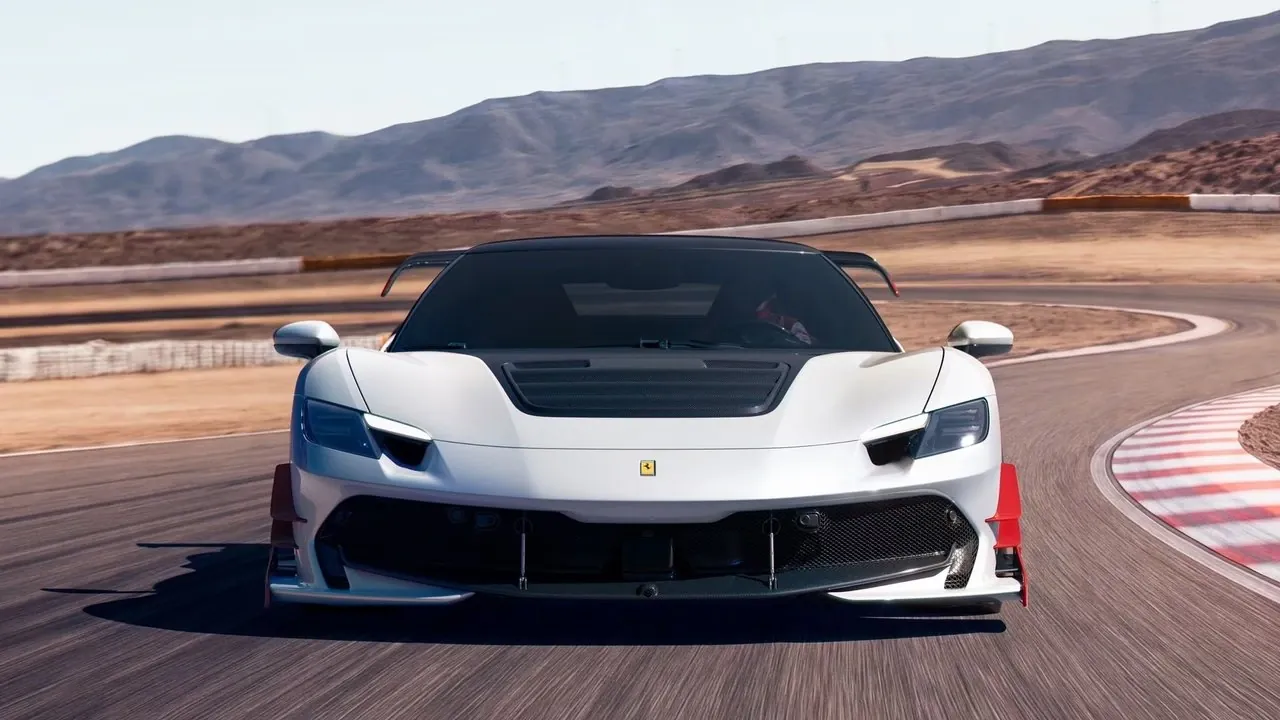
A wider wing adjustment range, revised diffuser, new mirrors and carbon-fiber components expand the setup options for different circuits. A cooled high-performance driveshaft also supports more extreme setups, while raising the rear ride height by up to 10 mm adds approximately 30 kg of downforce at 250 km/h.
In Ferrari’s comparison, the Evo in High Downforce configuration lapped Mugello 0.8 seconds faster than the 296 Challenge. Ferrari attributes the improvement to aerodynamic and vehicle-dynamics changes informed by driver and team feedback.
The Evo Gives Drivers More Control Over Intervention
Revised traction control and electronic differential settings are intended to improve braking stability and agility through fast corners. The brake pedal has more travel and requires more force for the same deceleration, while the redesigned display shows control intervention, tire-pressure data and lap times.
Two switches, TC1 and TC2, each offer five traction-control settings, and four ABS settings cover performance and stability in dry and wet conditions. Optional equipment includes a removable passenger seat, a silencer for noise-restricted circuits and an LTE antenna for Race Control messages.
We think leaving out the hybrid system is the most telling choice. It keeps weight and complexity down, and the Stradale’s 1,330 kg dry weight, 140 kg below the 296 GTB, gives that decision substance. Its racing engine roots, fixed rear wing and brake pedal designed to evoke the Evo’s feel reinforce what we see as Ferrari’s aim: a road car that feels like a race car, not just a faster version of the usual one.
The Evo is expected to make its racing debut in 2027 in the Europe and North America series, with regional series following from 2028. The LTE antenna is expected to be mandatory for Ferrari Challenge entries. For the Stradale, Ferrari’s seven-year maintenance program covers scheduled servicing every 20,000 km or annually, while fuel-consumption and emissions figures are pending homologation.
Source: Ferrari
Disclosure: Some of our articles include affiliate links. If you buy something through one of these links, Geeky Gadgets may earn an affiliate commission. Learn about our Disclosure Policy.
