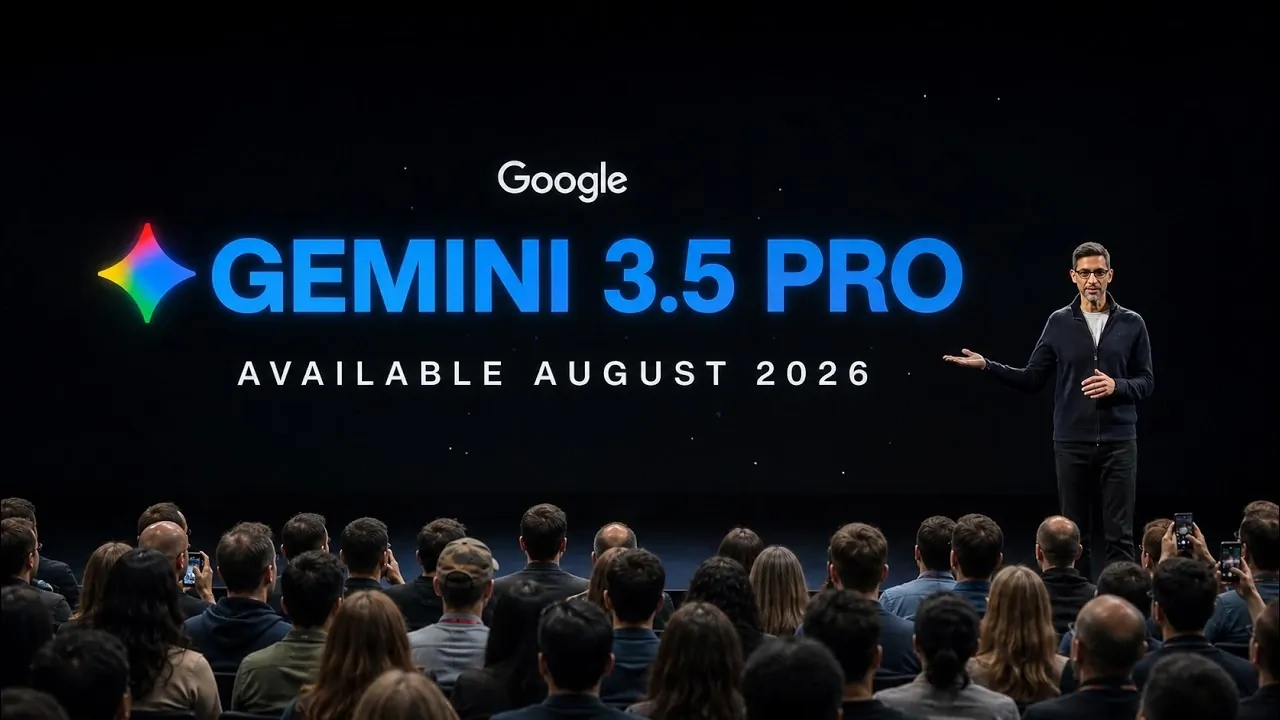
Google’s Gemini 3.5 Pro AI model, initially introduced as a significant step forward, has faced multiple delays that have disrupted its planned release. Originally scheduled for June 2026, the model has struggled to meet internal coding benchmarks, raising questions about its readiness and sparking concerns about Google’s ability to compete in a fast-moving AI landscape. According to AI Master, these delays highlight the increasing pressure on tech companies to balance innovation with execution in an industry defined by rapid iteration.
Dive into the broader context of these challenges, including how competitors like GPT 5.6 Sol and Claude Fable 5 are capitalizing on the gaps left by Gemini 3.5 Pro. Understand Google’s pivot toward ecosystem integration with upcoming models like Gemini 3.6 Flash and its implications for developers and users prioritizing efficiency and cost-effectiveness. This deep dive also explores the strategic adjustments Google may need to make to regain its footing in the evolving AI market.
Why the Gemini 3.5 Pro Delays Matter
TL;DR Key Takeaways :
- Google’s Gemini 3.5 Pro AI model has faced significant delays due to underperformance in internal benchmarks, raising concerns about the company’s ability to maintain its leadership in the competitive AI market.
- The delays have caused a $425 billion drop in Alphabet’s market valuation and led to talent retention challenges within Google’s DeepMind division.
- Google has shifted focus to Gemini 3.6 Flash, a cost-efficient model, but it may not meet the advanced needs of users seeking high-performance AI solutions.
- Competitors like Claude Fable 5 and GPT 5.6 Sol have gained ground, offering superior performance in areas such as reasoning, coding and language generation.
- Google is pivoting toward ecosystem integration, exemplified by its collaboration with Apple to power Siri, while also preparing for the release of Gemini 4, which could redefine its AI strategy and market position.
The repeated postponements have not only disrupted Google’s plans but also raised broader concerns about its capacity to deliver on ambitious promises. For a company that has long been a leader in AI innovation, such setbacks could have lasting implications for its reputation and market position.
The Gemini 3.5 Pro was envisioned as a flagship model, designed to demonstrate Google’s innovative advancements in AI technology. Its indefinite delay, however, signals deeper challenges within Google’s AI development pipeline. For users like you, this means continued reliance on older AI models or exploring alternative solutions from competitors that may offer more reliable and advanced capabilities.
The absence of a clear timeline for the model’s release has further fueled speculation about internal hurdles, ranging from technical bottlenecks to organizational inefficiencies. These delays are not just a setback for Google but also a missed opportunity for users seeking innovative tools to enhance productivity, automate tasks and solve complex problems.
Ripple Effects on the Market
The impact of Gemini 3.5 Pro’s delay extends far beyond Google’s internal operations. Alphabet, Google’s parent company, has suffered a dramatic $425 billion drop in market valuation since the initial announcement of the delay. This decline reflects waning investor confidence in Google’s ability to execute its AI strategy effectively.
Meanwhile, DeepMind, the division responsible for AI development, has faced significant challenges in retaining top talent. Several senior researchers have departed in recent months, raising concerns about the company’s ability to sustain innovation in an industry where expertise is a critical asset. These developments underscore the broader implications of the delays, as they not only affect Google’s market position but also its ability to attract and retain the talent necessary to drive future advancements.

Here are additional guides from our expansive article library that you may find useful on Gemini 3.5 Pro.
- Leaked Gemini 3.5 Pro Details Reveal Why Google is Falling Behind AI Rivals
- Google Delays Gemini 3.5 Pro Over Early Performance Flaws
- Google Delays Gemini 3.5 Pro to July 17 to Upgrade Math
- Google Gemini 3.5 Pro Leaks with 2 Million Context Window
- Stopgap Gemini 3.6 Flash May Launch During Gemini 3.5 Pro Delay
- Google Gemini 3.5 Pro is Reportedly Delayed by Coding Issues
- Gemini 3.5 Pro Leaks Reveals Context Window Fits 2 Million Tokens
- What Early Tests Reveal About Gemini 3.5 Flash and Pro
- Why Google’s Gemini 3.5 Flash Might Not Be Enough to Beat OpenAI
- Google Reportedly Pivots to Gemini 4 Over Gemini 3.5 Pro Flaws
Google’s Pivot: Gemini 3.6 Flash
In response to the setbacks with Gemini 3.5 Pro, Google has shifted its focus to the development and release of Gemini 3.6 Flash. This new model prioritizes cost efficiency over innovative performance, offering leaner outputs at a lower price point. While this approach may appeal to budget-conscious users, it represents a departure from the high-performance standards that many have come to expect from Google’s AI offerings.
For users like you, this pivot may present a mixed bag of opportunities and limitations. While Gemini 3.6 Flash could be a practical solution for basic AI tasks, it may fall short in addressing more advanced needs, such as complex reasoning, sophisticated coding, or nuanced language generation. As a result, those seeking high-performance AI solutions may need to look elsewhere for tools that align with their requirements.
Competitors Gain Ground
As Google grapples with delays and strategic shifts, its competitors have capitalized on the opportunity to strengthen their positions. Models like Claude Fable 5 and GPT 5.6 Sol have emerged as strong alternatives, outperforming Google’s offerings in key areas such as reasoning, language generation and coding tasks. These advancements highlight the growing competition in the AI market, where innovation and reliability are paramount.
Companies like Meta have also taken the opportunity to critique Google’s setbacks, further emphasizing the challenges the tech giant faces in maintaining its leadership. For users, this competitive landscape offers a wider array of choices, but it also underscores the importance of staying informed about the strengths and weaknesses of different AI models.
Strategic Shift: Ecosystem Integration
Rather than focusing exclusively on raw AI performance, Google appears to be pivoting its strategy toward ecosystem integration and distribution. This shift is evident in key partnerships, such as its collaboration with Apple to power Siri on iPhones. By embedding its AI models into widely used platforms, Google aims to secure a foothold in the broader technology ecosystem, potentially reaching a larger audience and diversifying its applications.
While this approach may not immediately restore Google’s competitive edge in performance benchmarks, it could redefine its role in the AI market. For users, this strategy may result in more seamless and integrated AI experiences, even if the underlying models do not represent the pinnacle of technical innovation.
What Lies Ahead
Looking to the future, Google has announced that Gemini 4 is currently in pre-training, with plans for a monthly release cadence. A critical milestone is anticipated in September 2026, when the Gemini-powered Siri beta is set to launch. This integration could mark a turning point in Google’s AI strategy, potentially reshaping its market position and addressing some of the concerns raised by the delays.
For users, the upcoming releases represent both a challenge and an opportunity. Staying informed about these developments will be crucial for making the most of the rapidly evolving AI landscape.
How You Can Adapt
In light of these developments, here are some practical steps you can take to navigate the changing AI market:
- Evaluate Gemini 3.6 Flash for cost-effective and basic AI tasks, particularly if budget constraints are a primary concern.
- For advanced reasoning, coding, or language generation, consider exploring alternatives such as Claude Fable 5 or GPT 5.6 Sol, which currently outperform Google’s offerings in these areas.
- Keep an eye on upcoming releases, especially the Gemini-powered Siri beta in September 2026, as it could signal a significant shift in Google’s AI capabilities and strategy.
While the delays surrounding Gemini 3.5 Pro have raised valid concerns about Google’s trajectory in AI, the company’s strategic pivot toward ecosystem integration and its upcoming releases may open new opportunities. By staying adaptable and informed, you can position yourself to benefit from the advancements and innovations that continue to shape the AI landscape.
Media Credit: AI Master
Disclosure: Some of our articles include affiliate links. If you buy something through one of these links, Geeky Gadgets may earn an affiliate commission. Learn about our Disclosure Policy.
