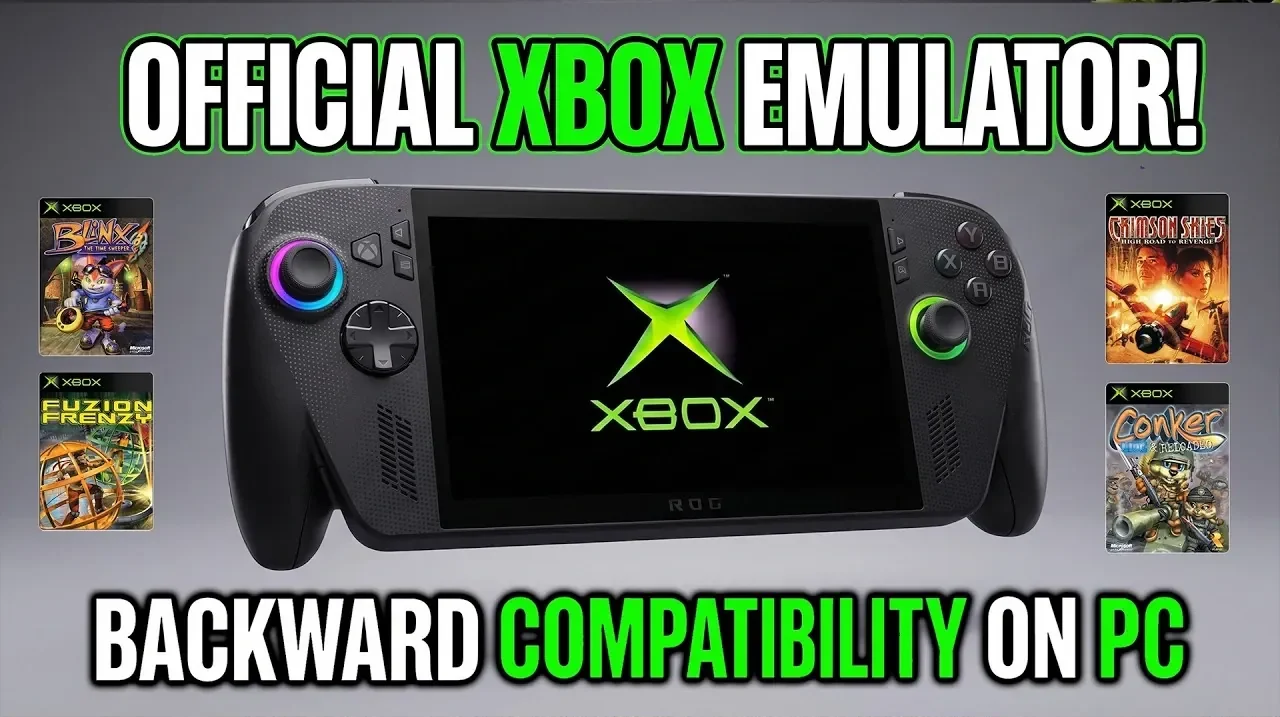
Microsoft has officially introduced Xbox emulation for PC, allowing select original Xbox games to run on modern hardware through a dual-emulator system. This architecture combines the Xbox 360 emulator (XEO3) with the original Xbox emulator (XEFU), bridging the gap between legacy gaming experiences and today’s technology. As highlighted by ETA Prime, this initiative represents a significant step in backward compatibility but comes with notable constraints. For example, the system currently supports only four games—Blinx: The Time Sweeper, Conker’s Live & Reloaded, Fusion Frenzy, and Crimson Skies: High Road to Revenge—leaving much of the original Xbox library unavailable.
Explore how this dual-emulator approach enhances visual quality through features like resolution scaling and anti-aliasing, while also grappling with performance inconsistencies such as frame rate drops in certain titles. Gain insight into the challenges of licensing, the absence of online multiplayer and the community’s role in testing the system’s limits. This breakdown offers a clear look at the strengths and weaknesses of Microsoft’s emulation efforts and what they mean for the future of gaming preservation.
Backward Compatibility: What It Means for PC Gamers
TL;DR Key Takeaways :
- Microsoft has introduced official Xbox emulation for PC, using a dual-emulator system (XEO3 for Xbox 360 and XEFU for the original Xbox) to enable backward compatibility for select original Xbox games.
- The system currently supports only four games: Blinx: The Time Sweeper, Conker’s Live & Reloaded, Fusion Frenzy, and Crimson Skies: High Road to Revenge, with performance varying significantly between titles.
- Modern enhancements, such as resolution upscaling, Vsync and anti-aliasing, improve the visual quality of older games, though some remain locked to their original frame rates.
- Performance inconsistencies, including frame rate drops and graphical glitches, highlight the technical challenges of emulating older hardware on modern PCs.
- Licensing restrictions, a limited game library and the absence of online multiplayer functionality present significant challenges, but the initiative sets a precedent for preserving gaming history and advancing backward compatibility in the industry.
Backward compatibility has always been a key concern for gamers who wish to revisit classic titles on newer systems. Microsoft’s emulation system directly addresses this demand, allowing PC users to experience a curated selection of original Xbox games. The technology behind this innovation relies on a dual-emulator architecture, combining the Xbox 360 emulator (XEO3) with the original Xbox emulator (XEFU). Together, these emulators bridge the gap between older gaming experiences and the capabilities of modern x86-based PCs.
This system is a significant step forward, but it also underscores the challenges of maintaining compatibility with older hardware. While the dual-emulator approach is technically impressive, it introduces complexities that can affect performance and optimization, especially across different hardware configurations.
The Dual-Emulator System: How It Works
At the core of Microsoft’s emulation initiative is the dual-emulator system, a layered design that ensures compatibility with the original Xbox’s hardware architecture. XEO3, the Xbox 360 emulator, acts as a host for XEFU, the original Xbox emulator. This setup allows the system to emulate the unique hardware of the original Xbox while maintaining performance on modern PCs.
However, this layered approach is not without its challenges. The interaction between the two emulators can lead to performance inconsistencies, with some games running smoothly while others encounter issues such as frame rate drops or graphical glitches. These challenges highlight the technical hurdles of emulating older hardware on modern systems, even with official support.

Become an expert in Xbox with the help of our in-depth articles and helpful guides.
- Why Xbox Just Removed Its Biggest Multiplayer Paywall
- Budget Xbox Project Helix S Series Leaked : Priced At $200
- Asher Sharma’s Xbox Reveal: Project Helix Details and Halo Remakes Confirmed
- Project Helix Leaks Reveal a $1,200 Hybrid Xbox Coming In 2027
- Microsoft Reveals More About Project Helix and the Future of Xbox
- Project Helix Specs and Release Window Confirmed in Latest Xbox Strategy Update
- Inside the Massive Xbox 2026 Games Showcase
- PS6 vs. Xbox Helix: Who Wins the Next-Gen Power War?
- Why Xbox is Breaking Records While PlayStation Faces Pricing Backlash
- Inside Xbox’s 33% Hardware Sales Drop and the Radical Plan to Fix It
Supported Games: A Limited Selection
Currently, Microsoft’s emulation system supports only four original Xbox games:
- Blinx: The Time Sweeper
- Conker’s Live & Reloaded
- Fusion Frenzy
- Crimson Skies: High Road to Revenge
These games represent a mix of genres, from platforming and party games to aerial combat. While this selection offers a glimpse into the potential of the emulation system, it leaves much of the original Xbox library untouched. Performance also varies significantly between titles. For instance, Fusion Frenzy runs smoothly on most systems, while Conker’s Live & Reloaded struggles with optimization, showcasing frame rate issues and graphical artifacts.
The limited game library is a reminder of the challenges involved in licensing and optimizing older titles for modern platforms. Many iconic Xbox games remain unavailable, leaving fans eager for a broader selection.
Modern Enhancements for Classic Games
One of the standout features of Microsoft’s emulation system is its ability to enhance the visual quality of older games. Users can adjust settings such as resolution, enable Vsync and apply anti-aliasing to improve the graphics of classic titles. Upscaling technology allows these games to run at higher resolutions, making them more visually appealing on today’s high-definition displays.
Despite these enhancements, some limitations persist. Certain games remain locked to their original frame rates, such as 30 FPS, reflecting the constraints of the original hardware. While these graphical improvements are a welcome addition, they also highlight the balance between preserving the authenticity of older games and meeting the expectations of modern gamers.
Performance: Strengths and Weaknesses
Performance is a critical factor in the success of any emulation system and Microsoft’s dual-emulator approach delivers mixed results. Some games, like Crimson Skies, perform well on mid-range PCs, offering smooth gameplay and stable frame rates. However, other titles, such as Conker’s Live & Reloaded, face significant challenges, including frame rate drops and graphical glitches.
These performance inconsistencies underscore the technical difficulties of emulating older hardware. While Microsoft’s system provides a solid foundation, further optimization is necessary to ensure a consistent experience across all supported games and hardware configurations.
Community Involvement: Expanding the System’s Potential
The gaming community has already begun exploring Microsoft’s emulation tools, experimenting with ways to expand compatibility and improve performance. By using the official emulators as a foundation, enthusiasts are testing the system’s limits and pushing for broader support. This community-driven effort could lead to exciting advancements, such as the inclusion of additional games or improved optimization for existing titles.
However, this experimentation also raises questions about the boundaries of official emulation. While third-party developers and modders play a crucial role in enhancing the gaming experience, their involvement highlights the limitations of Microsoft’s current approach and the need for ongoing development.
Challenges: Licensing and Game Library Constraints
Despite its promise, Microsoft’s emulation system faces several notable challenges:
- Online multiplayer functionality is unavailable for the supported games.
- Original game demos and bonus content are inaccessible due to licensing restrictions.
- The limited game library excludes many beloved titles from the original Xbox era.
These constraints reflect the complexities of bringing older games to modern platforms, particularly when intellectual property rights are involved. For fans of the original Xbox, the small selection of supported games may feel underwhelming, as many iconic classics remain out of reach.
Implications for the Gaming Industry
Microsoft’s official emulation initiative has the potential to influence the gaming industry in significant ways. By introducing a functional dual-emulator system, the company sets a precedent for other developers and platforms to explore backward compatibility. This move could inspire advancements in third-party emulators, particularly for x86 systems and encourage further innovation in preserving gaming history.
However, the long-term success of this initiative will depend on Microsoft’s ability to address its current limitations. Expanding the game library, improving performance and resolving licensing challenges will be crucial steps in making sure the system’s viability and appeal to a broader audience.
A Promising Step Forward
Microsoft’s official Xbox emulation for PC represents a bold effort to preserve gaming history and make classic titles accessible to a new generation. The dual-emulator system is an innovative solution, but its limitations, ranging from a small game library to performance inconsistencies, highlight areas for improvement. As the gaming community continues to experiment and refine the system, this initiative could pave the way for more robust emulation solutions in the future. For now, it offers a promising glimpse into the potential of backward compatibility, with room for growth and development.
Media Credit: ETA PRIME
Disclosure: Some of our articles include affiliate links. If you buy something through one of these links, Geeky Gadgets may earn an affiliate commission. Learn about our Disclosure Policy.
