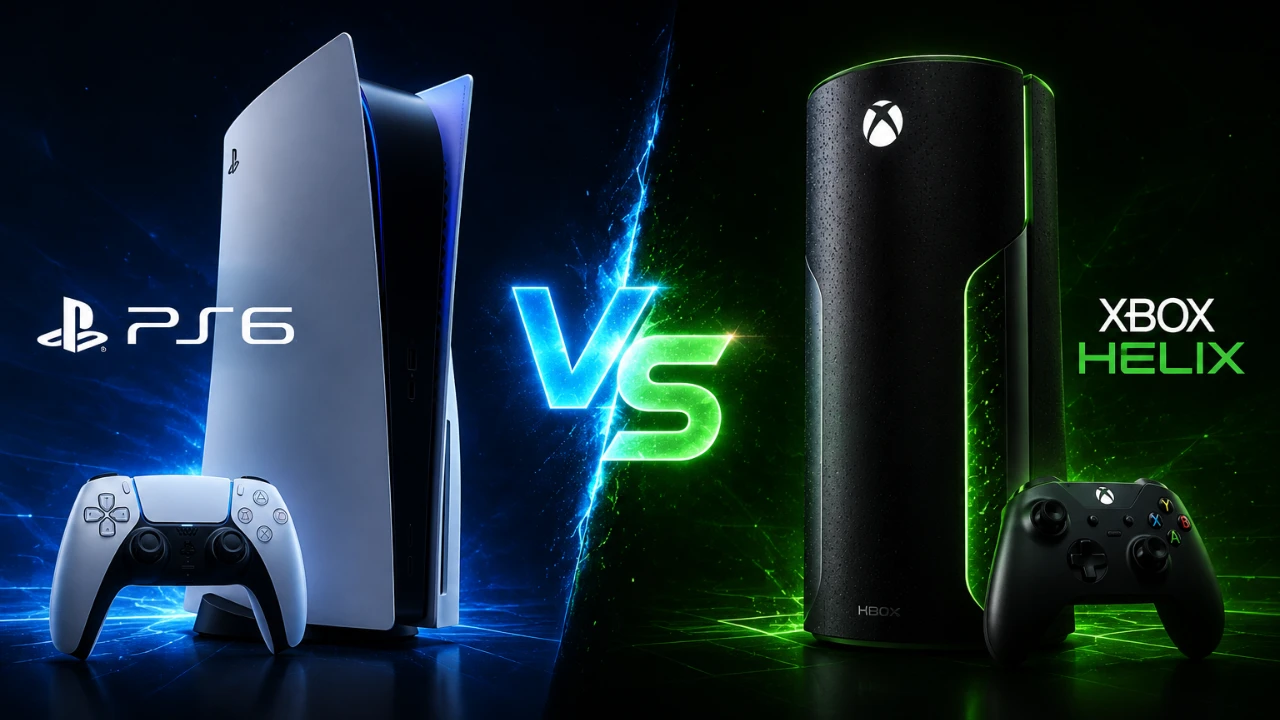
The gaming industry is on the cusp of significant change as it eagerly anticipates the arrival of the next-generation consoles, the PlayStation 6 (PS6) and Xbox’s Project Helix, set to launch during the holiday season of 2027. These consoles promise to push the boundaries of gaming with innovative technology and features, but they also face substantial challenges. Rising production costs, evolving consumer demands, and a fiercely competitive market will test whether these systems can strike the right balance between innovation, affordability, and accessibility. The video below from The Tech Chap gives us more details about the two consoles.

When to Expect the Launch
The PS6 and Project Helix are expected to hit the market in late 2027, though potential delays could push their release into early 2028. Developers are projected to receive prototype hardware as early as 2026, giving them ample time to optimize their games for these platforms. This timeline aligns with the typical console lifecycle, which generally spans 6-8 years, allowing Sony and Microsoft to refine their designs and marketing strategies.
The staggered timeline also provides an opportunity for both companies to assess market trends and consumer feedback. By the time these consoles launch, they will need to address not only the expectations of hardcore gamers but also the growing interest in cloud gaming, handheld devices, and subscription-based services.
What’s Under the Hood?
Both the PS6 and Project Helix are expected to feature state-of-the-art hardware designed to deliver unparalleled gaming experiences. Key components include AMD Zen 6 processors, RDNA 5 graphics, and GDDR7 RAM, which promise smoother gameplay, faster load times, and stunning visuals. These advancements aim to meet the increasing demands of modern games, which are becoming more complex and resource-intensive.
- Xbox’s Modular Approach: Xbox is rumored to adopt a hybrid PC-console design with chiplet architecture, allowing modular upgrades. This approach could appeal to gamers seeking flexibility and extended hardware longevity.
- Sony’s Traditional Path: The PS6 is expected to stick with a more conventional Accelerated Processing Unit (APU) design, prioritizing streamlined performance and reliability over modularity.
AI-driven technologies will also play a pivotal role in enhancing the gaming experience. Features like ray tracing, path tracing, and advanced upscaling technologies (PSSR 3 for PS6 and FSR Diamond for Xbox) will elevate realism in lighting, textures, and overall visuals. However, storage limitations, likely capped at 1TB, could become a bottleneck as game file sizes continue to grow, potentially requiring gamers to invest in external storage solutions.
Price Points and Payment Options
The anticipated price range for these consoles is between $699 and $799, reflecting the rising costs of advanced components. This price point positions the PS6 and Project Helix as premium devices, but both companies are exploring ways to make them more accessible to a broader audience. Some models could be around $1,000.
- Tiered Models: Xbox may offer multiple versions of Project Helix, such as a budget-friendly 1080p model alongside a premium 4K version, catering to gamers with varying budgets and performance needs.
- Subscription Plans: Both Sony and Microsoft are considering subscription-based payment options, allowing you to spread the cost over time. This approach could make high-end gaming more attainable for casual players.
- Ad-Supported Models: Another possibility is ad-supported consoles, which could lower the upfront price. While this might attract budget-conscious gamers, it raises concerns about the potential for intrusive advertising during gameplay.
Affordability will be a critical factor in determining the success of these consoles, especially as economic pressures continue to shape consumer spending habits.
Challenges in a Changing Market
The gaming industry is undergoing a period of transformation, driven by economic pressures, technological advancements, and shifting consumer expectations. Rising component costs and supply chain disruptions could make it difficult for Sony and Microsoft to maintain competitive pricing without sacrificing profitability.
- Xbox’s Strategic Shift: Xbox is doubling down on its Game Pass subscription service, which has become a cornerstone of its ecosystem. By potentially outsourcing hardware production, Microsoft aims to streamline operations and focus on software and services.
- Sony’s Momentum: Sony, buoyed by the strong sales of the PS5, faces the challenge of sustaining its market dominance. The company will need to innovate while maintaining the brand loyalty that has been a key driver of its success.
Both companies must also adapt to the growing popularity of cloud gaming and handheld devices, which are reshaping how and where people play games. The ability to anticipate and respond to these trends will be crucial in determining their long-term success.
Handheld and Cloud Gaming: The Next Frontier
The resurgence of handheld gaming, fueled by the success of the Nintendo Switch, has prompted both Sony and Microsoft to explore portable gaming solutions. Rumors suggest that both companies are developing handheld devices designed to complement their next-gen consoles. These devices would likely integrate seamlessly with cloud gaming services, allowing you to play high-quality games on the go.
Cloud gaming itself is emerging as a significant focus for the industry. Affordable streaming devices could cater to casual gamers who prioritize convenience over high-end performance. By offering a range of options, from premium consoles to portable and streaming devices, Sony and Microsoft aim to capture a broader audience and adapt to the changing habits of gamers.
The Role of Next-Gen Games
The success of the PS6 and Project Helix will hinge on their game libraries. Highly anticipated titles like GTA 6, The Witcher 4, and The Elder Scrolls 6 are expected to showcase the full potential of next-gen hardware, offering immersive worlds, dynamic gameplay, and stunning visuals.
AI-driven enhancements will also breathe new life into current-gen games, making for a smoother transition for players. These advancements could redefine what you expect from gaming, delivering experiences that are more interactive, realistic, and engaging than ever before.
Rumored PS6 vs Xbox Helix Specifications
| Component | PlayStation 6 (Rumored) | Xbox Next: Project Helix (Rumored) |
| SoC Codename | Project Amethyst / Orion | Magnus |
| CPU Architecture | AMD Zen 6 Generation | AMD Zen 6 Generation |
| CPU Core Layout | 8 to 10 Cores (Hybrid: 7-8x Zen 6c + 2x Zen 6 LP) | 11 Cores (Hybrid: 3x Zen 6 + 8x Zen 6c) |
| GPU Architecture | AMD RDNA 5 / UDNA | AMD RDNA 5 |
| GPU Compute Units | 52 to 54 CUs | 68 CUs |
| Memory Capacity | 30GB to 32GB GDDR7 (Up to 40GB max theoretical) | 36GB to 48GB GDDR7 |
| Memory Bus Width | 160-bit | 192-bit |
| Dedicated NPU | Integrated GPU “Neural Arrays” | Standalone NPU (Up to 110 TOPS @ 6W) |
| Upscaling Standard | PSSR 2.0 (PlayStation Spectral Super Resolution) | AMD FSR Diamond |
| Target Performance | 4K / 60–120 FPS (Heavy focus on Ray Tracing/PT) | Native 4K / 120 FPS |
| Estimated Die Size | ~280 mm² (Monolithic) | ~408 mm² (Chiplet: 144mm² SoC + 264mm² GPU) |
| Estimated Price | $599 – $999 (Potential “Lite” vs. “Pro” launch strategy) | $999 – $1,200 (Positioned as a premium PC alternative) |
| Key Differentiator | Modular design (detachable disc), native handheld companion | Plays PC games natively (Steam, Epic, GOG storefront support) |
What Lies Ahead?
The PS6 and Xbox Project Helix represent a bold step forward for the gaming industry. With features like 4K resolution at 120Hz, AI-generated frames, and ultra-high refresh rates, these consoles aim to deliver a premium gaming experience. Game engines like Unreal Engine 6 will further push the boundaries of what’s possible, creating lifelike environments and more interactive gameplay.
However, their success will depend on how well they address challenges such as affordability, market competition, and evolving consumer preferences. As a gamer, you stand to benefit from these innovations, but only time will reveal whether these consoles will truly redefine gaming or simply mark another step in its ongoing evolution.
Take a look at other insightful guides from our broad collection that might capture your interest in the PS6 release date.
- Sony PS6 Manufacturing to Start in 2027 & What Gamers Can Expect
- PS6 Everything We KnowSo Far : Rumours, Release Date, Price & Specifications
- Why the Latest PlayStation 6 Leaks Are Shocking the Gaming Industry
Source & Image Credit: The Tech Chap
Disclosure: Some of our articles include affiliate links. If you buy something through one of these links, Geeky Gadgets may earn an affiliate commission. Learn about our Disclosure Policy.
