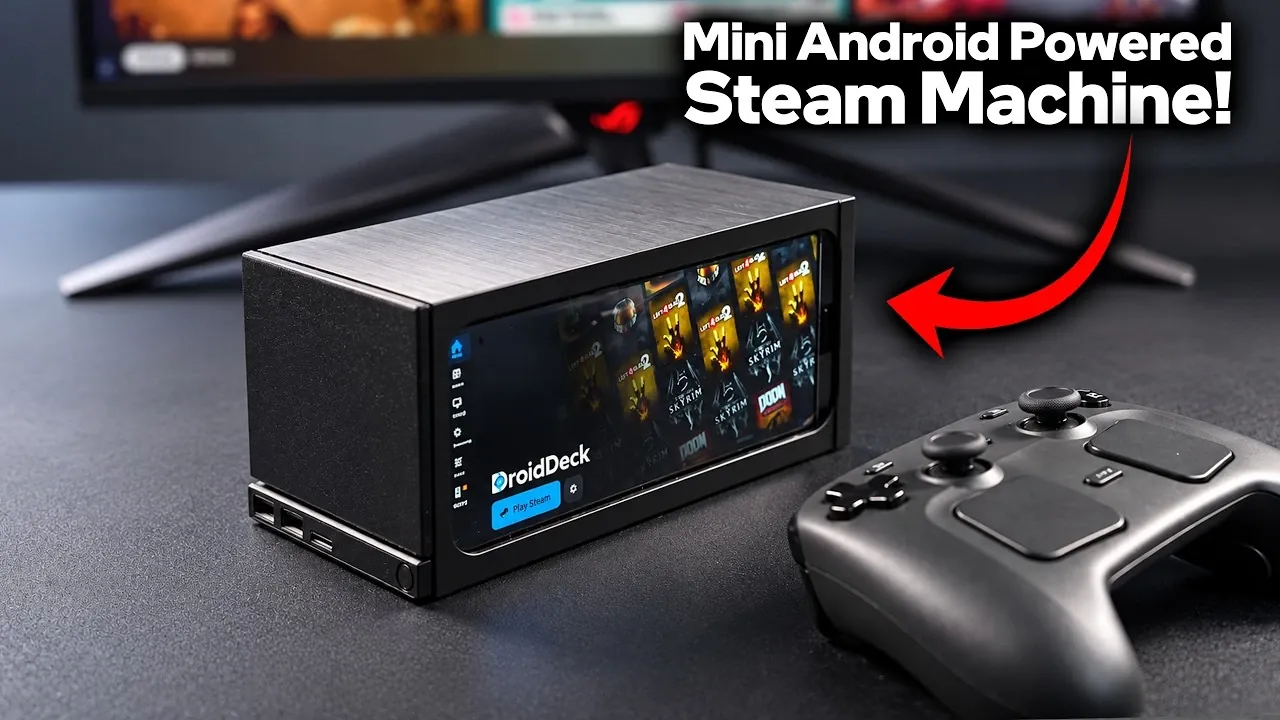
ETA Prime has converted a high-performance Android smartphone into a compact Steam Machine, highlighting how Android devices can handle gaming in unique ways. Using the Red Magic 11 Pro S, equipped with a Snapdragon 8 Gen 5 processor and 16GB of RAM, the project demonstrates x86 PC game emulation directly on Android. The setup incorporates a custom 3D-printed case, a USB-C to HDMI hub for external display support and a thermoelectric cooling module to manage heat during extended gameplay sessions.
Explore the Red Magic’s “console mode” and its ability to enable dual-screen functionality for multitasking. Learn how peripherals like controllers and keyboards enhance the gaming experience and review performance benchmarks for games such as Cyberpunk 2077 and Left 4 Dead 2. This deep dive also examines the technical and practical challenges of x86 emulation on Android, providing a detailed look at the trade-offs involved in this experimental build.
Key Components and Design Innovations
- The project transforms the Red Magic 11 Pro S smartphone into an Android-powered Steam Machine capable of emulating x86 PC games, redefining mobile gaming possibilities.
- Key hardware modifications include a custom 3D-printed case, USB-C to HDMI hub for external display support, thermoelectric cooling for heat management and peripheral ports for versatile gameplay.
- The device delivers performance comparable to the Steam Deck for certain games at 720p resolution, though challenges like thermal throttling and compatibility issues with some titles persist.
- Game testing results show mixed performance, with titles like “Injustice 2” running smoothly at 60 FPS, while others like “Spider-Man: Miles Morales” experience graphical issues due to emulation limitations.
- Future advancements in Snapdragon processors, cooling solutions and emulation software could further enhance the potential of Android devices for portable PC gaming, despite current practicality limitations.
The foundation of this project is the Red Magic 11 Pro S, a high-performance gaming smartphone equipped with the Snapdragon 8 Gen 5 processor, 16GB of RAM and integrated liquid cooling. This device was selected for its exceptional processing power and gaming-oriented features, making it an ideal candidate for this ambitious build.
To create the Steam Machine aesthetic, a custom 3D-printed case was designed, giving the device a unique and functional appearance. Additional hardware modifications were implemented to expand its capabilities, including:
- USB-C to HDMI Hub: Enables external display support for a more immersive gaming experience.
- Thermoelectric Cooling Module: Helps manage heat during intensive gaming sessions, making sure stable performance.
- Peripheral Ports: Allows connection of external devices like keyboards, mice and controllers for versatile gameplay.
These enhancements ensure the device remains compact while offering the flexibility to adapt to various gaming styles. The result is a portable gaming setup that balances power and practicality.
Functionality and Gaming Experience
This Android-powered Steam Machine operates by emulating x86 PC games directly on the smartphone, eliminating the need for cloud gaming or streaming services. Using Red Magic’s “console mode,” the phone can output to an external display while retaining dual-screen functionality. This feature allows the phone’s screen to be used for secondary tasks, such as monitoring system performance or adjusting in-game settings.
The setup supports a wide range of peripherals, allowing users to customize their gaming experience. Whether you prefer a controller for action-packed adventures or a keyboard and mouse for precision in first-person shooters, the device adapts seamlessly to your preferences.

Check out more relevant guides from our extensive collection on Steam Machine that you might find useful.
- High End Emulation on the Steam Machine Tested
- Steam Machine Guide: How to Get Maximum Performance Out of the 6-Inch Cube
- Compact Steam Machine Alternative : Built for 1440p Gaming
- Valve Hits 760,000 Yearly Steam Machine Sales Amid RAM Shortage
- Upgrading Valve’s Steam Machine to 64GB RAM and 4TB Storage
- Steam Machine Hands on : New Console Struggles with Native 4K Gaming
- How to Upgrade Steam Machine SSD Storage with a 1TB Samsung 9100 Pro
- Valve Revamps the Steam Machine UI with New Verification Metrics
- Valve Commits to 2026 Delivery for All Steam Machine Orders
- FSR 4.1 Pushes Crimson Desert to 70+ FPS on Steam Machine
Performance Insights and Challenges
In terms of performance, the device delivers results comparable to the Steam Deck for certain games, particularly at 720p resolution and low settings. Technologies like FidelityFX Super Resolution (FSR) enhance performance by generating additional frames, though this can sometimes result in visual artifacts or reduced image quality. However, the project is not without its challenges:
- Thermal Management: Despite the integrated liquid cooling and thermoelectric module, the device occasionally experiences thermal throttling during extended gaming sessions, which impacts performance.
- Compatibility Limitations: While many games run smoothly, some titles, such as Spider-Man 2 and Doom Eternal, encounter graphical glitches or crashes, highlighting the limitations of x86 emulation on Android.
These challenges underscore the experimental nature of the project but also highlight areas for potential improvement in future iterations.
Game Testing and Results
To evaluate the device’s capabilities, several popular games were tested. The results provide valuable insights into its performance:
- Spider-Man: Miles Morales: Playable with occasional graphical issues, demonstrating the limits of emulation.
- Injustice 2: Achieved a smooth 60 FPS at 720p resolution, showcasing the device’s potential for optimized games.
- Left 4 Dead 2: Ran consistently well with minimal issues, offering a stable gaming experience.
- Cyberpunk 2077: Managed 30 FPS on low settings, pushing the boundaries of what the device can handle.
These results highlight the potential of Android devices to handle demanding PC games, albeit with compromises in resolution and graphical fidelity.
Future Prospects for Android Gaming
The future of x86 emulation on Android looks increasingly promising. With each new generation of Snapdragon processors, performance and efficiency continue to improve, paving the way for higher resolutions and smoother frame rates. The Snapdragon 8 Gen 5 already demonstrates significant progress and upcoming iterations could further narrow the gap between mobile and PC gaming. Potential advancements include:
- Enhanced Cooling Solutions: More effective thermal management systems to prevent throttling during extended use.
- Optimized Hardware Designs: Improved 3D-printed cases for better heat dissipation and ergonomics.
- Refined Emulation Software: Better compatibility and performance for a wider range of PC games.
These developments could make portable gaming PCs a reality for a broader audience, transforming the way we think about mobile gaming.
Practicality and Limitations
While this project demonstrates impressive capabilities, it remains more of a proof of concept than a practical solution for most users. The complexity of the setup, combined with performance constraints, makes it less accessible than dedicated gaming devices. Additionally, bugs and quirks in both hardware and software integration limit its overall usability.
However, the project serves as a valuable exploration of what’s possible with current technology. It highlights the growing potential of Android devices for gaming and sets the stage for future innovations in mobile hardware and software. This experiment not only showcases the capabilities of modern smartphones but also inspires further advancements in portable gaming solutions.
Media Credit: ETA PRIME
Disclosure: Some of our articles include affiliate links. If you buy something through one of these links, Geeky Gadgets may earn an affiliate commission. Learn about our Disclosure Policy.
