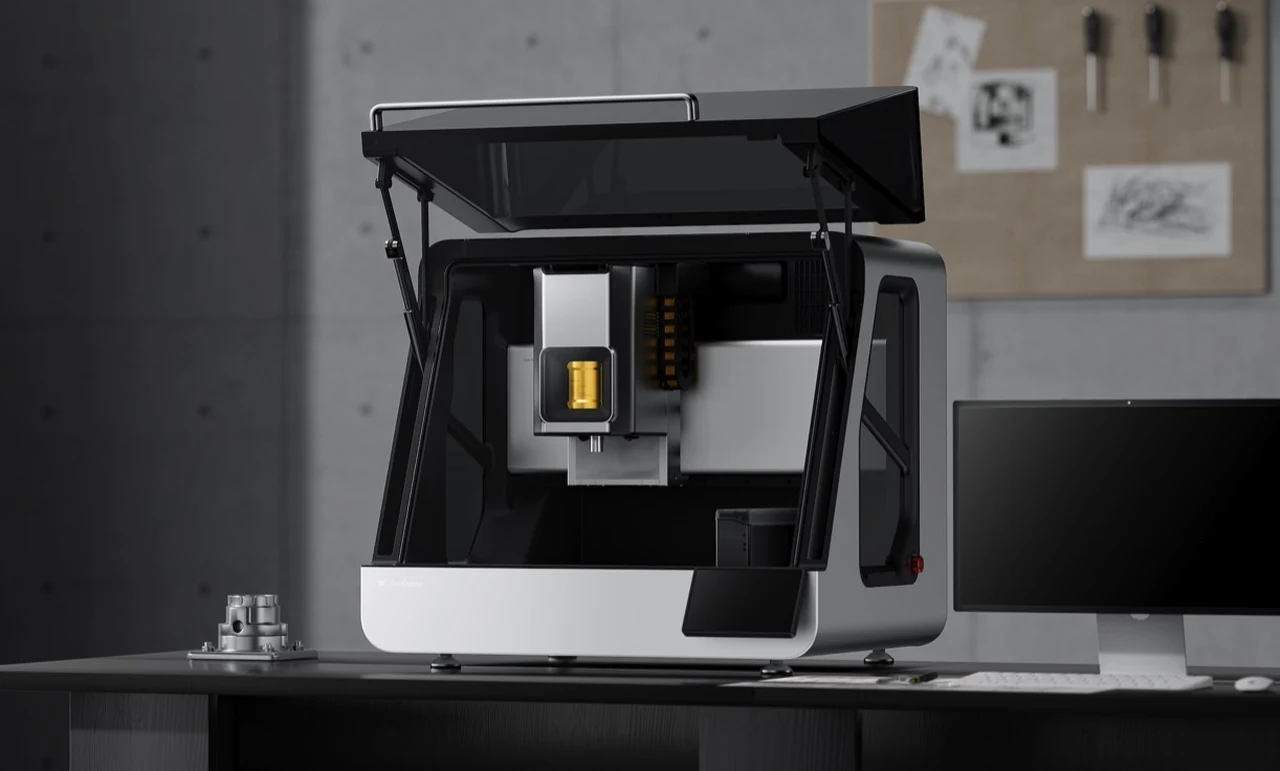
If you’re in the market for a state-of-the-art CNC machine or want to turn your workshop into a production-ready studio, you might be interested to know that ToolDance will launch its X1 desktop CNC machining centre on Kickstarter on October 15 at 4:00 PM BST (11:00 AM EDT), with Super Early Bird pledges starting from US$2,999 or roughly £2,250 depending on exchange rates, half the stated MSRP of US$5,999. The X1 takes the form of an enclosed three-axis mill with a 1.5 kW spindle, a nine-tool automatic tool changer and a 3D sensing system that locates stock and sets work offsets, with optional fourth and fifth axis modules that bolt on in minutes. Deliveries are estimated for Q1 2027. Click “Notify me on launch” on the Kickstarter page to get an alert the moment pledges open. Before the campaign goes live, you can also reserve a VIP spot with a fully refundable US$30 deposit at tooldance.ai; VIP backers receive US$200 cashback per machine and one-hour early access to Super Early Bird pledges.
The idea behind the X1 is to shorten the path from a digital model to a finished part or prototype in a variety of different materials. Industrial machining centres do this with automatic tool changers, probing, coolant and a programmer who knows how to drive CAM software. ToolDance has packed the first three into a 110 kg enclosure and handed the fourth to its own ToolDance Studio software, which analyses your model, generates the toolpaths, guides the workholding and simulates the job before a single part is cut. The ToolDance X1 has been specifically designed for makers who have outgrown 3D printing, or Research and Development teams who want same-day parts instead of a one-to-two-week wait on an outsourced machine shop part, as well as small workshops wishing to engage in short production runs.
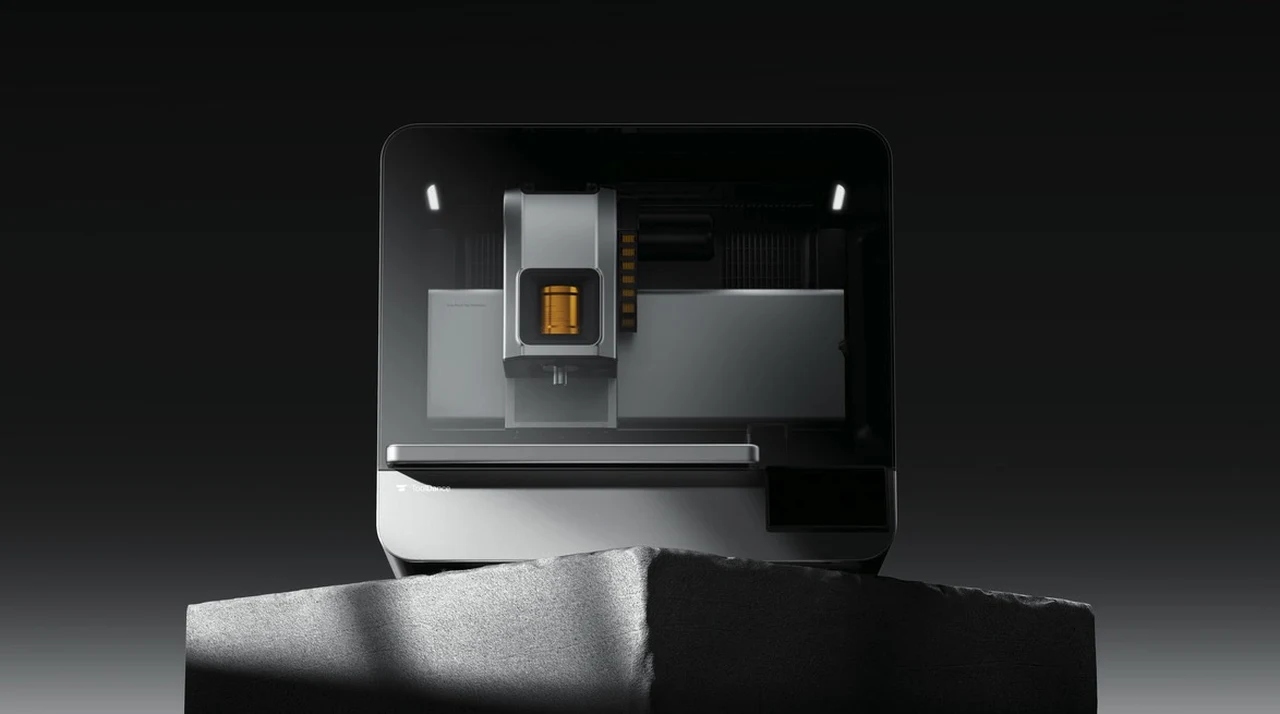
Over the last few months its creators at ToolDance have been demonstrating its cutting capabilities at IFA Berlin, IMTS Chicago and Maker Faire Bay Area. ToolDance was founded by Will Wang and is made up of a team with backgrounds at DJI, Siemens and the wider CNC industry, and say the X1 has already been put through five prototype generations with around 150 units in continuous testing ahead of production and the launch of the Kickstarter campaign on October 15.
Hardware Overview
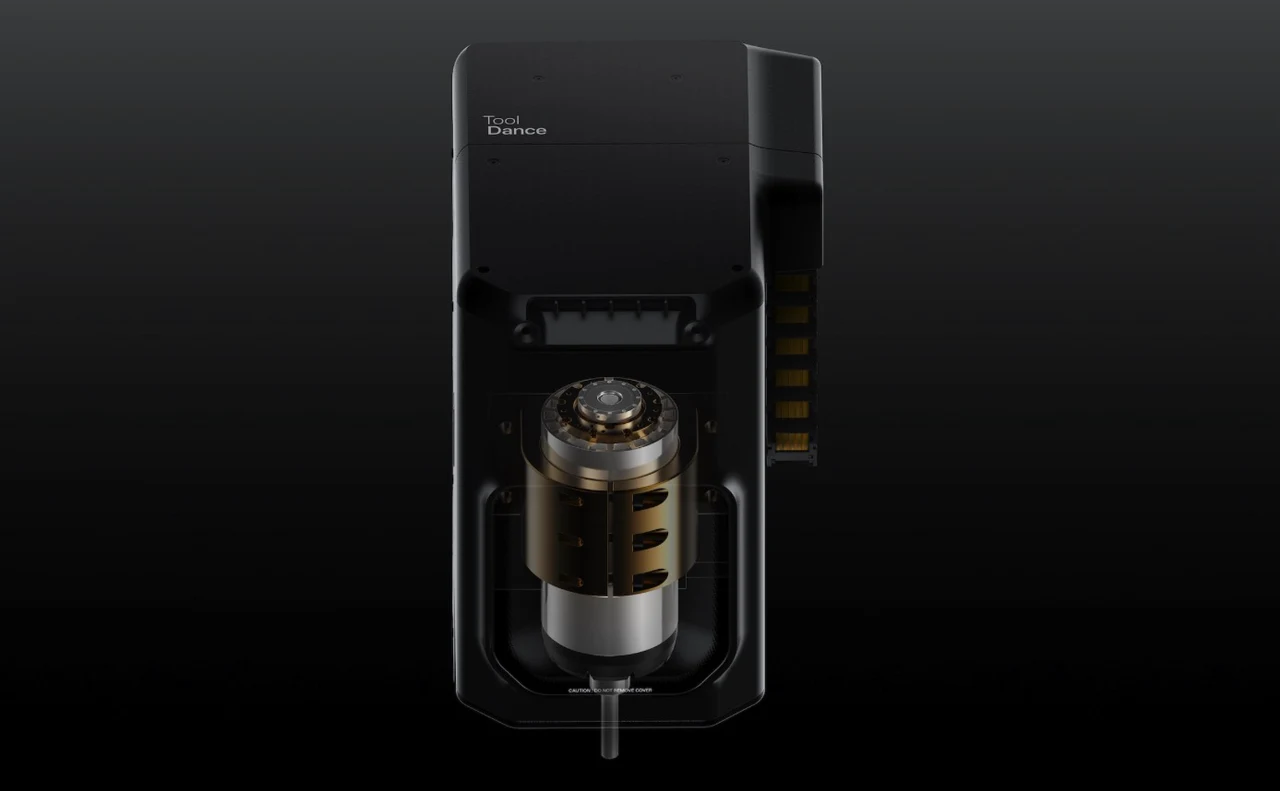
ToolDance uses a 1,500 W permanent-magnet synchronous motor for the spindle, rated at 1.5 kW on an S1 continuous-duty basis, with a ceiling of 24,000 RPM. That rating sits well above the few hundred watts typical of desktop mills, and the company’s argument for PMSM over the asynchronous motors found in most of them is torque at low speed, which is what you need when roughing steel rather than skimming acrylic.
The high end of the range covers wood, acrylic and plastics; the low end is where aluminium, brass, copper, steel, stainless steel and titanium can be formed. ToolDance has test cuts including 304 stainless and Grade 5 titanium in dry, air-blast machining, with flood coolant available for heavier metal work.
ToolDance X1 Specifications :
- Work envelope: 400 × 265 × 180 mm (X × Y × Z)
- Motion and feeds: preloaded ball screws, NEMA 23 stepper motors with closed-loop control, rapids up to 5,000 mm/min and a rated cutting feed of 3,000 mm/min
- Positioning repeatability: ±0.01 mm
- Frame, size and weight: cast aluminium alloy reinforced along the critical load paths, 750 × 625 × 772 mm, 110 kg
- Power: single-phase 110 to 240 VAC, 50/60 Hz, no three-phase supply required
- Connectivity and monitoring: USB, Ethernet, Wi-Fi and a built-in 1080p camera for live viewing
- Cooling: air cooling as standard, flood cooling through an optional module
At 110 kg, the X1 needs a solid bench location in your workshop rather than a flat-pack desk, and the single-phase supply means it can go into a home workshop or studio without requiring three-phase power. The ToolDance X1 enclosure is equipped with a safety interlock that controls access while the spindle is turning.
Nine Tools, No Hands
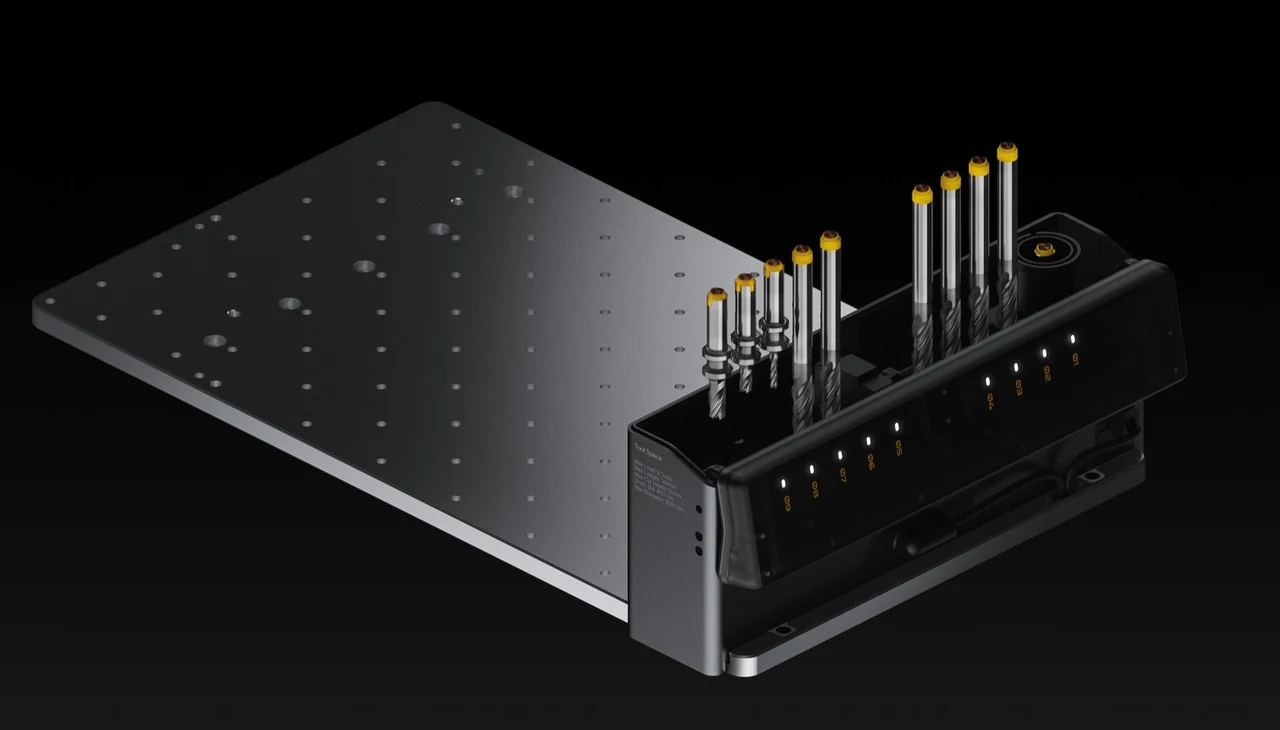
The automatic tool changer is the feature that most clearly separates the X1 from the hobby end of the market. A real part rarely needs one tool. A bracket might need a roughing end mill, a finishing end mill, a chamfer tool, a drill and a thread mill, and on a manual-change machine each is a pause, a swap, a length measurement and a chance to introduce error.
- Capacity: nine cutting tools plus a workpiece probe, each tool carrying an RFID tag so the machine knows what is loaded without being told
- Shanks: up to 10 mm in diameter, covering 4, 6, 8 and 10 mm metric and 1/8, 3/16, 1/4 and 5/16 inch imperial
- Tool size: 35 to 100 mm overall length, with a maximum cutter diameter of 18 mm
With a changer and a probe, the whole jobs are capable of running unattended from the first operation to the last, which is the difference between time wasted monitoring a machine and getting on with something else while the ToolDance X1 goes about its business. The X1 also supports drilling and thread milling, although conventional tapping is not currently supported.
Setup Guided by Cameras and Structured Light
If you have already been using desktop CNC machines you’ll already know that locating a part correctly is where it’s possible to lose hours, and the X1’s 3D sensing system is aimed squarely at that problem. Simple enough for beginners, it combines a spindle-mounted RGB camera, a Structured-Light sensor and the workpiece probe to find stock and establish work coordinates, recognises official ToolDance stock and fixtures, and offers fully automatic, semi-automatic and manual setup modes depending on how much you want to hand over. A separate camera handles remote monitoring, so you can check on progress while the job runs.
This pairs with what the company calls Workholding Guidance, which recommends how to fixture each operation based on the part geometry and walks the operator through it visually. First-part guidance in the software covers stock loading, tool installation, workholding and the machining workflow for anyone new to CNC.
ToolDance Studio Writes the Toolpaths
If creating toolpaths has been a pain point in the past, you’ll be pleased to know that the ToolDance Studio is a software application that takes a model through three stages:
- Review and program: import a STEP or STL file, run a DFM (design for manufacturability) analysis that checks geometry and tool access, and let AutoCAM generate the operations, tool selection, toolpaths, feeds and speeds for supported job types.
- Review and set up: adjust the generated operations in ToolDance Studio’s Interactive Programming mode, follow the workholding guidance, and set work coordinates with the sensing system.
- Simulate and machine: check material removal, machine motion and potential collisions in simulation, then run the job with automatic tool changes.
It’s also good to know that experienced machinists are not locked in. Studio can import and verify standard G-code from third-party CAM, and ToolDance says dedicated plugins and verified post-processors for Fusion 360, Siemens NX and Mastercam are in development and will be available before machines are delivered. DXF, 3MF and OBJ import are on the roadmap.
The licensing model is one of the more reassuring parts of the campaign. Core AutoCAM, interactive programming and simulation all run locally, the software works offline after an initial online registration, and standard local functions carry no subscription. Optional cloud-based AI features, including Image-to-Model, which converts reference photographs into 3D geometry, need an internet connection and will be charged separately, with pricing to be announced.
Windows is the launch platform, with macOS support planned for a later date. Desktop monitoring works over a local network or remotely over the internet, and a mobile app is on the roadmap, allowing the ToolDance X1 to slot into your existing workflow, whatever it might be.
Bolt-On Fourth and Fifth Axes
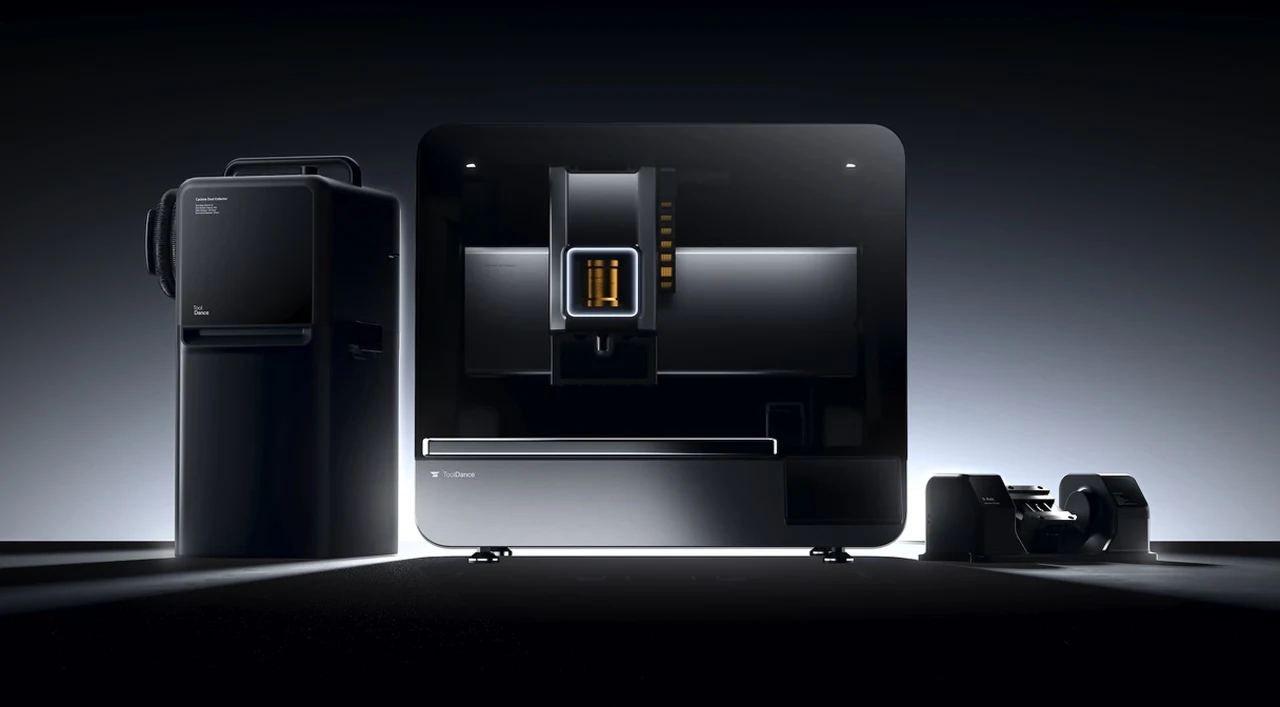
The base X1 is a three-axis machine, and the add-on pricing shows what a fully specified system costs. These are crowdfunding add-on prices rather than retail:
- 4-axis module, US$699: rotary machining for cylindrical and irregular parts, with a Ø120 × 160 mm working envelope (diameter × length) with the tailstock installed
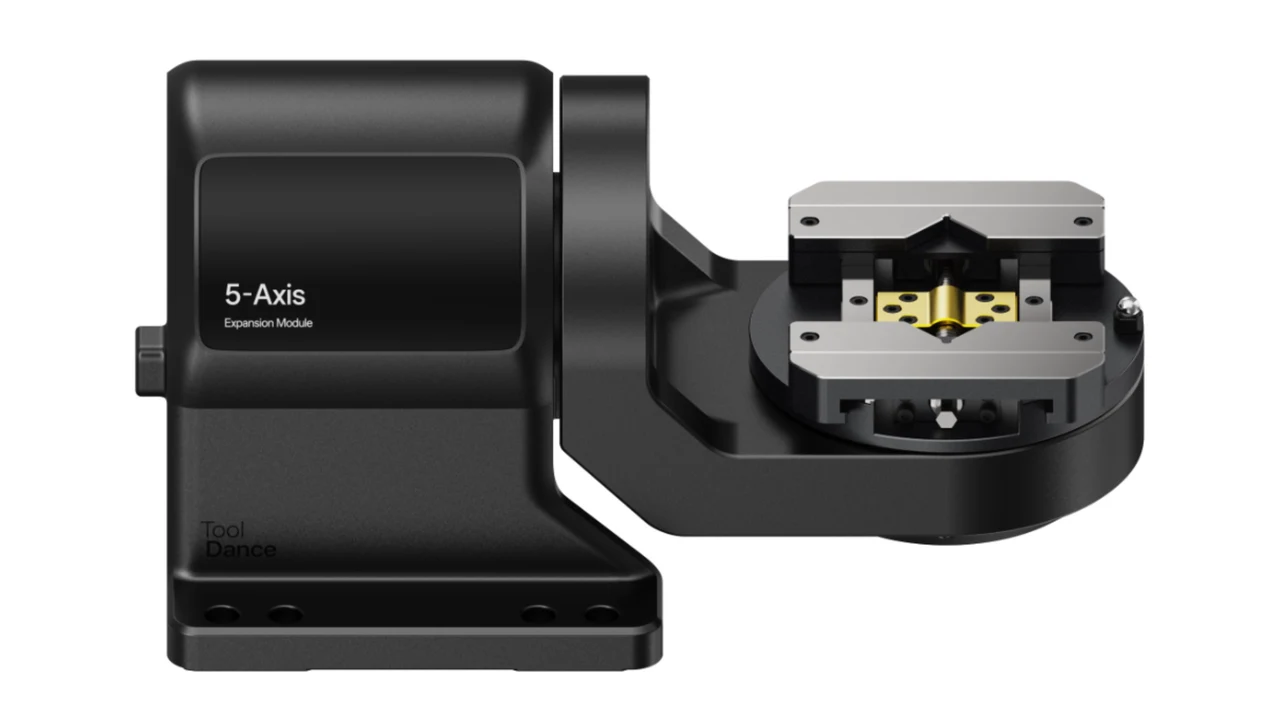
- 5-axis module, US$1,099: indexed 3+2 and simultaneous five-axis machining
- Dust-collection module, US$599: dust and debris collection for dry machining
- Flood-cooling module, US$799: coolant delivery and chip management, doubling as a sturdy bench for the machine
ToolDance says both rotary modules bolt on or off in two to four minutes and need no separate controller.
The five-axis module’s published working volume is 160 × 160 × 105 mm for 3+2 work, 110 × 110 × 105 mm for simultaneous five-axis on square stock, or Ø140 × 105 mm on round stock. RTCP, or rotation tool centre point, keeps the cutter tip on the programmed path while the rotary axes move, and it is what separates true simultaneous five-axis from tilting a part and cutting in three.
On the software side, AutoCAM currently generates simultaneous four- and five-axis toolpaths for reliefs and sculptures. For precision mechanical parts, the interactive programming mode fully supports 3+2 positional setups, with fully automated 3+2 programming still in development, and complex multi-axis work can also come in from compatible third-party CAM.
Pricing, Cashback and Delivery
The campaign terms at a glance:
- Super Early Bird: from US$2,999, against a stated MSRP of US$5,999
- VIP cashback: US$200 per machine for anyone who made the US$30 fully refundable VIP reservation before launch and pledges for an eligible bundle, giving an effective entry price of US$2,799
- Payment: Visa, Mastercard and Amex, with Kickstarter’s Pledge Over Time option splitting the pledge into three equal monthly instalments
- Shipping: worldwide on a DDP basis, so duties, taxes and customs clearance are included, with shipping fees collected after the campaign through the Pledge Manager
- Certification and delivery: all required certifications, including CE and UKCA, will be in place before shipping, with an estimated delivery window of Q1 2027
The cashback mechanics deserve a careful read. The VIP reservation is separate from the Kickstarter pledge and does not reduce what Kickstarter charges; the cashback is processed within 14 days of the campaign closing, and the US$30 refund begins processing after that same window whether or not you back. ToolDance recommends using the same email address for both transactions.
What to Know Before You Pledge
ToolDance is clear about how to read its own numbers, and the detail is worth having before you choose a bundle:
- Positioning repeatability of ±0.01 mm describes the machine returning to the same place, not finished-part tolerance, which depends on geometry, material, tooling, workholding, thermal conditions and machining parameters.
- The 1.5 kW spindle figure is the published rating rather than a measured cutting-performance comparison with other machines.
- Fixtures, tools and rotary modules all reduce the space available for a part.
- As with any crowdfunding campaign, the delivery estimate is a target rather than a guarantee.
Kickstarter 2026
The X1 is pitched at a gap in the market: a machine priced near a high-end hobby mill that behaves like a small production centre, with the automation to run multi-tool jobs unattended and software that does the CAM heavy lifting for people who have never written a toolpath.
Between now and the Q1 2027 deliveries, ToolDance plans to ship the Fusion 360, NX and Mastercam post-processors, announce pricing for the cloud AI features, and continue work on automated 3+2 programming, the mobile app and macOS support.
Full pledge tiers and bundles will appear on the official ToolDance X1 Kickstarter page when the campaign opens on October 15, with more detail and the VIP reservation available now at the company’s main website, tooldance.ai.
Disclosure: Some of our articles include affiliate links. If you buy something through one of these links, Geeky Gadgets may earn an affiliate commission. Learn about our Disclosure Policy.
