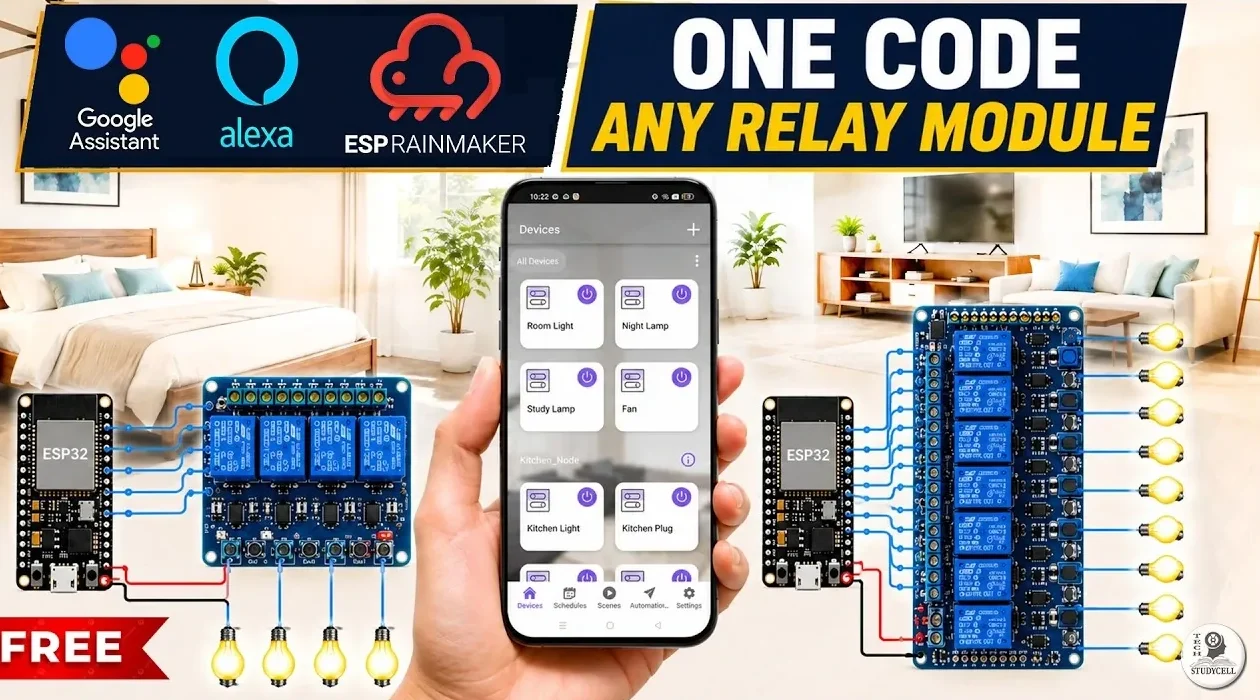
The ESP32 microcontroller, combined with the ESP RainMaker platform, offers a practical and scalable approach to home automation. In a detailed guide by Tech StudyCell, the focus is on using a single, universal Arduino sketch to control appliances across multiple rooms. This sketch supports configurations for 2, 4, or 8-channel relay modules and integrates seamlessly with voice assistants like Amazon Alexa and Google Home. Notably, the system retains manual switch functionality, making sure reliability even during network outages. By using features such as EEPROM state retention and compatibility with active-low and active-high relays, this setup provides both flexibility and resilience for real-world applications.
Explore how this system balances customization and simplicity to meet diverse automation needs. You’ll gain insight into configuring GPIO pin assignments, optimizing device names for better voice assistant integration and tailoring relay types to match specific hardware setups. Additionally, learn about the step-by-step process for flashing the Arduino sketch, connecting to the ESP RainMaker platform and integrating voice control. Whether you’re automating lighting, managing fan speeds, or deploying advanced multi-device setups, this guide equips you with the knowledge to build a reliable and efficient smart home system.
The Foundation of the System
TL;DR Key Takeaways :
- Home automation is becoming a standard feature, with the ESP32 microcontroller and ESP RainMaker platform offering a scalable, efficient and user-friendly solution for controlling appliances across multiple rooms.
- The universal Arduino sketch for ESP32 devices supports 2, 4, or 8-channel relay modules, customizable device names and compatibility with active-low and active-high relays, making sure flexibility and ease of deployment.
- The system provides multiple control options, including voice integration with Amazon Alexa and Google Home, manual switches and offline functionality, making sure reliability even during network outages.
- EEPROM integration ensures state retention during power outages, allowing appliances to resume their previous states automatically, enhancing reliability and minimizing downtime.
- Designed for customization and scalability, the system supports tailored GPIO pin assignments, relay configurations and device names, making it suitable for diverse home automation needs, from small apartments to larger homes.
Universal Arduino Sketch
At the core of this home automation system lies a universal Arduino sketch specifically designed for ESP32 devices. This sketch is highly adaptable, allowing users to configure it for 2, 4, or 8-channel relay modules with ease. By simply specifying the number of relays, the code automatically generates the required ESP RainMaker objects, streamlining the deployment of multiple ESP32 devices across your home.
Key features of the universal sketch include:
- Compatibility with active-low and active-high relays: This ensures the system works seamlessly with a variety of hardware configurations.
- Customizable device names: Simplifies integration with voice assistants like Amazon Alexa and Google Home, enhancing user convenience.
This adaptability allows you to tailor the system to meet the unique requirements of each room or appliance, making sure a personalized and efficient automation experience.
Multiple Control Options: Voice, Manual and Offline
The system offers three distinct control methods, making sure both convenience and reliability under various conditions:
- Voice Control: Fully integrated with Amazon Alexa and Google Home, allowing hands-free operation of connected devices for effortless control.
- Manual Control: Supports both latched switches and push buttons, providing a dependable fallback option in case of network outages or connectivity issues.
- Offline Functionality: Even in the absence of an internet connection, manual switches remain operational, making sure uninterrupted control over your appliances.
This multi-layered approach guarantees that your home automation system remains functional and user-friendly, regardless of external factors such as internet availability.

Gain further expertise in ESP32 by checking out these recommendations.
- How an $8 ESP32 S3 Microcontroller Runs a 28.9M Parameter Local LLM
- Optimize ESP32 Battery Life Using 10 Lesser-Known Features
- Build a Sonos Rival with the $30 AUD Louder ESP32 Board
- Arduino Nano ESP32 handheld console with round color display
- Super Tiny RP2040/ESP32 Board Display for IoT and DIY Projects
- Tiny Holo Cubic display features a 1.3-inch TFT IPS and ESP32 microcontroller
- LilyGo T Watch Keyboard C3 mini computer kit
- These Hidden Apple Maps Settings Will Completely Upgrade Your CarPlay
- Track Room Occupancy Without Cameras Using ESP32 Wi-Fi Drops
- New CodeCell C6 IoT ESP32 Board : Same Price, Improved Low-Power Design
State Retention with EEPROM Integration
Power outages can disrupt the functionality of home automation systems, but this project addresses that challenge through EEPROM integration. The system stores the current state of each relay in non-volatile memory, making sure that when power is restored, the relays automatically return to their previous states. This eliminates the need for manual reconfiguration and ensures that your appliances resume their intended operation seamlessly. By incorporating this feature, the system enhances reliability and minimizes downtime, making it a practical solution for real-world use.
Optimized for ESP RainMaker’s Free Plan
The ESP RainMaker platform offers a free plan with certain limitations, such as the number of devices and data transmissions. This project is carefully designed to operate efficiently within these constraints, making sure cost-effectiveness without compromising functionality. For example:
- Minimized sensor data transmission: Reduces resource usage while maintaining essential functionality.
- Optimized device configurations: Maximizes the system’s capabilities without exceeding the platform’s limits.
This thoughtful design ensures that the system remains practical and affordable for everyday use, making it accessible to a wide range of users.
Customization and Scalability
One of the standout features of this system is its flexibility and scalability. Users can customize various aspects of the setup, including:
- GPIO pin assignments: Tailor the system to match your specific hardware requirements.
- Relay types: Configure the system for active-low or active-high relays based on your hardware setup.
- Device names: Assign unique names to devices for easier identification and control via voice assistants or mobile apps.
This level of customization ensures that the system can be adapted to suit diverse home automation needs, whether for a small apartment or a larger home.
Scalability is another major advantage. By deploying multiple ESP32 devices, you can expand the system to cover additional rooms or appliances. Each device operates independently while remaining part of the unified automation network, making sure seamless integration and consistent performance across your home.
Step-by-Step Setup Process
Setting up the system is straightforward and user-friendly, even for individuals with limited technical experience. The process involves:
- Configuring the Arduino sketch: Adjust the code to match your specific hardware and automation requirements.
- Uploading the code: Flash the configured sketch to the ESP32 microcontroller using the Arduino IDE.
- Linking the device: Connect the ESP32 to the ESP RainMaker platform and integrate it with Amazon Alexa and Google Home for voice control.
Comprehensive instructions guide you through each step, making sure a smooth and hassle-free setup process. This accessibility makes the system suitable for both hobbyists and professionals.
Practical Applications
This home automation system is versatile and can be applied to a wide range of use cases. Whether you’re automating basic appliances or implementing more complex setups, the system provides real-time feedback and immediate response for both manual and app-based operations. Some practical applications include:
- Lighting control: Automate lights in different rooms for convenience and energy efficiency.
- Fan speed adjustments: Control ceiling or table fans with precision.
- Advanced automation scenarios: Manage multiple devices simultaneously for a fully integrated smart home experience.
The system’s versatility and responsiveness make it an excellent choice for enhancing everyday living.
Building a Smarter Home with ESP32
By using the capabilities of the ESP32 microcontroller and the ESP RainMaker platform, this project delivers a robust, flexible and scalable solution for home automation. The universal Arduino sketch simplifies deployment, while features like EEPROM integration, offline functionality and voice control enhance reliability and convenience. Whether you’re a hobbyist exploring IoT or an experienced developer, this system provides the tools you need to create a customized and efficient home automation network tailored to your needs.
Media Credit: Tech StudyCell
Disclosure: Some of our articles include affiliate links. If you buy something through one of these links, Geeky Gadgets may earn an affiliate commission. Learn about our Disclosure Policy.
