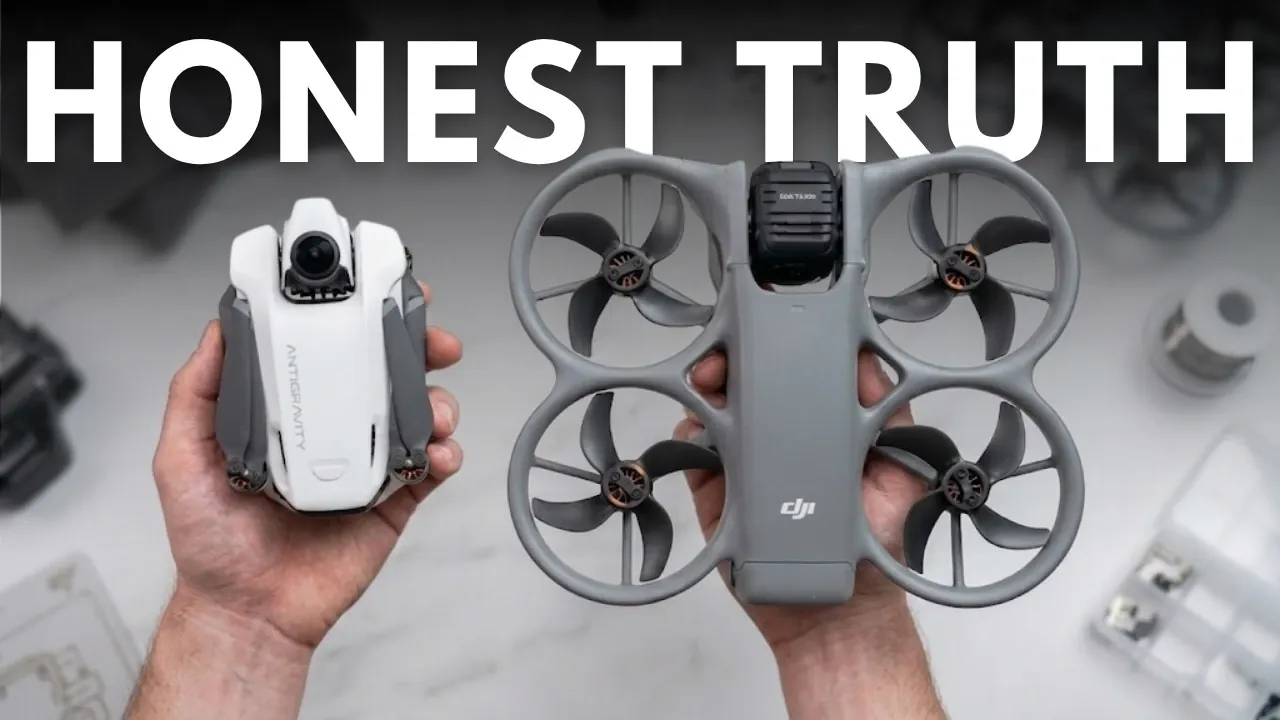
The DJI Avata 360 and the Antigravity A1 represent two compelling options in the world of 360-degree drones, but they cater to distinct user needs. As highlighted by Tech Court, the Antigravity A1’s foldable design and sub-250-gram weight make it a standout choice for those prioritizing portability. In contrast, the DJI Avata 360, while heavier and non-foldable, offers a robust build that enhances durability, making it better suited for users who value resilience over compactness. These differences underscore the importance of aligning your choice with your specific priorities, whether it’s convenience or durability.
Explore how these two drones differ across key areas like camera performance, where the Avata 360’s dual 1/1.1-inch sensors cater to professional creators, while the A1’s 1/2.8-inch sensors are tailored for hobbyists. Gain insight into their flight experiences, from the A1’s intuitive motion controller to the Avata 360’s versatile control options. Additionally, understand how battery life and safety features can impact your decision, making sure you select the drone that best fits your workflow and environment.
Portability: Compact Design vs Robust Build
TL;DR Key Takeaways :
- The Antigravity A1 excels in portability with its foldable design and lightweight build (under 250 grams), making it ideal for users prioritizing convenience and mobility.
- The DJI Avata 360 offers superior camera quality with dual 1/1.1-inch sensors, 8K video at 60fps and a 10-bit color profile, catering to professional videographers and advanced editing needs.
- Battery life differs significantly: the Antigravity A1 provides up to 34 minutes of flight time, while the DJI Avata 360 offers 15-16 minutes, requiring extra batteries for extended use.
- The DJI Avata 360 features advanced safety with omnidirectional obstacle sensing and robust transmission, while the Antigravity A1 focuses on simplicity with basic sensors and intuitive controls.
- Pricing varies: the Antigravity A1 offers an all-in-one package at $1,279, while the DJI Avata 360 starts at $479 but requires additional purchases for a complete setup.
Portability is a key factor for many drone users and in this regard, the Antigravity A1 takes the lead. Its foldable design and lightweight construction, weighing under 250 grams, make it exceptionally easy to carry. Whether you’re traveling or simply heading out for a quick shoot, the A1’s compact size allows it to fit comfortably in a jacket pocket or small bag. This makes it an ideal choice for users who prioritize convenience and mobility.
On the other hand, the DJI Avata 360 is larger and heavier, weighing 455 grams. Its non-foldable design adds to its bulk, requiring more effort to transport. While its robust build enhances durability, it may not be the best option for users who are frequently on the move or need a drone that’s easy to pack. For those who value portability above all else, the Antigravity A1 offers a more practical solution.
Camera Quality: Professional Precision vs Casual Creativity
When it comes to camera performance, the DJI Avata 360 is designed with professionals in mind. It features dual 1/1.1-inch sensors capable of recording 8K video at 60 frames per second. Additionally, its support for a 10-bit DLOG-M color profile ensures exceptional dynamic range and color accuracy, making it ideal for advanced post-production workflows. For professional videographers or content creators seeking top-tier footage, the Avata 360 delivers unmatched quality.
In contrast, the Antigravity A1 is geared toward casual users and hobbyists. Its 1/2.8-inch sensors can record 8K video at 30 frames per second, with an 8-bit color profile. While the footage is still impressive, it lacks the depth and flexibility required for professional-grade editing. For users who prioritize ease of use and quick results over advanced editing capabilities, the A1 provides a more accessible option.

Here are more guides from our previous articles and guides related to drones that you may find helpful.
- 8+ Big drones capable of carrying large payloads and heavy equipment
- Solar 42 cinematic ambient drone synthesizer
- DJI Neo palm-sized drone with auto follow technology
- DJI Neo 2 Review: Camera Quality, Gimbal, and Flight Modes Explored
- DJI Lito X1 Launch : Beta Units & Retail Packaging Revealed
- Big Drones Capable Of Carrying Large Payloads.Webp
- DJI Avata 360 Review: Testing Video Quality & Battery Life
- Meet the DJI Lito : a Drone Built for Absolute Beginners
- DJI Addresses Neo 2 Flaws With New Drone Prototype
- World’s Fastest Drone: How It Reached 585 km/h
Battery Life: Extended Flights vs Quick Swaps
Battery life is a critical consideration for drone enthusiasts and here the Antigravity A1 shines. Its high-capacity battery offers up to 34 minutes of flight time, allowing for longer, uninterrupted sessions. This extended battery life is particularly beneficial for users who need to capture extensive footage or explore larger areas without frequent interruptions.
The DJI Avata 360, by comparison, provides a shorter flight time of 15-16 minutes under real-world conditions. While this limitation can be mitigated by carrying extra batteries, it does require more planning and preparation. For users who value convenience and extended flying sessions, the Antigravity A1’s superior battery performance makes it the more practical choice.
Flight Experience: Intuitive Simplicity vs Versatile Control
The flight experience offered by each drone varies significantly, catering to different user preferences. The Antigravity A1 emphasizes simplicity, featuring a goggles-first flying experience controlled exclusively through a motion controller. This intuitive setup is beginner-friendly and easy to master, making it an excellent choice for first-time users or those who prefer a straightforward flying experience.
In contrast, the DJI Avata 360 provides a more versatile approach. It supports multiple control options, including the RC2 remote, goggles with a motion controller and an FPV remote. This flexibility allows users to customize their flying experience and adapt to various scenarios, whether they’re capturing cinematic shots or navigating complex environments. For users who value adaptability and advanced control, the Avata 360 offers a more comprehensive solution.
Safety Features: Comprehensive Protection vs Basic Coverage
Safety is a crucial aspect of drone operation, particularly in challenging environments. The DJI Avata 360 excels in this area with its full omnidirectional obstacle sensing and integrated prop guards. These features provide enhanced protection, making it safer to navigate tight spaces or areas with obstacles. For users who prioritize safety and reliability, the Avata 360 offers a robust solution.
The Antigravity A1, while equipped with forward and downward sensors, lacks the comprehensive obstacle avoidance capabilities of its competitor. Its exposed propellers also increase the risk of damage during collisions. While it performs well in open areas, it may not be the best choice for users who frequently operate in complex or crowded environments.
Transmission and Range: Advanced Stability vs Reliable Basics
Reliable transmission is essential for smooth control and uninterrupted footage capture. The DJI Avata 360 utilizes DJI’s advanced O4+ transmission system, which delivers superior range and stability, even in environments with heavy interference. This makes it an excellent choice for users who require consistent performance in demanding conditions.
The Antigravity A1 features its OmniLink 360 system, which, while effective, doesn’t match the refinement and reliability of the Avata 360’s transmission capabilities. For users who need maximum stability and range, particularly in challenging scenarios, the Avata 360 provides a more dependable connection.
Software and Editing: User-Friendly Tools vs Professional Features
Post-production capabilities can significantly influence the overall user experience. The Antigravity A1 includes Antigravity Studio, a user-friendly editing platform with robust AI tools for automated enhancements. This makes it an excellent choice for users who want quick and intuitive editing options without a steep learning curve.
The DJI Avata 360, on the other hand, offers powerful editing software designed for professionals. While it provides advanced tools and features, it may be less accessible to casual users or those new to video editing. For users who prioritize advanced editing capabilities and are willing to invest time in learning, the Avata 360’s software offers greater creative potential.
Price: All-In-One Value vs Ecosystem Integration
Cost is often a deciding factor when choosing a drone. The Antigravity A1 is priced at $1,279, which includes the drone, motion controller and goggles. This all-in-one package provides excellent value for new users seeking a complete setup.
The DJI Avata 360, with a starting price of $479 for the drone alone, appears more affordable at first glance. However, additional accessories like controllers and goggles are sold separately, which can increase the overall cost. For existing DJI users, the Avata 360 may be more economical due to its compatibility with the DJI ecosystem. New users, however, may find the Antigravity A1’s bundled package more appealing.
Making the Right Choice
Choosing between the DJI Avata 360 and the Antigravity A1 ultimately depends on your priorities and intended use cases.
- Opt for the Antigravity A1 if portability, extended battery life and a streamlined flying experience are your main concerns.
- Choose the DJI Avata 360 if you prioritize superior camera quality, versatile controls, advanced safety features and seamless integration with the DJI ecosystem.
Both drones cater to different needs, making sure that whether you’re a casual user or a professional, there’s an option that aligns with your goals. Carefully evaluate your requirements to make an informed decision and elevate your 360-degree drone experience.
Media Credit: Tech Court
Disclosure: Some of our articles include affiliate links. If you buy something through one of these links, Geeky Gadgets may earn an affiliate commission. Learn about our Disclosure Policy.
