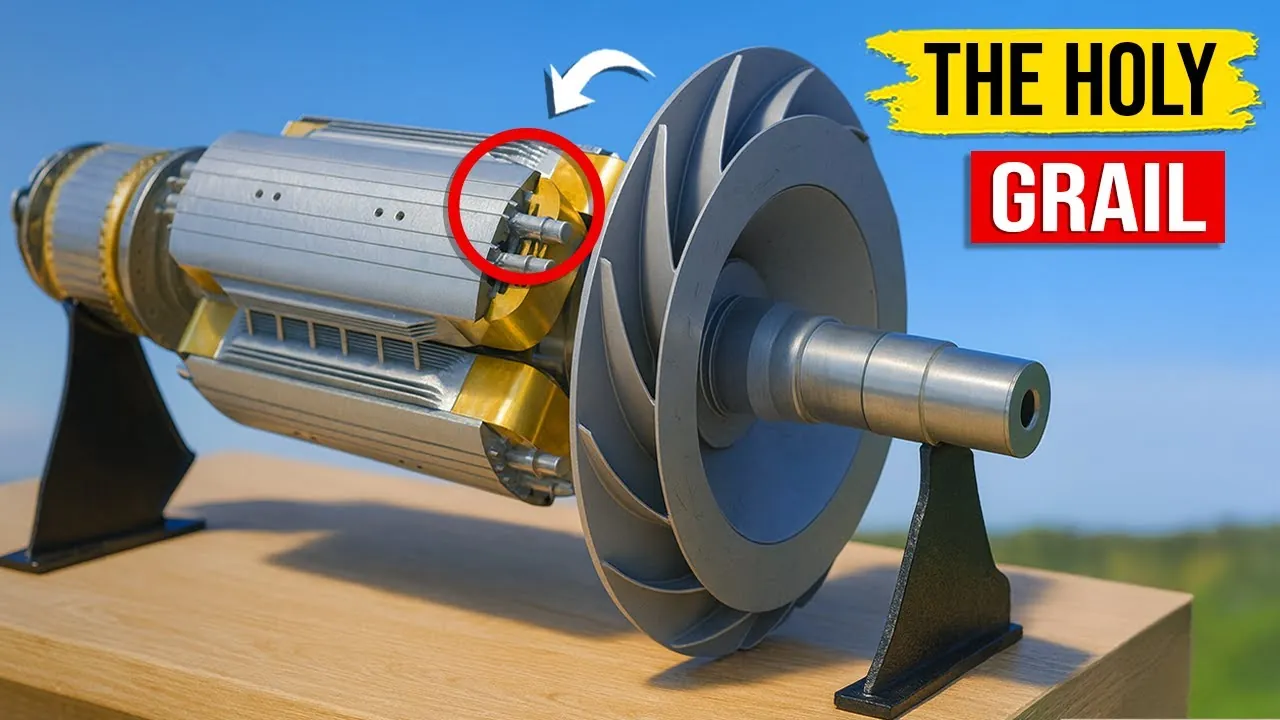
What if a single innovation could save industries millions of dollars, slash carbon emissions, and redefine what we thought was possible in energy efficiency? Enter ABB’s new 56.2 MW brushless synchronous electric motor, an engineering marvel that achieves an astonishing efficiency of over 99%. To put this into perspective, this motor can save an estimated 61 GWh of energy over its lifetime, equivalent to removing 10,000 cars from the road each year. Bold claims like these aren’t just about numbers; they represent a seismic shift in how we approach industrial sustainability and operational excellence. With industries worldwide grappling with rising energy costs and mounting environmental pressures, this motor isn’t just a technical achievement, it’s a lifeline.
In this overview, Ziroth explores the ingenious design principles and innovative technologies that make this motor a fantastic option. From its brushless synchronous design that eliminates energy-draining components to its advanced cooling systems that ensure uninterrupted performance, every detail has been carefully engineered to push the boundaries of efficiency. But this isn’t just about the mechanics; it’s about the profound ripple effects such innovation can have, on businesses, the environment, and the future of industrial engineering. How does a seemingly small leap in efficiency translate into such massive impacts? The answer lies in the intersection of precision engineering and visionary thinking.
ABB’s Record-Breaking Electric Motor
TL;DR Key Takeaways :
- ABB’s new 56.2 MW brushless synchronous electric motor achieves over 99% efficiency, surpassing the typical 96% efficiency of industrial motors, saving 61 GWh of energy and $6 million in costs over 25 years.
- The motor reduces CO2 emissions by 45,000 tons, equivalent to removing 10,000 cars from the road annually, offering significant environmental benefits.
- Innovative design features, such as a brushless synchronous system and enhanced copper windings, improve energy efficiency, reduce maintenance, and enhance durability.
- Advanced control strategies and integrated cooling systems address challenges like harmonic distortion and heat management, making sure smooth, reliable, and continuous high-load operation.
- Designed for demanding industrial environments, the motor provides rapid financial returns, aligning with global sustainability goals while optimizing operational performance.
The Importance of Efficiency in Industrial Motors
Industrial electric motors typically achieve an efficiency of around 96%, which may seem sufficient at first glance. However, ABB’s motor surpasses this standard, achieving an unprecedented efficiency of over 99%. This seemingly small improvement has far-reaching implications. Over a 25-year operational lifespan, the motor can save approximately 61 GWh of energy, translating to an estimated $6 million in energy cost savings.
The environmental benefits are equally remarkable. By reducing CO2 emissions by 45,000 tons, this motor achieves the same environmental impact as removing 10,000 cars from the road annually. These figures underscore how even incremental advancements in efficiency can drive substantial economic and environmental progress in large-scale industrial operations.
Innovative Design Features Driving Performance
The exceptional performance of ABB’s motor is rooted in its innovative design, which addresses inefficiencies commonly found in traditional motors. Several key features contribute to its superior efficiency and reliability:
- Brushless Synchronous Design: Unlike conventional motors, this design eliminates brushes and slip rings, components that are prone to energy losses and frequent maintenance. Instead, the motor employs wireless power transfer for rotor excitation, making sure smooth energy flow and reducing wear over time.
- Enhanced Copper Windings: The rotor and stator are equipped with copper windings, chosen for their excellent conductivity. This minimizes electrical resistance and optimizes energy transfer. Additionally, the windings undergo vacuum pressure impregnation (VPI), which enhances durability by protecting them from environmental factors and reducing resistance losses.
These design innovations not only improve energy efficiency but also reduce maintenance requirements, making the motor a cost-effective and reliable solution for industrial applications.
The Genius of the World’s Most Efficient Electric Motor

Enhance your knowledge on energy by exploring a selection of articles and guides on the subject.
- Samsung Unveils Cutting Edge Energy Efficient Appliances
- How MGA Thermal’s Alloy is Changing the Future of Energy
- Wave Energy : The Future of Clean, Reliable Renewable Energy
- Samsung SmartThings Energy manages energy usage
- What Is Fusion Energy? The Future of Clean Power Explained
- Samsung showcases energy saving devices
- NASA’s Mechanical Battery: A Breakthrough in Sustainable Energy
- How iOS 26 Enhances Battery Life with Smart Energy Tools
- BLUETTI Apex 300 Modular Energy Storage System from $1,199
- Nissan Leaf Batteries To Be Recycled For Energy Storage
Addressing Operational Challenges: Harmonics and Heat
Harmonic distortion is a common issue in electric motors, often leading to inefficiencies and operational instability. ABB’s motor effectively mitigates this challenge through advanced control strategies and a single-piece rotor design. These features work together to minimize electrical distortions, making sure smooth and efficient operation even under demanding conditions.
Thermal management is another critical aspect of maintaining optimal performance. The motor incorporates an integrated cooling system that combines air circulation with heat exchangers to regulate operating temperatures. This advanced cooling mechanism not only enhances efficiency but also extends the motor’s lifespan, even when operating continuously at full load.
Engineered for Continuous, High-Load Operation
Designed for S1 duty type, ABB’s motor is built to operate continuously at full capacity without compromising performance. Its robust design is tailored to meet the rigorous demands of a steel plant in India, where it operates under high-load conditions. By optimizing the motor for these specific parameters, ABB has unlocked its full energy-saving potential, demonstrating its capability to perform reliably in challenging industrial environments.
Practical Benefits for Industries
The advantages of this motor extend beyond energy efficiency. Its ability to prevent 45,000 tons of CO2 emissions aligns with global sustainability goals, providing industries with a practical solution to reduce their carbon footprint while maintaining high performance.
From a financial perspective, the motor offers a compelling return on investment. In some cases, the energy savings alone can offset the initial cost in as little as three months. This combination of economic and environmental benefits makes it an attractive choice for industries aiming to optimize their operations while contributing to sustainability initiatives.
ABB’s high-efficiency electric motor exemplifies the potential of precision engineering and innovative design to address critical challenges in industrial operations. By tackling issues such as energy losses, harmonic distortion, and thermal inefficiencies, it sets a new standard for industrial performance.
For industries seeking to enhance efficiency, reduce costs, and align with sustainability goals, this motor offers a practical and impactful solution. Its ability to deliver substantial energy savings, minimize emissions, and provide rapid financial returns underscores the importance of incremental technological advancements in driving meaningful change.
Media Credit: Ziroth
Disclosure: Some of our articles include affiliate links. If you buy something through one of these links, Geeky Gadgets may earn an affiliate commission. Learn about our Disclosure Policy.
