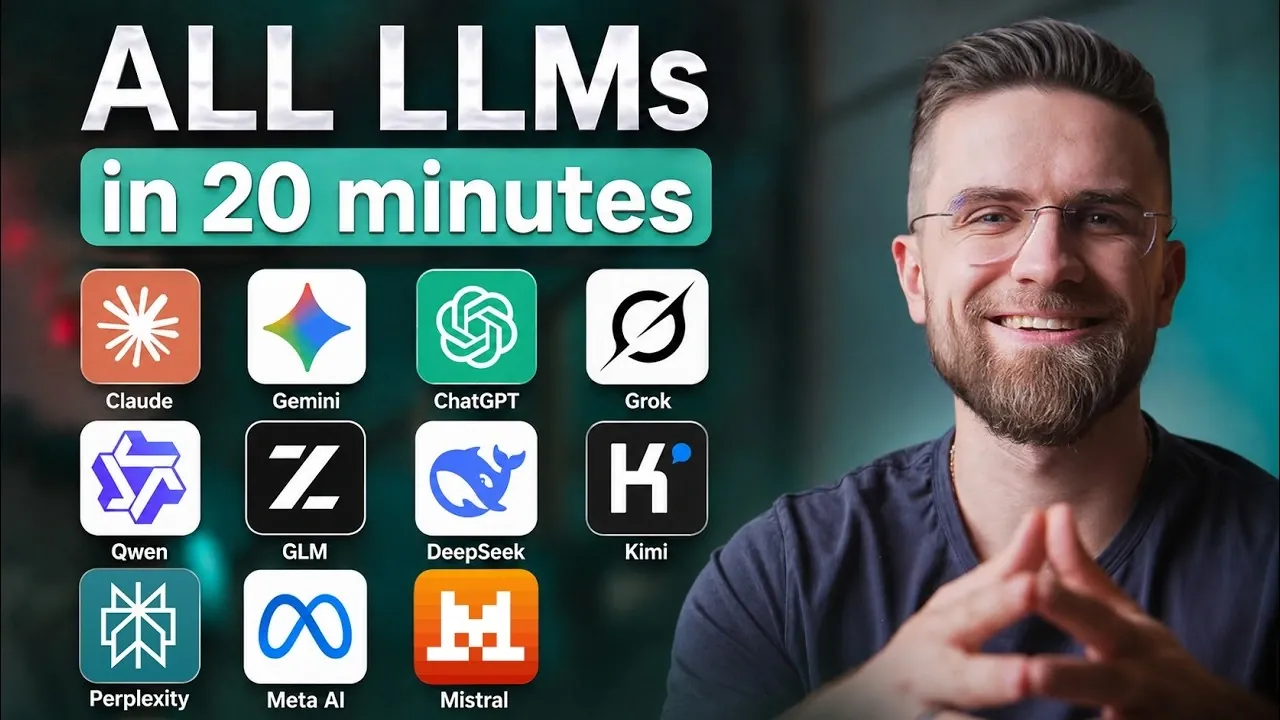
AI models or Large Language Models (LLMs) have become an integral part of modern workflows, yet many users overlook the importance of selecting the right model for the right task. AI Master explores how relying on a single model can limit outcomes, emphasizing the need to understand the unique strengths and weaknesses of each LLM. For instance, while ChatGPT (GPT) excels in multi-step reasoning and integration with third-party systems, models like Gemini and Claude shine in areas such as abstract reasoning and coding, respectively. This explainer highlights why aligning your choice of LLM with specific tasks is crucial for optimizing performance, enhancing privacy and managing costs effectively.
Gain insight into the distinct capabilities of leading LLMs and how they cater to specialized needs. Discover how privacy-focused models like Mina address data security concerns, why open-weight alternatives such as Llama are gaining traction for local deployment and where niche options like DeepSeek or Mistral fit into targeted use cases. By understanding these differences, you’ll be better equipped to navigate the evolving LLM landscape and make informed decisions that align with your priorities.
Understanding the Current LLM Landscape
TL;DR Key Takeaways :
- Different LLMs excel in specific tasks, making it crucial to select the right model based on your needs, such as ChatGPT for general tasks, Claude for coding and reasoning and Mina for privacy-focused collaboration.
- Open-weight models like Llama and DeepSeek offer cost-effective, privacy-conscious alternatives to proprietary LLMs but may lag in reasoning capabilities and require optimized hardware for best performance.
- Specialized models such as Mistral for EU compliance and Perplexity for research tasks highlight the importance of aligning LLMs with targeted use cases for optimal results.
- Emerging trends include privacy-focused AI, seamless tool integration, cost-effective solutions and local AI deployment, addressing user priorities like data security and compliance.
- Experimentation and understanding task-specific requirements are key to selecting the most effective LLM, balancing factors like performance, privacy and cost-efficiency.
The LLM market is diverse, with each model excelling in specific areas. While some models are designed for general usability, others specialize in tasks such as coding, research, or privacy-focused applications. Below is an overview of the leading models and their unique attributes:
- ChatGPT (OpenAI): Known for its polished user experience and seamless integration with third-party tools, GPT is a versatile option for general tasks. It excels in multi-step reasoning and tool use, making it a reliable choice for a wide range of applications. However, it doesn’t always lead in performance benchmarks, particularly in niche areas.
- Gemini (Google): Gemini stands out for its exceptional math and abstract reasoning capabilities, as well as its ability to process large context windows of up to 2 million tokens. Its integration with Google Workspace makes it a strong choice for enterprises, though concerns about bias persist due to Google’s advertising-driven model.
- Claude (Anthropic): Favored by developers, Claude excels in coding, reasoning tasks and handling long documents. It provides honest feedback and performs well in real-world benchmarks. However, it lacks image generation capabilities, which may limit its versatility for certain creative tasks.
- Mina (Agentic AI): Mina is tailored for professional use, particularly in meetings and collaborative environments. It automates follow-ups, participates in conversations and integrates with over 200 tools. Its privacy-focused design makes it a top choice for users concerned about data security.
- Grok (X): Grok specializes in real-time insights from social media and conversational tasks. While it performs well in these areas, its limited ability to handle structured analysis and multi-step reasoning reduces its overall versatility.
Each of these models offers unique advantages, but understanding their limitations is equally important. Selecting the right model depends on the specific requirements of your tasks and the trade-offs you are willing to accept.
The Rise of Open-Weight Models
Open-weight models are gaining popularity as cost-effective and privacy-conscious alternatives to proprietary LLMs. These models, such as Quen, GLM and Kimmy, allow local deployment, eliminating the need for external servers and offering greater control over data. However, they come with trade-offs, including reduced reasoning capabilities and a higher likelihood of generating inaccurate outputs, often referred to as hallucinations.
Meta AI’s Llama has played a significant role in popularizing open-weight models, particularly through its integration with platforms like WhatsApp and Instagram. These models are accessible and flexible, making them appealing for users who prioritize privacy and cost-effectiveness. However, they often lag behind proprietary options in terms of quality and advanced reasoning tasks. To fully use open-weight models, proper hardware optimization is essential, as their performance heavily depends on the computing resources available.

Here are more detailed guides and articles that you may find helpful on ChatGPT.
- GPT-5.6 Pro Leaks Expose a Massive Jump in AI Reasoning Power
- ChatGPT 5.6 vs Claude Mythos 5 : Leaks Reveal Two Very Different Futures for AI
- OpenAI Introduces ChatGPT 5.6 Sol, Terra and Luna Models
- What ChatGPT 5.6’S Delay Means for the Future of Open Source AI
- What the Leaked ChatGPT 5.6 Model Reveals About OpenAI’s Next Move
- What to Expect from OpenAI’s GPT-5.6 Release in June 2026
Specialized Models for Targeted Use Cases
Some LLMs are designed for specific applications, offering unique advantages in niche areas. These specialized models cater to targeted needs, making them valuable for users with specific priorities:
- DeepSeek: Using a “mixture of experts” architecture, DeepSeek delivers cost-effective performance and supports local use, addressing privacy concerns. However, its hosted versions may raise jurisdictional issues due to reliance on Chinese servers.
- Mistral (European Lab): Mistral is tailored for compliance with European data residency rules, making it ideal for EU-specific use cases. While it offers fast performance and data security, it is less competitive in advanced reasoning tasks compared to other models.
- Perplexity and Research Agents: These models excel in search-based tasks with citations, making them highly valuable for research purposes. However, manual verification of sources is often necessary to ensure the accuracy and reliability of their outputs.
These specialized models highlight the importance of aligning your choice of LLM with the specific requirements of your tasks. While they may not offer the versatility of general-purpose models, their targeted capabilities can provide significant advantages in the right contexts.
Emerging Trends and Challenges
The LLM landscape is evolving rapidly, driven by technological advancements and shifting user priorities. Several key trends are shaping the market, offering both opportunities and challenges:
- Privacy-Focused AI: With growing concerns about data security, privacy-focused models like Mina and open-weight alternatives are gaining traction. These models address the need for secure, localized data processing, making them increasingly popular among professionals and enterprises.
- Tool Integration: Models such as GPT and Gemini are enhancing productivity by integrating seamlessly with third-party tools and enterprise software. This trend is particularly beneficial for users looking to streamline workflows and improve efficiency.
- Cost-Effectiveness: Open-weight models and architectures like DeepSeek’s mixture of experts are providing affordable solutions for businesses and individuals. These models offer a viable alternative to proprietary options, particularly for users with budget constraints.
- Local AI Deployment: The ability to deploy AI locally is addressing concerns about data residency and compliance, especially in regions like Europe. This trend is particularly relevant for industries that handle sensitive or regulated data.
Despite these advancements, challenges remain. Models designed for short, well-defined tasks often struggle with long, complex workflows, limiting their applicability in certain scenarios. Additionally, reliance on hosted solutions can raise privacy and jurisdictional concerns, particularly for users handling sensitive data. As the market continues to evolve, addressing these challenges will be critical to unlocking the full potential of LLMs.
Making the Right Choice
Selecting the right LLM requires a clear understanding of your specific needs and priorities. For general tasks, GPT is a reliable and versatile option. If your focus is on coding, reasoning, or handling long documents, Claude and Gemini offer specialized capabilities that may better suit your requirements. For users prioritizing privacy and cost-effectiveness, open-weight models provide a compelling alternative, provided you have the necessary hardware to support them.
Experimentation is key to finding the model that best aligns with your goals. By testing different options and assessing their performance in real-world scenarios, you can identify the tools that deliver the greatest value for your specific use cases. Whether your focus is on enhancing productivity, making sure data security, or optimizing costs, the right LLM can help you achieve your objectives more effectively.
Media Credit: AI Master
Disclosure: Some of our articles include affiliate links. If you buy something through one of these links, Geeky Gadgets may earn an affiliate commission. Learn about our Disclosure Policy.
