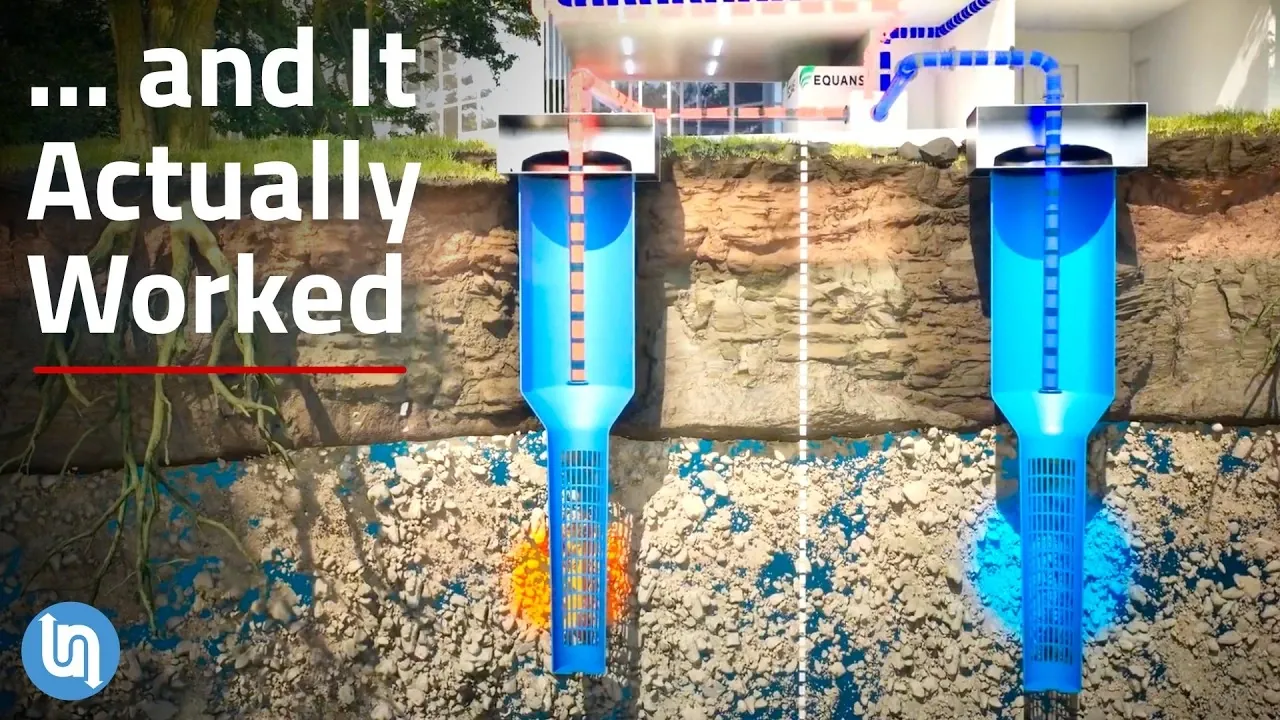
Aquifer Thermal Energy Storage (ATES) is a new approach to energy management that uses natural underground aquifers to store thermal energy for seasonal heating and cooling. As explained by Undecided with Matt Ferrell, this system captures excess heat during summer and stores it underground, retrieving it in winter to warm buildings. While ATES has been widely adopted in countries like the Netherlands, where over 3,000 systems are operational, its implementation in the United States has been limited due to high upfront costs, regulatory hurdles and technical challenges. Despite these barriers, the technology holds immense potential to reduce energy consumption and greenhouse gas emissions, offering a sustainable alternative to traditional heating and cooling systems.
In this guide, you’ll gain insight into the efficiency advantages of ATES, including how it outperforms conventional systems by up to tenfold for cooling and fourfold for heating. Explore the financial and environmental benefits that make ATES a compelling option, from operational cost savings to a 75% reduction in emissions. Additionally, uncover the key obstacles hindering its adoption in the US and learn how lessons from the Netherlands, such as supportive policies and quality standards, could help overcome these challenges. This breakdown provides a clear path forward for integrating ATES into the American energy landscape.
What is ATES?
TL;DR Key Takeaways :
- ATES (Aquifer Thermal Energy Storage) is an efficient and eco-friendly system for seasonal heating and cooling, reducing energy consumption and greenhouse gas emissions by up to 75%.
- ATES systems are significantly more efficient than traditional systems, offering 5-10 times better cooling efficiency than air conditioning and 4 times better heating efficiency than gas furnaces.
- Barriers to ATES adoption in the US include high upfront costs, lack of awareness, regulatory challenges and technical issues like corrosion and maintenance concerns.
- The Netherlands has successfully implemented over 3,000 ATES projects, driven by supportive energy policies, financial incentives and quality assurance standards.
- Widespread adoption of ATES in the US could reduce natural gas and electricity consumption by up to 40%, but requires increased investment, policy support, public awareness and technical innovation to overcome existing challenges.
ATES systems use underground aquifers to store thermal energy, using natural processes to provide efficient heating and cooling. The system operates in a cyclical manner:
- During summer, excess heat is captured and stored in the aquifer, while cold water is extracted to cool buildings.
- In winter, the stored heat is retrieved to warm buildings, reducing reliance on conventional heating systems.
This process capitalizes on the thermal properties of aquifers, making ATES systems highly efficient. For cooling, they are approximately 5 to 10 times more efficient than traditional air conditioning systems. For heating, they outperform gas furnaces by about four times. These efficiency gains translate into substantial operational cost savings and a reduction in greenhouse gas emissions of up to 75%, according to research. By integrating ATES, buildings can achieve both economic and environmental benefits, making it a forward-thinking solution for energy management.
Efficiency and Environmental Benefits
The efficiency of ATES systems offers long-term financial and environmental advantages. While the initial installation costs can be significant, most systems achieve a return on investment within 2 to 10 years, depending on factors such as project scale and local energy prices. Over time, the reduced operational costs make ATES a cost-effective choice for both residential and commercial applications.
Beyond financial savings, ATES contributes to environmental sustainability by reducing dependence on fossil fuels. This is particularly important during peak energy demand periods. In summer, when electricity grids are strained by widespread air conditioning use, ATES provides a low-energy alternative. Similarly, in winter, stored heat minimizes the need for natural gas or electric heating, alleviating pressure on energy infrastructure and lowering emissions. By addressing seasonal energy demands, ATES supports a more balanced and sustainable energy system.

Here is a selection of other guides from our extensive library of content you may find of interest.
- Ultimate Apple Watch Accessory: EnergyLink Charging Watch Band
- How the Super Soaker Inventor Built a Heat Engine Without Moving Parts
- iPhone 18 Pro: What Apple Isn’t Telling You Yet
- Best Phone Battery Life 2025: OnePlus 15, vivo X300 Pro, & iPhone 17 Pro Max
- The Battery BATTLE ROYALE – iPhone, Pixel, Galaxy, Xiaomi – Who Wins the Drain Test
- Apple Home vs Google Home: How iOS 27 Changes the Ecosystem
- Apple Just Confirmed WWDC 26: What to Expect from Siri 2.0 and iOS 27
- The iPhone Ultra Fold’s Invisible Crease Could End the Fold Wars
- Every Major Apple Announcement Leaked Ahead of WWDC 2026
- Apple Silicon AI Performance: Local Al on Apple Silicon Uses 7X Less RAM
Barriers to Adoption in the US
Despite its clear advantages, ATES has struggled to gain traction in the United States. Several factors have contributed to its limited adoption:
- High upfront costs: The significant initial investment required for ATES systems can deter stakeholders, particularly in regions where energy prices are relatively low.
- Lack of awareness: Many policymakers, developers and consumers are unfamiliar with ATES technology, limiting its visibility and perceived viability.
- Regulatory challenges: Unlike the Netherlands, where supportive policies and incentives have driven adoption, the US lacks a cohesive framework to promote ATES implementation.
- Technical issues: Challenges such as corrosion, silt accumulation and bacterial growth in aquifers can impact system efficiency and longevity, increasing maintenance requirements and costs.
These barriers highlight the need for targeted efforts to address financial, regulatory and technical obstacles, as well as to raise awareness about the benefits of ATES.
Lessons from the Netherlands
The Netherlands serves as a model for successful ATES implementation, with over 3,000 projects currently in operation. Several factors have contributed to its widespread adoption:
- Energy policies: Strict energy performance standards for buildings have incentivized developers to adopt ATES systems as a means of compliance.
- Government support: Financial incentives and subsidies have reduced the burden of upfront costs, making the technology more accessible.
- Quality assurance: Clear standards for installation and contractor accountability ensure that systems are reliable and efficient.
These measures have created a favorable environment for ATES, demonstrating how policy support and market development can overcome barriers to adoption. The Netherlands’ experience underscores the importance of aligning regulatory frameworks, financial incentives and technical standards to drive the adoption of innovative energy solutions.
Unlocking ATES Potential in the US
The United States has significant untapped potential for ATES, with geological studies indicating that many regions, including major urban centers like New York City, have suitable conditions for aquifer-based energy storage. Additionally, the growing urgency to address climate change and rising energy demands presents an opportunity to integrate ATES into the nation’s energy strategy.
Research suggests that widespread adoption of ATES in the US could reduce natural gas and electricity consumption by up to 40%. This would not only lower energy costs for consumers but also contribute to national goals for reducing greenhouse gas emissions and achieving energy independence. However, realizing this potential will require a concerted effort to address existing barriers and promote the benefits of ATES.
The Path Forward
To accelerate the adoption of ATES in the United States, several key steps must be taken:
- Increased investment: Funding for research, development and pilot projects can demonstrate the feasibility and benefits of ATES, encouraging broader adoption.
- Policy support: Federal and local governments can implement energy efficiency standards and financial incentives to make ATES more attractive to developers and property owners.
- Public awareness: Educational campaigns can inform policymakers, developers and the public about the advantages of ATES, fostering greater interest and acceptance.
- Technical innovation: Addressing challenges such as corrosion and maintenance can improve system reliability, reduce costs and enhance the overall appeal of ATES technology.
By learning from the Netherlands and tailoring solutions to the unique conditions of the US market, policymakers and industry leaders can create an environment that supports the widespread adoption of ATES. This would not only advance energy efficiency but also contribute to a cleaner, more sustainable energy future.
Media Credit: Undecided with Matt Ferrell
Disclosure: Some of our articles include affiliate links. If you buy something through one of these links, Geeky Gadgets may earn an affiliate commission. Learn about our Disclosure Policy.
