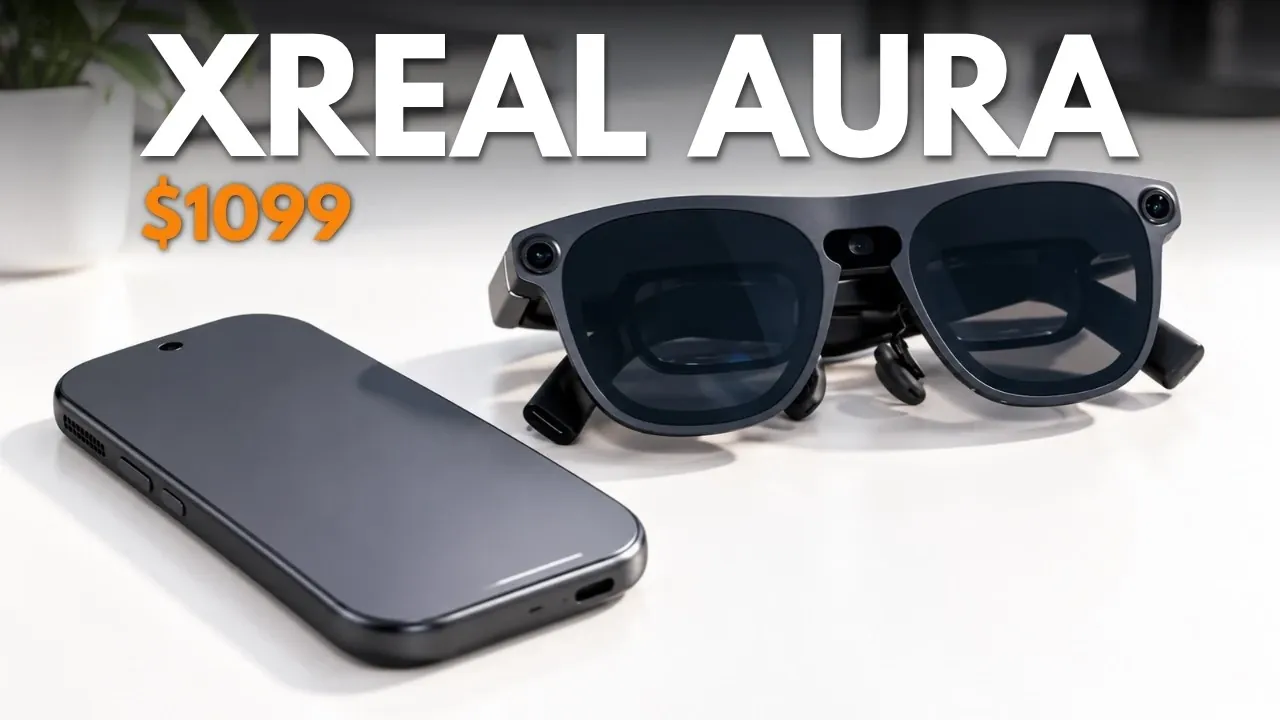
The XREAL Aura, unveiled at Google’s Android Developer Summit on October 28, 2026, introduces a new contender in the augmented reality space. Developed in collaboration with Google, these lightweight AR glasses run on the Android XR platform and feature advanced hardware like Sony micro OLED displays with a 120Hz refresh rate and a 70° field of view. Tech Court highlights the device’s wired design, which connects to a separate processing puck via USB-C, as a potential limitation for users prioritizing portability. Despite this, the Aura’s competitive pricing, starting at $1,099—and its focus on productivity, entertainment and gaming make it a noteworthy addition to the AR market.
Explore how the XREAL Aura’s features translate into practical use cases, from virtual multi-monitor setups for work to immersive 3D content for entertainment. Gain insight into its 6DoF tracking, spatial gallery integration, and Bose-tuned spatial audio, which aim to enhance both functionality and user experience. Additionally, the breakdown will examine challenges such as the untested battery performance and the narrower field of view, helping you assess whether this device aligns with your needs.
Availability and Pricing
TL;DR Key Takeaways :
- The XREAL Aura, announced on October 28, 2026, at Google’s Android Developer Summit, is a lightweight AR glasses device powered by Android XR, designed for productivity, entertainment and gaming.
- Available for pre-order in select regions (US, Canada, South Korea, Japan) starting at $1,099, with shipping beginning November 2, 2026 and a limited-time launch discount until December 2026.
- Features include Sony micro OLED displays (1920×1200 resolution per eye, 120Hz refresh rate), 6DoF tracking, electrochromic dimming and a Snapdragon Reality Elite platform for high AI performance.
- Runs on Android XR with over 150 XR-specific apps, Gemini AI assistant and unique features like a spatial gallery for 3D photo viewing, but its wired design and untested battery life raise usability concerns.
- Positioned as a competitive AR option against Meta VR glasses, its success depends on addressing challenges like portability, battery performance and real-world application effectiveness.
The XREAL Aura is now available for pre-order in select regions, including the United States, Canada, South Korea and Japan. Shipping is set to begin on November 2, 2026. Pricing starts at $1,099 for the 12GB RAM/256GB storage model, while the 16GB RAM/512GB variant is priced at $1,299. Early adopters can take advantage of a limited-time launch discount, which will remain available until the end of December 2026. This pricing strategy positions the Aura as a competitive option in the AR market, appealing to both tech enthusiasts and professionals.
Design and Build
Weighing just 95 grams, the XREAL Aura emphasizes comfort and portability, making it suitable for extended use. The glasses feature Sony micro OLED displays with a resolution of 1920×1200 per eye, a 120Hz refresh rate and a 70° field of view, delivering sharp visuals and smooth performance. The optical see-through lenses are equipped with electrochromic dimming, allowing users to adjust brightness levels to suit various lighting conditions.
Integrated cameras provide six degrees of freedom (6DoF) tracking and support hand interaction, enhancing the immersive experience. However, the reliance on a separate processing puck connected via a USB-C cable may limit mobility, especially for users seeking a fully wireless experience. While the design is sleek and lightweight, the wired connection could be a drawback for those prioritizing portability.

Here are more guides from our previous articles and guides related to XREAL Aura that you may find helpful.
- $20 Price Gap Pits XREAL Aura Against Meta VR Glasses
- XREAL Aura Secures 10,000 Deposits for Fall 2026 Launch
- How XREAL Aura $1,500 Spatial Computing Glasses Could Challenge Apple Vision
- Immersive Meta VR Glasses Challenge XREAL Aura AR Vision
- XREAL Aura Brings Android XR and Gemini AI to Smart Glasses
- URXR One vs XREAL Aura: AR Glasses Specs and Features Compared
- Best $1300 Smart Glasses: XREAL Aura vs Meta VR Headset
- VITURE Pro 2 Beats XREAL XBX in New $299 XR Glasses Test
- XREAL vs URXR vs VITURE Compared as Best AR Monitor Replacements
- Xreal Aura vs Galaxy XR : 6 Degrees of Freedom and a Wider FOV Define the Xreal Aura
Performance and Specifications
The XREAL Aura is powered by Qualcomm’s Snapdragon Reality Elite platform, delivering 48 TOPS (trillions of operations per second) of AI performance. The proprietary X1S chip ensures ultra-low-latency tracking, with a response time of just 3 milliseconds, making it ideal for real-time applications. Connectivity options include Wi-Fi 6E, Bluetooth 5.3, and USB-C, making sure seamless integration with a wide range of devices.
The glasses are equipped with a 4,455mAh battery that supports 57W fast charging, promising quick recharges. However, the real-world battery performance remains untested, leaving potential users uncertain about its longevity during extended sessions. While the hardware specifications are impressive, the practical usability of these features will depend on how well they perform in everyday scenarios.
Software and Features
Running on Android XR, the XREAL Aura supports a wide array of Android apps, including Chrome, YouTube, and Google Maps. At launch, users will have access to over 150 XR-specific experiences, ranging from immersive films to interactive 3D content. The inclusion of the Gemini AI assistant adds contextual voice-command functionality, allowing hands-free operation for tasks such as navigation and app control.
One standout feature is the spatial gallery, which integrates with Google Photos to display 3D photos in an immersive environment. This feature highlights the Aura’s potential for personal and professional use, offering a unique way to interact with digital content. The software ecosystem is designed to provide a seamless and engaging experience, but its success will depend on the quality and variety of available applications.
Practical Applications
The XREAL Aura is designed to cater to a wide range of use cases, making it a versatile tool for various scenarios:
- Work: Transform your workspace with a virtual multi-monitor setup, whether connected to an Android device or a laptop. This feature is particularly useful for professionals seeking to enhance productivity in limited physical spaces.
- Entertainment: Enjoy movies, explore 3D content and watch 360° videos on a large virtual screen, offering a cinema-like experience from the comfort of your home.
- Gaming: Play Android games, mirror PC games and connect Bluetooth controllers for an immersive gaming experience. The low-latency tracking ensures smooth and responsive gameplay.
These practical applications demonstrate the Aura’s potential to integrate seamlessly into daily life, whether for work, leisure, or creative pursuits.
Additional Features
The XREAL Aura includes several features designed to enhance user experience and accessibility. Bose-tuned spatial audio delivers immersive sound quality, while a four-microphone array ensures clear voice input for commands and communication. For users with vision impairments, the glasses support prescription lens inserts, making them more inclusive and accessible to a broader audience.
These thoughtful additions highlight the Aura’s focus on user comfort and functionality, making sure that it meets the needs of a diverse range of users.
Challenges and Limitations
Despite its innovative features, the XREAL Aura faces several challenges. The wired connection to the processing puck may restrict portability, limiting its appeal for users seeking a fully wireless experience. Additionally, the 70° field of view is narrower compared to many high-end VR headsets, which could impact the level of immersion for some users.
Another concern is the untested battery life and app performance in real-world conditions. While the hardware and software specifications are promising, their effectiveness in practical scenarios remains to be seen. As a first-generation product, the Aura represents a strong foundation but may require further refinement to address these limitations.
Market Position and Competitive Edge
The XREAL Aura is positioned as a direct competitor to Meta’s VR glasses, offering a lower price point and earlier availability. Its launch pricing, combined with discount incentives for early adopters, makes it an attractive option for those looking to explore AR technology. However, potential buyers may prefer to wait for detailed reviews to assess its performance, comfort and usability before committing to a purchase.
By focusing on affordability and a robust feature set, the Aura aims to carve out a niche in the competitive AR market. Its success will depend on how well it meets user expectations and addresses the challenges posed by its wired design and untested battery performance.
Looking Ahead
The XREAL Aura represents a significant advancement in AR technology, combining a lightweight design with innovative features and Android XR compatibility. Its potential for work, entertainment and gaming makes it a compelling option for early adopters and tech enthusiasts. However, its wired design and untested battery life may deter some users, particularly those seeking a more portable and reliable solution.
For those intrigued by the possibilities of augmented reality, the Aura offers a glimpse into the future of immersive technology. While it holds promise as a versatile and innovative device, waiting for comprehensive reviews and real-world feedback could provide a clearer understanding of its capabilities and limitations.
Media Credit: Tech Court
Disclosure: Some of our articles include affiliate links. If you buy something through one of these links, Geeky Gadgets may earn an affiliate commission. Learn about our Disclosure Policy.
