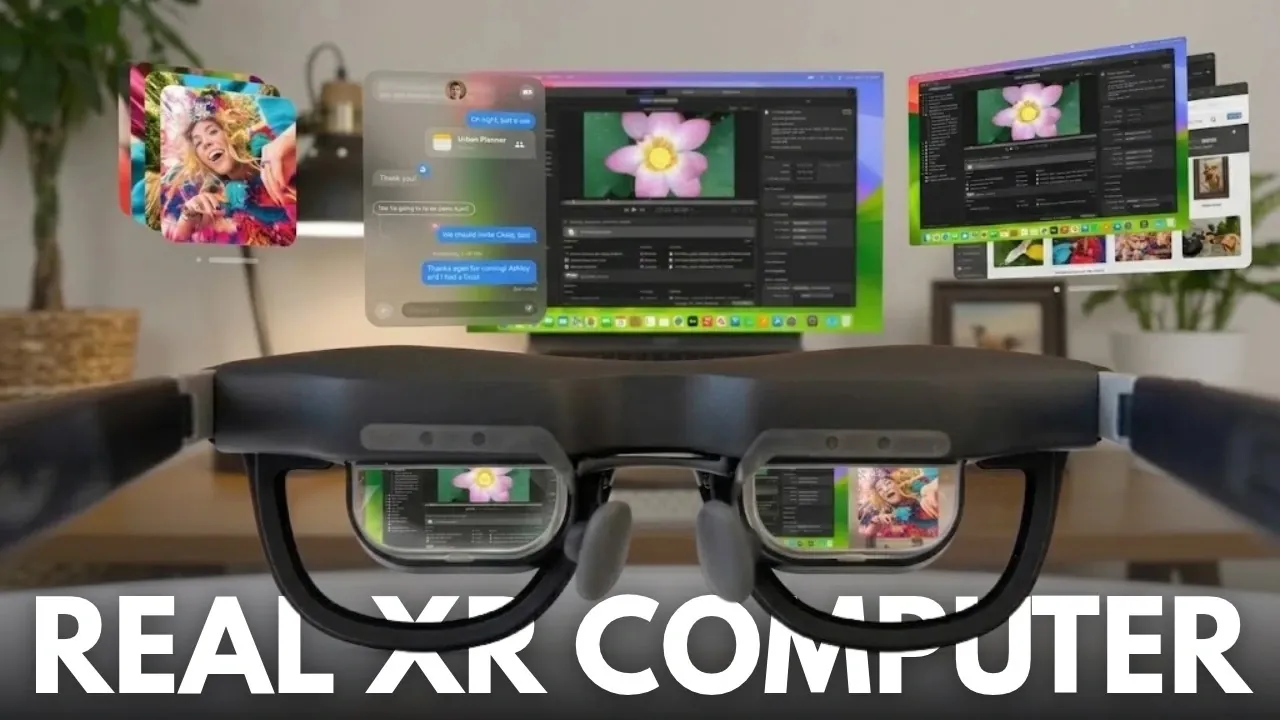
The XREAL Aura is making waves in the augmented reality (AR) space with its lightweight design, advanced hardware and focus on user comfort. Weighing under 95 grams, the device separates its processing power into an external compute puck, reducing the weight on the glasses themselves for extended usability. Tech Court highlights how the Aura’s 70° field of view (FOV) enhances immersion, creating a more natural integration of digital overlays with the physical world. Paired with the Qualcomm Snapdragon Reality Elite platform and X1S spatial co-processor, the Aura promises smooth performance for both productivity and entertainment applications.
In this breakdown, you’ll gain insight into how the Aura uses Android XR to provide access to a wide range of apps and services, making it adaptable to diverse workflows. Explore the role of Gemini AI in delivering contextual assistance, from real-time navigation to task-specific insights. Additionally, understand the trade-offs of its tethered design and external compute puck, as well as the challenges it faces in justifying its premium pricing in a competitive market. This guide offers a clear look at what sets the XREAL Aura apart and where it fits in the evolving AR landscape.
Lightweight Design and Hardware Innovation
TL;DR Key Takeaways :
- The XREAL Aura is a lightweight AR device (under 95 grams) with a unique design that separates the processing unit from the glasses, enhancing comfort for extended use.
- Powered by the Qualcomm Snapdragon Reality Elite platform and X1S spatial co-processor, the Aura delivers seamless spatial computing, real-time processing and optical see-through technology for immersive AR experiences.
- It features a 70° field of view (FOV) for enhanced immersion and advanced spatial and hand tracking for intuitive interaction with digital content.
- Built on Google’s Android XR platform, the Aura offers access to a wide range of Android apps and integrates the Gemini AI system for contextual assistance and real-time insights.
- Despite its innovative features, the Aura faces challenges such as its $1,500 price tag, reliance on an external compute puck and competition in the crowded AR market, which may impact its adoption.
Weighing under 95 grams, the XREAL Aura prioritizes comfort and usability, making it suitable for extended wear. Unlike many AR devices that integrate all components into a single unit, the Aura separates its processing unit from the glasses, relying on an external compute puck for intensive computational tasks. This design choice significantly reduces the weight on your face, making sure a more comfortable experience during prolonged use while maintaining high performance.
At the heart of the Aura lies the Qualcomm Snapdragon Reality Elite platform, paired with the X1S spatial co-processor. This powerful combination enables seamless spatial computing and real-time processing, making sure smooth performance across a variety of applications. The device also incorporates optical see-through technology, allowing you to interact with your physical surroundings while overlaying digital content. By merging a lightweight design with innovative hardware, the Aura positions itself as a practical and innovative solution in the AR space.
Immersive Display and Intuitive Interaction
One of the standout features of the XREAL Aura is its expansive 70° field of view (FOV), which offers a significantly wider perspective compared to many competing AR glasses. This broader FOV enhances immersion, making digital elements appear more naturally integrated with your physical environment. Whether you’re navigating virtual workspaces or engaging in AR gaming, the wide FOV ensures a more engaging experience.
The Aura also excels in interaction, thanks to its advanced spatial tracking and hand tracking capabilities. These features enable you to intuitively manipulate virtual objects and interact with digital content in real-time. Whether you’re using AR tools for productivity or exploring immersive entertainment, the combination of precise tracking and a wide FOV ensures a seamless and interactive AR experience. By focusing on both visual immersion and intuitive controls, the Aura delivers a compelling blend of functionality and engagement.

Take a look at other insightful guides from our broad collection that might capture your interest in XREAL Aura.
- What Makes XREAL Aura the Most Important XR Release Of 2026
- XREAL Aura Secures 10,000 Deposits for Fall 2026 Launch
- Meet XREAL’s $1,500 Aura XR Glasses Coming in Fall 2026
- Xreal Aura vs Galaxy XR : 6 Degrees of Freedom and a Wider FOV Define the Xreal Aura
- URXR One vs XREAL Aura: AR Glasses Specs and Features Compared
- XREAL Aura Might Make Apple’s $3,500 Vision Pro Pointless
- Why Xreal Aura’s $1,500 AR Glasses Are Ditching Traditional VR for Spatial Computing
- The New XREAL Aura AR Glasses Likely Cost Under $1,500: Fall 2026 Launch
- Fall 2026 Launch Likely Prices XREAL AURA Glasses At $1,500
- XREAL Aura : Inside the $1,500 Spatial Computing Smart Glasses
Software Ecosystem and AI Integration
Built on Google’s Android XR platform, the XREAL Aura offers access to a vast library of Android apps and services. This compatibility ensures that you can seamlessly integrate familiar tools into your AR experience while exploring new applications designed specifically for augmented reality. From enhancing productivity with AR-enabled workflows to unlocking new possibilities in gaming and entertainment, the Aura uses the versatility of Android XR to cater to a wide range of user needs.
Adding to its appeal is the Gemini AI system, which provides contextual assistance by delivering real-time information and insights based on your environment. Whether you’re working on a complex project, navigating unfamiliar spaces, or exploring AR-specific applications, Gemini AI aims to enhance efficiency and streamline interactions. By combining the flexibility of Android XR with the intelligence of Gemini AI, the Aura creates a dynamic and adaptable software ecosystem that supports diverse use cases.
Challenges in a Competitive Market
Despite its impressive features, the XREAL Aura faces significant challenges in an increasingly crowded AR market. While the 10,000 refundable reservations indicate strong initial interest, the potential $1,500 price tag raises concerns about affordability. Many consumers may compare the Aura to more affordable alternatives, such as laptops or smartphones, which often offer overlapping functionality. To succeed, the Aura must clearly demonstrate its unique value proposition and justify its premium pricing.
Another potential hurdle is the device’s reliance on a cable and external compute puck. While this design choice reduces the weight of the glasses, it may deter users who prioritize a fully wireless experience. Competing devices that offer wireless functionality could appeal to those seeking greater mobility and convenience. For the Aura to thrive, it must convince users that its benefits, such as its lightweight design, wide FOV and advanced tracking capabilities, outweigh these limitations.
Looking Ahead: The Future of the XREAL Aura
The XREAL Aura represents a bold step forward in the evolution of AR technology, combining innovative hardware, immersive features and a versatile software ecosystem. However, its ultimate success will depend on several critical factors, including pricing, launch timing and its ability to deliver a seamless user experience. The device must also address potential concerns, such as its reliance on external components and its relatively high cost, to gain widespread adoption.
While the Aura faces challenges in a competitive market, its advanced features and integration with Android XR position it as a promising contender in the AR space. Whether it achieves mainstream success remains to be seen, but the Aura undeniably marks an exciting milestone in the development of practical and immersive AR solutions. By pushing the boundaries of what AR technology can achieve, the XREAL Aura has the potential to influence the future of spatial computing and redefine how users interact with digital and physical environments.
Media Credit: Tech Court
Disclosure: Some of our articles include affiliate links. If you buy something through one of these links, Geeky Gadgets may earn an affiliate commission. Learn about our Disclosure Policy.
