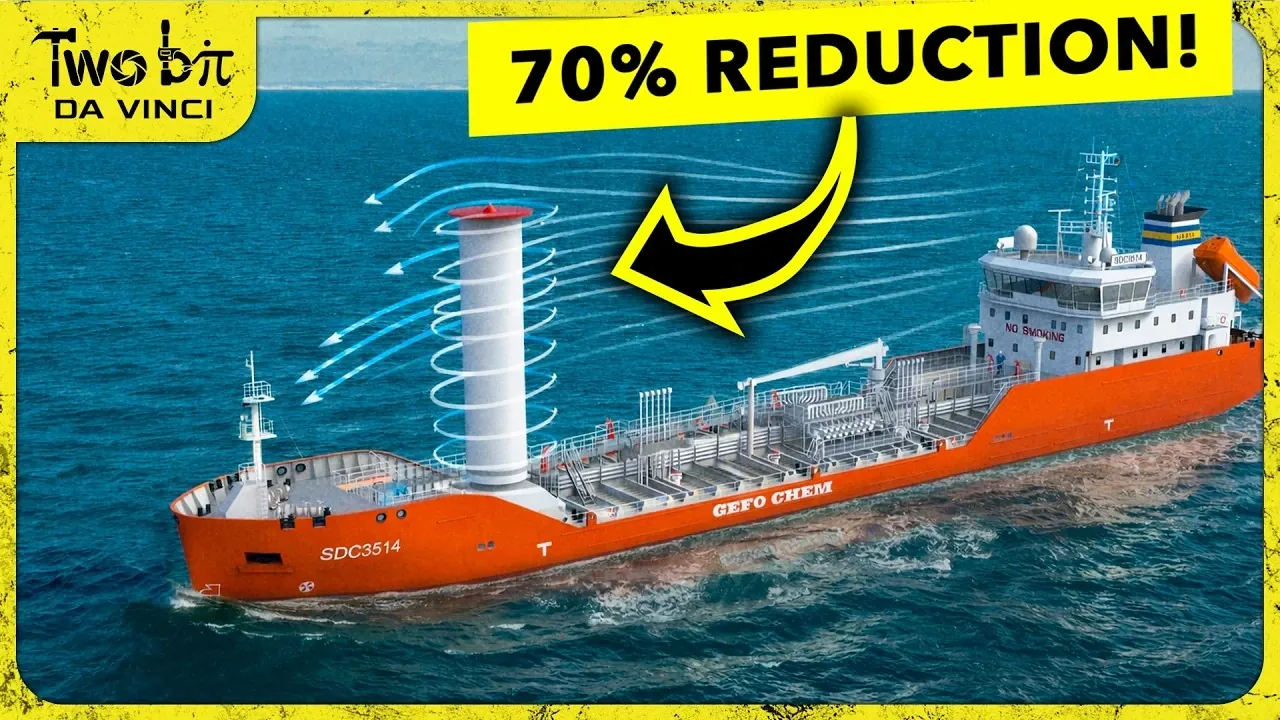
The shipping industry, responsible for transporting nearly 90% of global goods, faces mounting pressure to reduce its significant carbon footprint. According to Two Bit da Vinci, wind propulsion offers a promising pathway for decarbonizing maritime transport. A notable example is the adoption of rotor sails, which use the Magnus effect to generate thrust. These systems can lower fuel consumption by 5-25% in typical conditions and up to 70% in optimal scenarios, presenting a measurable approach to cutting emissions while enhancing operational efficiency.
Explore this guide to understand the mechanics behind rigid wing sails modeled after aircraft designs, the adaptability of modern soft sails and the functionality of kite systems that tap into high-altitude winds. Gain insight into the economic implications of these technologies, such as reduced fuel costs and shorter payback periods, as well as their contribution to achieving international emissions goals.
Modern Wind Propulsion: A Technological Renaissance
TL;DR Key Takeaways :
- The shipping industry, responsible for 90% of global goods transport, is adopting wind propulsion technologies to reduce carbon emissions and fuel consumption, blending traditional methods with modern innovations.
- Key wind propulsion systems include rotor sails, rigid wing sails, modern soft sails and kite systems, offering fuel savings of up to 70% in optimal conditions and significant environmental benefits.
- Wind propulsion technologies provide dual advantages: reducing greenhouse gas emissions and lowering operating costs, with typical payback periods ranging from three to eight years.
- Regulatory frameworks like IMO carbon targets and EU emissions regulations are driving the adoption of wind propulsion, with projections estimating up to 40,000 wind-powered ships by 2050.
- Modern advancements, including AI and automation, are enhancing the efficiency and scalability of wind propulsion, positioning it as a key solution for sustainable maritime transport and global decarbonization goals.
Wind propulsion systems are at the forefront of efforts to reduce emissions and fuel consumption in the shipping industry. These systems combine traditional wind power principles with state-of-the-art technologies, offering scalable and practical alternatives to fossil fuel reliance. Below are the key innovations driving this transformation:
- Rotor Sails (Magnus Effect): These spinning cylinders use the Magnus effect to generate thrust, reducing fuel consumption by 5-25% under typical conditions and up to 70% in optimal scenarios. Rotor sails are particularly effective for large vessels such as tankers and bulk carriers, seamlessly integrating into their design.
- Rigid Wing Sails: Inspired by airplane wings, these fully automated, aerodynamic structures provide substantial thrust. Ships equipped with rigid wing sails overview daily fuel savings of up to 18 tons, making them an ideal choice for long-haul routes.
- Modern Soft Sails: Combining traditional sail designs with advanced composite materials, these semi-rigid systems are both durable and adaptable. Often paired with hybrid propulsion systems, they ensure consistent performance even in challenging weather conditions.
- Kite Systems: Large, automated kites deployed above ships harness high-altitude winds to tow vessels. These systems reduce fuel consumption by up to 20% while keeping the ship’s deck space unobstructed, offering a practical and efficient solution.
These technologies demonstrate how wind propulsion is evolving into a sophisticated and reliable tool for modern shipping, capable of addressing both environmental and operational challenges.
Environmental and Economic Advantages
Wind propulsion technologies provide a dual advantage: environmental sustainability and economic savings. By reducing reliance on fossil fuels, these systems lower greenhouse gas emissions while simultaneously cutting operating costs. The typical payback period for wind propulsion installations ranges from three to eight years, depending on the ship type and operational profile, making it a financially attractive option for shipowners.
The use of advanced materials, such as recycled plastics and composites, further enhances sustainability. These materials are lightweight, durable and reduce the environmental impact of manufacturing. Additionally, wind power eliminates the need for complex fuel infrastructure, offering a clean and renewable energy source that is readily available. By adopting wind propulsion, the shipping industry can significantly reduce its carbon footprint while achieving long-term economic benefits.

Deep dive into the latest in energy technologies by exploring our other resources and articles.
- Z Pinch Fusion Costs Drop, Compact Reactor Skips Magnets & Lasers
- Useful Energy vs Primary Energy: Clearer Way to Measure Electrification Gains
- Kesterite Solar Cells vs Perovskite: Efficiency and Stability
- Solar Energy S 40,000 mAh retractable solar panel and power bank
- Best Battery Life Smartphones of 2025: OnePlus 15 Leads the Way
- NASA’s Mechanical Battery: A Breakthrough in Sustainable Energy
- Solid-State Battery Energy Density: Donut Labs Scrutiny
- Donut Lab Solid State Battery Claims, 400 Wh/kg and Fast Charge
- Donut Lab Solid State Battery or Pseudo-Capacitor, Experts Weigh In
- Donut Labs Solid-State Battery Tests : VTT Data & Doubts
Scaling Up: The Road to Widespread Adoption
Although wind propulsion is still in its early stages, its potential for growth is substantial. Currently, around 200 ships are equipped with wind propulsion systems, but projections suggest this number could rise to 10,000 by 2030 and 40,000 by 2050. This rapid expansion is being driven by stringent regulatory frameworks, such as the International Maritime Organization (IMO) carbon targets and the European Union’s emissions regulations.
These policies are encouraging shipowners to invest in sustainable technologies to meet global decarbonization goals. Simultaneously, advancements in AI and automation are allowing real-time optimization of wind propulsion systems, further improving their efficiency and reliability. As these technologies continue to evolve, they are expected to play a pivotal role in the industry’s transition to cleaner energy sources.
Wind Power: From Historical Legacy to Future Innovation
For centuries, wind power was the backbone of global shipping, propelling vessels across oceans before the advent of fossil fuels. Today, it is experiencing a resurgence, reimagined through modern engineering and technology. AI-driven systems now allow ships to dynamically optimize routes and adjust sail configurations, maximizing energy efficiency and minimizing environmental impact.
As a consumer, your choices can influence this shift. Supporting brands that adopt wind-powered shipping contributes to reducing the environmental impact of global trade. This transition is not merely a technological evolution, it represents a critical step in addressing climate change and making sure a sustainable future for maritime transport.
Wind propulsion is redefining the shipping industry by merging traditional methods with modern innovations. With continued investment and widespread adoption, wind-powered shipping has the potential to transform global trade, aligning with international decarbonization goals and paving the way for a cleaner, more sustainable future.
Media Credit: Two Bit da Vinci
Disclosure: Some of our articles include affiliate links. If you buy something through one of these links, Geeky Gadgets may earn an affiliate commission. Learn about our Disclosure Policy.
