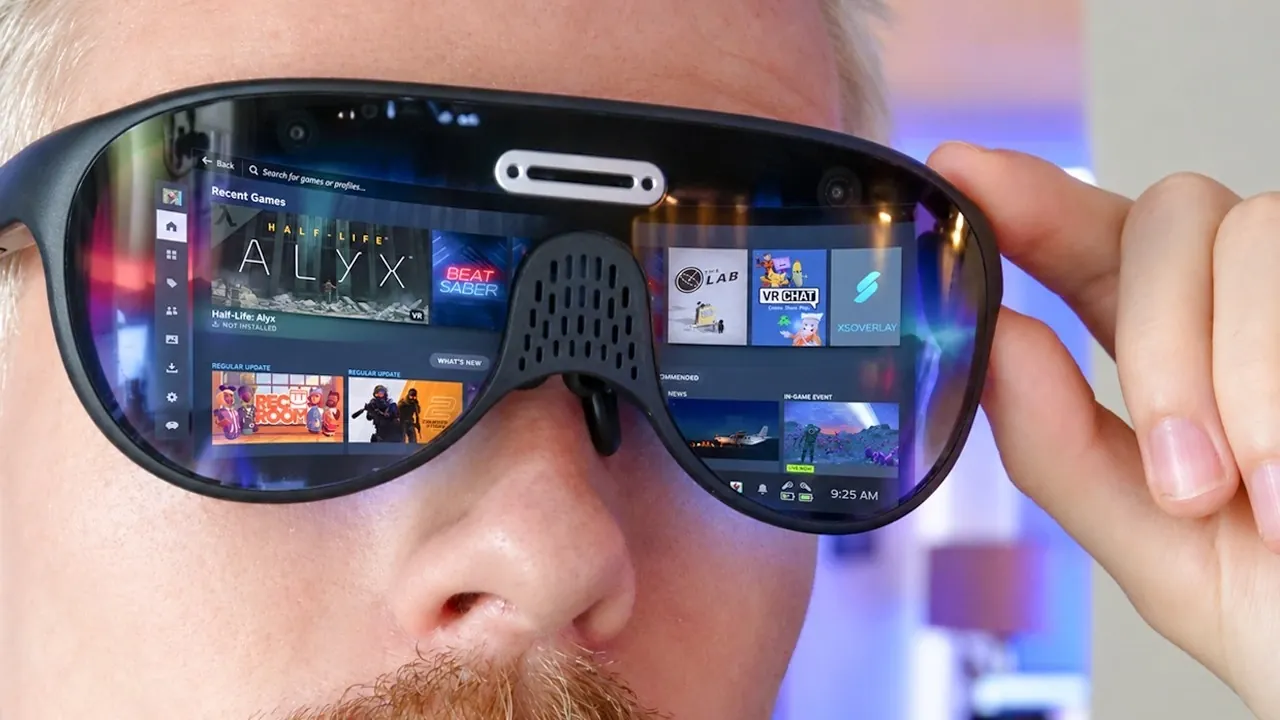
The URXR1 glasses by Unseen Reality bring a fresh contender to the spatial computing space, offering a lightweight, modular design tailored for professionals and XR enthusiasts. Weighing just 93 grams, these glasses prioritize portability without sacrificing essential features like dual micro OLED displays, 6DoF tracking and color passthrough. Nathie examines how the URXR1 balances its compact form with advanced functionality, particularly as a virtual monitor solution for multitasking or immersive entertainment. While the glasses rely on connected devices for power and processing, their sleek build and customizable fit make them a practical choice for users seeking comfort during extended wear.
In this review, you’ll explore how the URXR1’s display quality enhances productivity with sharp visuals and a 90° field of view, as well as how its hand tracking and passthrough features support mixed reality use cases. Learn about the trade-offs involved in its device-dependent design, including power requirements and software limitations and how these factors compare to other XR options like the XREAL Air. By the end, you’ll have a clear understanding of whether the URXR1 glasses meet your needs for lightweight, high-quality XR experiences.
Lightweight, Modular and Comfortable
TL;DR Key Takeaways :
- The URXR1 glasses by Unseen Reality combine smart glasses’ portability with XR headsets’ immersive features, offering advanced display technology, 6DoF tracking and color passthrough capabilities, though they rely on connected devices for processing power.
- Weighing only 93 grams, the glasses prioritize comfort and portability by excluding built-in batteries and speakers, instead using external power sources like smartphones or an optional power hub.
- Equipped with dual micro OLED displays (2448×2448 resolution per eye, 90Hz refresh rate), the glasses deliver sharp visuals with a 90° diagonal field of view, optimized for multitasking and virtual monitor setups.
- Key features include 6DoF tracking, color passthrough and hand tracking, though the latter may experience latency issues; the glasses also support virtual monitor setups and mixed reality applications via companion software.
- Priced at $799 (early Kickstarter) or $899 retail, the URXR1 glasses target professionals and XR enthusiasts seeking a lightweight, high-quality visual solution, though they are not standalone devices and depend on compatible external hardware.
Design and Build
Weighing a mere 93 grams, the URXR1 glasses are engineered for extended wear without causing discomfort. Their lightweight design is achieved by excluding built-in batteries and speakers, instead relying on external power sources such as smartphones, laptops, or an optional 10,000mAh power hub for prolonged usage. This approach ensures that the glasses remain compact and portable, catering to users who prioritize mobility.
Key design features include:
- Adjustable nose pieces: These allow for a customized fit, making sure comfort for a wide range of users.
- Magnetic prescription lens support: Ideal for users requiring vision correction, offering seamless integration without compromising the design.
This minimalist yet functional design makes the URXR1 an attractive option for users seeking a lightweight, wearable tech solution that doesn’t sacrifice essential features.
Display and Visuals: High-Quality Imagery for Productivity and Entertainment
The URXR1 glasses are equipped with dual micro OLED displays, each offering a resolution of 2448×2448 pixels per eye and a refresh rate of 90Hz. With a pixel density of 36 pixels per degree (PPD) and brightness levels reaching 120 nits per eye, the visuals are sharp, vibrant and well-suited for both professional tasks and entertainment purposes.
Key display specifications:
- 90° diagonal field of view: This provides an immersive experience, particularly for virtual monitor setups.
- Optimized for multitasking: The glasses enable extended screen configurations, making them ideal for professionals managing multiple applications simultaneously.
However, users may observe some vertical limitations compared to larger XR headsets, which could affect certain immersive applications. Despite this, the display quality remains a standout feature, offering crisp and detailed visuals.

Discover other guides from our vast content that could be of interest on display glasses.
- MemoMind One Kickstarter Suspended Over Even G2 Patent Clash
- How to Stream YouTube on Your Meta Ray-Ban Display Glasses
- Top Meta Display Smart Glass Accessories From LED Blockers to Clip-Ons
- How to Access Over 100 Hidden Web Apps on Your Meta Ray-Ban Glasses
- XREAL 1S vs Viture Beast vs XREAL One Pro : Tested for Productivity, Gaming and Media
- Meta Ray-Ban Display Glasses: Are They Worth It?
- Meta Ray-Ban Display Dual-Screen Smart Glasses Set to Launch in 2026
- Everything New in the Meta Ray-Ban Version 125 Firmware Update
- Meta Adventurer Smart Glasses Unboxing and Hands-on First Look
- Apple Glasses May Finally Arrive with an Unexpected Approach
Features and Functionality: Enhancing the XR Experience
The URXR1 glasses excel in bridging the gap between reality and virtuality, offering a range of features designed to enhance both productivity and immersion. These include:
- 6DoF tracking: This ensures precise movement tracking, allowing users to interact seamlessly within virtual environments.
- Color passthrough: A feature that enables users to remain aware of their physical surroundings while engaging with virtual content.
- Hand tracking: Facilitates intuitive interaction with virtual objects, although current latency issues may impact precision for certain tasks.
The companion software further enhances functionality by supporting virtual monitor setups, app shortcuts and mixed reality applications. While the hand tracking feature shows promise, its early-stage development means that some users may experience delays, particularly during tasks requiring high precision.
Performance and Usability: Smooth Integration with Limitations
The URXR1 glasses deliver a smooth and responsive user experience, with low-latency passthrough of under 10 milliseconds making sure seamless interaction between real and virtual environments. The 6DoF tracking system is generally stable, though reflective surfaces may occasionally disrupt accuracy.
Performance highlights:
- Power requirements: A 15W power source is necessary to achieve optimal resolution (1440p at 90Hz).
- Device dependency: The glasses rely on connected devices for processing power, which limits their standalone functionality.
While these dependencies may pose challenges for users seeking a fully independent XR solution, the URXR1 glasses perform reliably for most applications, offering a balanced combination of portability and capability.
Compatibility and Limitations: Understanding the Trade-Offs
The URXR1 glasses are designed as an accessory rather than a standalone XR device, heavily relying on connected devices for both power and processing. This design choice comes with certain trade-offs that potential users should consider:
- Device pairing: Users must pair the glasses with compatible devices to unlock their full potential.
- Software development: The companion software and operating system are still under development, which may limit available features at launch.
These limitations make the URXR1 less suitable for users seeking a fully independent XR experience. However, for those who value portability and high-quality visuals, the glasses offer a unique and practical solution.
Target Audience: Tailored for Professionals and Enthusiasts
The URXR1 glasses are designed for professionals and XR enthusiasts who prioritize portability, high-quality visuals and productivity tools. They are particularly appealing to users who:
- Value compact form factors: The lightweight design makes them ideal for on-the-go use.
- Require virtual monitor setups: Perfect for multitasking or immersive entertainment in mixed reality environments.
Whether managing complex projects or exploring virtual worlds, the URXR1 glasses provide a versatile and practical solution for users seeking a balance between functionality and portability.
Comparison to Competitors: Filling a Unique Niche
The URXR1 glasses occupy a distinct position in the XR market. While they do not directly compete with high-end devices like the Apple Vision Pro or Valve’s Steam Deck, they stand out as portable virtual monitors. Their closest competitor is the XREAL Air, but the URXR1 differentiates itself with features such as:
- 6DoF tracking: This enhances spatial interaction, offering a more immersive experience.
- Color passthrough: A feature that supports mixed reality applications, bridging the gap between physical and virtual environments.
Although their reliance on connected devices may limit their appeal to some users, the URXR1 glasses cater to those who prioritize lightweight accessories over standalone XR headsets.
Pricing and Availability: A Crowdfunding Opportunity
The URXR1 glasses are currently available through a Kickstarter campaign, with early pricing starting at $799 and a retail price of $899. As with any crowdfunding project, potential backers should carefully evaluate the campaign and the company’s track record before committing. Shipping to early backers is anticipated in the coming months, offering a glimpse into the future of wearable technology.
Media Credit: Nathie
Disclosure: Some of our articles include affiliate links. If you buy something through one of these links, Geeky Gadgets may earn an affiliate commission. Learn about our Disclosure Policy.
