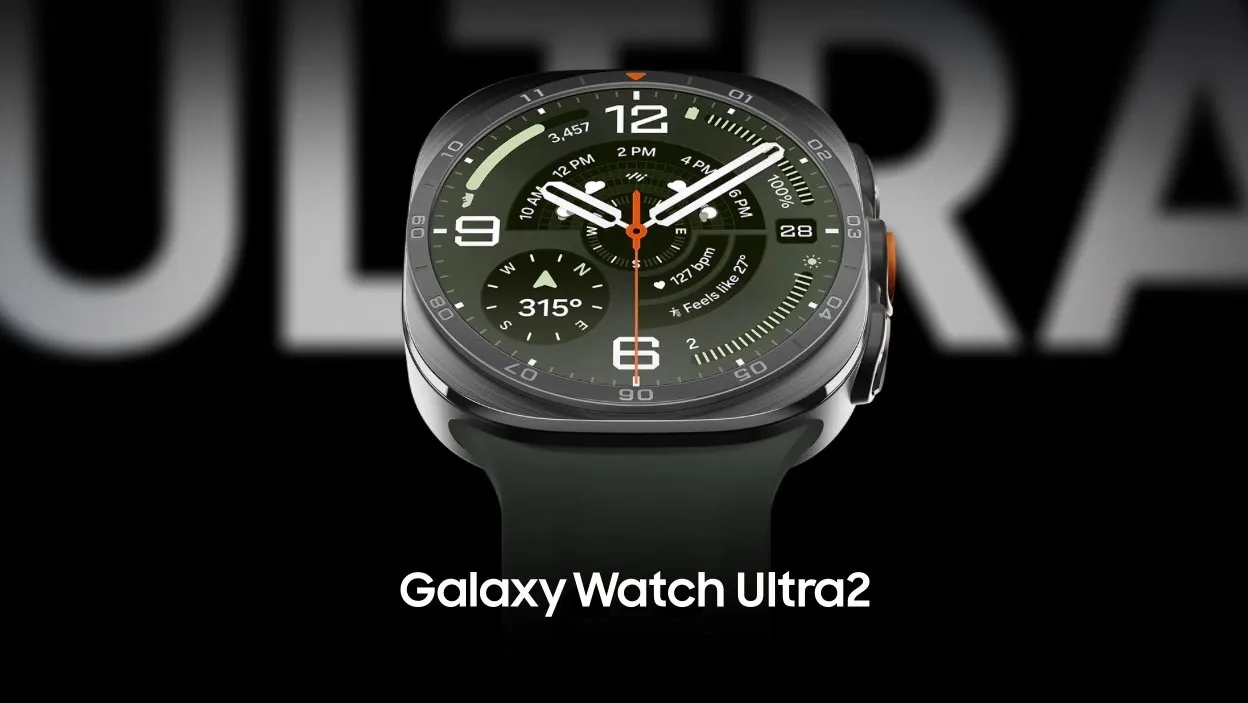
The Samsung Galaxy Watch Ultra 2 does some things very well and others poorly, and which is which matters if you are buying it for health tracking. In long-term testing by The Quantified Scientist, nighttime heart rate and GPS held up well, while heart-rate readings during exercise were inconsistent enough that the watch is not recommended for that job. Find out how it coped on an indoor bike, on runs and in the weights room, as well as which rival watches came out ahead for sleep tracking on Android.
Workout Heart Rate: Good on a Bike, Weak in the Gym
TL;DR Key Takeaways :
- Exercise heart-rate correlations against a Polar H10 ranged from 0.95 for indoor cycling to 0.70 for weight lifting. The Quantified Scientist does not recommend the watch for heart-rate tracking based on these results, though performance might be better on some people.
- GPS tracks generally overlapped well on repeated routes, with deviations around obstacles and buildings. GPS received a score of 80 based on visual inspection rather than a quantified method.
- In a comparison with 4,000 manually counted steps, the watch overcounted by 12 to 22 steps per 1,000, or roughly 1% to 2%.
- Against a Z-Max EEG headband, the watch identified 81% of reference deep sleep, about 51% of light sleep and 72% of REM sleep. Its sleep score was 68, placing it around the middle of devices tested in 2026.
- Nighttime heart-rate readings agreed closely with the reference within the approximately 38-60 BPM range tested. Exported heart-rate variability values appeared unrealistic; there may be an export algorithm error, and the values may not reflect the actual measurements.
If you want a watch to track your heart rate during workouts, the Galaxy Watch Ultra 2 is a risky pick. Measured against a Polar H10 chest strap, it was close on an indoor bike, at 0.95 out of a perfect 1, but slipped to 0.85 on runs, 0.82 on outdoor rides and 0.70 in the weights room.
Indoor cycling was its best result. Most readings sat on or near the chest strap’s, although the watch tended to read low at higher heart rates and was least reliable at the start of a session. It seemed to settle as the body warmed up, in both warmer September and colder November conditions.
Running was hit and miss. Some runs tracked closely, but in one the chest strap held at around 150 beats per minute while the watch showed close to 170, before dropping too low. Outdoor cycling was similar: a good ride could be followed days later by one with large errors, and bumps, braking and a tight grip on the handlebars can all move your wrist enough to affect the reading.
Weight lifting gave the weakest result. The watch missed peaks the chest strap caught and sometimes read too high, and wrist tension during a set can make those peaks hard for any watch to detect.
Against other devices the picture is not flattering. For indoor cycling, 73% of the devices tested did better, and in the other three comparisons between 71% and 87% did. On that basis The Quantified Scientist does not recommend the watch for heart-rate tracking. This was a test on one person, whose body tends to be harder for most devices to track, so your results may be better.
GPS and Steps: Reliable Routes, a Few Extra Steps
GPS is one of the watch’s strengths. On routes run and cycled again and again, its recorded tracks sat closely on top of one another, including beside a wall where many devices struggle, and it picked up a signal quickly.
It was not perfect. One track drifted slightly through hedges, another smoothed off a corner, and under a large construction overhang the tracks wandered across buildings before recovering once the watch had its signal back. GPS earned a score of 80, judged by eye and not by a measured method.
Step counting was close but a little generous. Over 4,000 manually counted steps the watch added 12 to 22 steps per 1,000, roughly 1% to 2% too many, and other devices have done better in the same test.

Gain further expertise in Samsung Galaxy Watch Ultra 2 by checking out these recommendations.
- Samsung Galaxy Watch Ultra 2: Massive Upgrade?
- 15 Steps to Take After Unboxing Your Galaxy Watch Ultra 2
- Top 25+ Samsung Galaxy Watch Ultra 2 Hidden Features
- Max Out Your Galaxy Watch Ultra 2: Must-Have Apps
- Samsung Galaxy Watch Ultra 2 Delayed: Here’s Why It’s Worth the Wait
Sleep Tracking: Mid-Table, With a Pixel Watch Ahead
If sleep tracking is your main reason to buy, there are better choices. Compared with a Z-Max EEG headband, which reads brain waves, the watch caught 81% of deep sleep and 72% of REM sleep, but only about 51% of light sleep.
The weak spot is that it reports more deep and REM sleep than the headband found, at the expense of light sleep. Its sleep score of 68 put it around the middle of the devices tested in 2026, behind the Apple Watch Series 12, Apple Watch Ultra 4 and Google and Fitbit devices, with some Amazfit models slightly ahead too.
For sleep tracking on Android, The Quantified Scientist recommends a Pixel Watch over a Galaxy Watch. A Fitbit Charge or Fitbit Air is a cheaper route at around $100 to $160, while the Eight Sleep Pod tracks sleep with nothing worn on your body, though it is only recommended if you also want its bed heating and cooling and can afford it.
Overnight Heart Rate: The Watch at Its Best
Overnight is where the Galaxy Watch Ultra 2 is most trustworthy. With heart rates between roughly 38 and 60 BPM, its readings stayed close to the reference through the night, and it correctly told lower-heart-rate nights from higher ones. That makes it useful for following how your average heart rate changes from night to night.
Heart-rate variability is another matter. The values the watch exported looked unrealistic, possibly because of an error in how the data is exported, so they may not reflect what the watch actually measured.
Taken together, The Quantified Scientist would not make the Galaxy Watch Ultra 2 a top Android pick for health and sports tracking, but says it may still suit someone with a Galaxy phone who likes its design and other features. If accurate workout heart rate or sleep stages matter most to you, these results point to other watches.
Media Credit: The Quantified Scientist
Disclosure: Some of our articles include affiliate links. If you buy something through one of these links, Geeky Gadgets may earn an affiliate commission. Learn about our Disclosure Policy.
