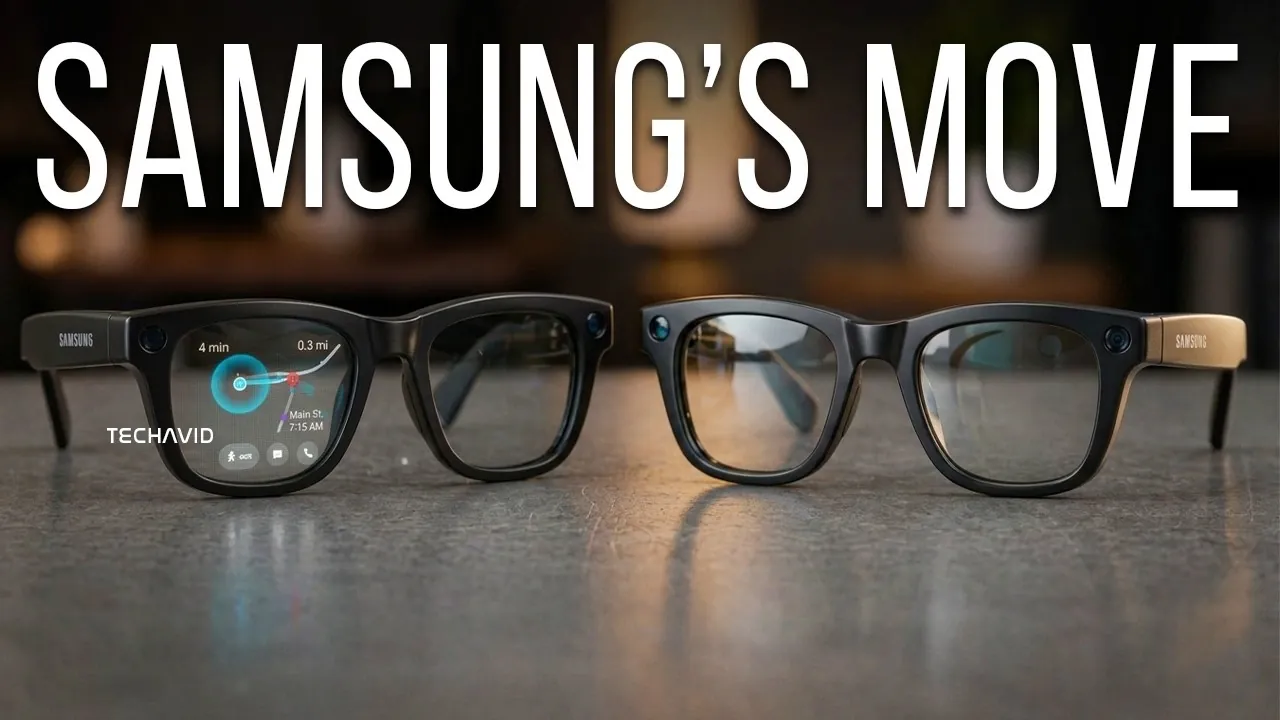
Samsung’s upcoming smart glasses lineup signals a deliberate approach to wearable technology, with two distinct products catering to different user needs. As detailed by TechAvid, the AI glasses, codenamed “Jinju,” are set for a summer 2026 release and prioritize comfort and accessibility. These lightweight glasses, powered by the Snapdragon AR1+ chipset, weigh just 50 grams and include features like a 12MP camera and Bluetooth pairing with Samsung’s One UI 8.5. Meanwhile, the HUD glasses, codenamed “Haean,” are expected to debut in 2027, offering a more immersive experience with a built-in display and enhanced XR capabilities. This staggered timeline reflects Samsung’s strategic focus on refining each product to meet its intended audience’s expectations.
Explore the nuances of Samsung’s dual-product strategy, including how the AI glasses aim to compete with Ray-Ban Meta smart glasses through a balance of functionality and ecosystem integration. Gain insight into the HUD glasses’ potential for professional applications, from real-time overlays to extended reality use cases. By examining the design priorities and release schedules, you’ll better understand how Samsung plans to address both casual and professional markets in the evolving smart glasses landscape.
TL;DR Key Takeaways :
- Samsung is launching two smart glasses product lines: AI-powered “”Jinju” glasses for casual users in summer 2026 and advanced HUD “Haean” glasses for professionals in 2027.
- The AI glasses (“”Jinju”) will feature a lightweight design (50 grams), a 12MP camera, Bluetooth pairing and Snapdragon AR1+ chipset for AR applications, competing with Ray-Ban Meta smart glasses.
- The HUD glasses (“Haean”) will include a built-in display, enhanced XR capabilities and One UI 9 integration, targeting immersive applications like gaming and professional use.
- Samsung’s dual-product strategy aims to cater to both casual users and professionals, making sure relevance across diverse market segments.
- Staggered product launches allow Samsung to gather user feedback from the AI glasses to refine and perfect the more advanced HUD glasses for 2027.
AI Glasses (“Jinju”): Lightweight and User-Friendly
Samsung’s AI glasses, internally referred to as “Jinju,” are designed to prioritize comfort and functionality. With codenames SM-2000P and SM-2000J, these glasses are expected to feature regional or connectivity-specific variations, making sure adaptability across different markets. Powered by the Snapdragon AR1+ chipset, the glasses promise efficient performance tailored for augmented reality (AR) applications, making them a practical choice for everyday users. Key features of the AI glasses include:
- Lightweight design: Weighing approximately 50 grams, these glasses are built for extended wear without causing discomfort.
- 12MP camera: Equipped for basic photography and video recording, allowing users to capture moments on the go.
- Bluetooth pairing: Seamless integration with Samsung’s One UI 8.5 software ensures smooth connectivity with other devices.
The AI glasses are positioned to compete directly with Ray-Ban Meta smart glasses, offering similar functionality but enhanced by Samsung’s proprietary software and ecosystem. The summer 2026 launch window indicates Samsung’s focus on delivering a polished, user-friendly product aimed at casual users and early adopters of wearable technology.
HUD Glasses (“Haean”): Immersive Technology for 2027
The HUD glasses, codenamed “Haean,” represent Samsung’s more advanced offering in the smart glasses market. Identified as SM-5000 during development, these glasses are expected to feature a built-in display, delivering a true heads-up display (HUD) experience. Designed for users seeking immersive, high-performance wearable technology, the “Haean” glasses are set to integrate deeply into extended reality (XR) ecosystems, making them ideal for professionals and tech enthusiasts. Key anticipated features include:
- Built-in display: Provides real-time overlays of information, enhancing productivity and situational awareness.
- Enhanced XR capabilities: Supports immersive applications, making the glasses suitable for gaming, design and professional use cases.
- One UI 9 integration: Ensures seamless system performance and compatibility with Samsung’s broader ecosystem.
Currently in the refinement stage, the HUD glasses are targeting an early 2027 release. This timeline allows Samsung to fine-tune the product’s features, making sure it meets the expectations of demanding users who require advanced functionality and reliability.
Expand your understanding of smart glasses with additional resources from our extensive library of articles.
- Samsung Smart Glasses 2026: Features, Specs, and Release Date
- Google vs Meta Smart Glasses: Which AI Frames Are Better
- Samsung Galaxy AI Smart Glasses Release Date Revealed
- Nothing AI Smart Glasses : Design, Features & Pricing Strategy
- Apple Smart Glasses Leak: 4 New Frame Designs for 2027 Launch
- Apple Glass Early Look: 2026 Release Date & Leaked Features
- Apple Smart Glasses: Major Production Milestone Leaked for 2026
- The $89 Smart Glasses That Rival Ray-Ban Meta Gen 1
- Apple Smart Glasses Leak: Visual Intelligence & Gemini Siri
- Are the Even Realities G2 Smart Glasses Worth It in 2026?
Samsung’s Dual-Product Strategy
Samsung’s dual-product strategy is a calculated approach to address the diverse needs of the smart glasses market. By offering two distinct product lines, the company is targeting two primary user groups:
- AI Glasses: Designed for everyday users seeking lightweight, functional wearables with basic AR capabilities. These glasses are ideal for casual use, offering a balance of practicality and comfort.
- HUD Glasses: Aimed at professionals and tech enthusiasts requiring advanced display technology and immersive XR features. These glasses cater to users who demand high performance and innovative functionality.
By staggering the launches of these products, Samsung can allocate resources effectively, focusing on each product category’s unique requirements. The earlier release of the AI glasses allows the company to establish a foothold in the market, gather user feedback and refine its technology. This feedback loop will likely inform the development of the more complex HUD glasses, making sure they meet the expectations of their target audience.
Samsung’s strategy also highlights its broader vision for wearable technology. By addressing both casual and professional users, the company is positioning itself as a versatile player in the smart glasses market, capable of meeting a wide range of consumer demands. This approach not only enhances Samsung’s competitive edge but also reinforces its commitment to innovation and user-centric design.
Media Credit: TechAvid
Disclosure: Some of our articles include affiliate links. If you buy something through one of these links, Geeky Gadgets may earn an affiliate commission. Learn about our Disclosure Policy.
