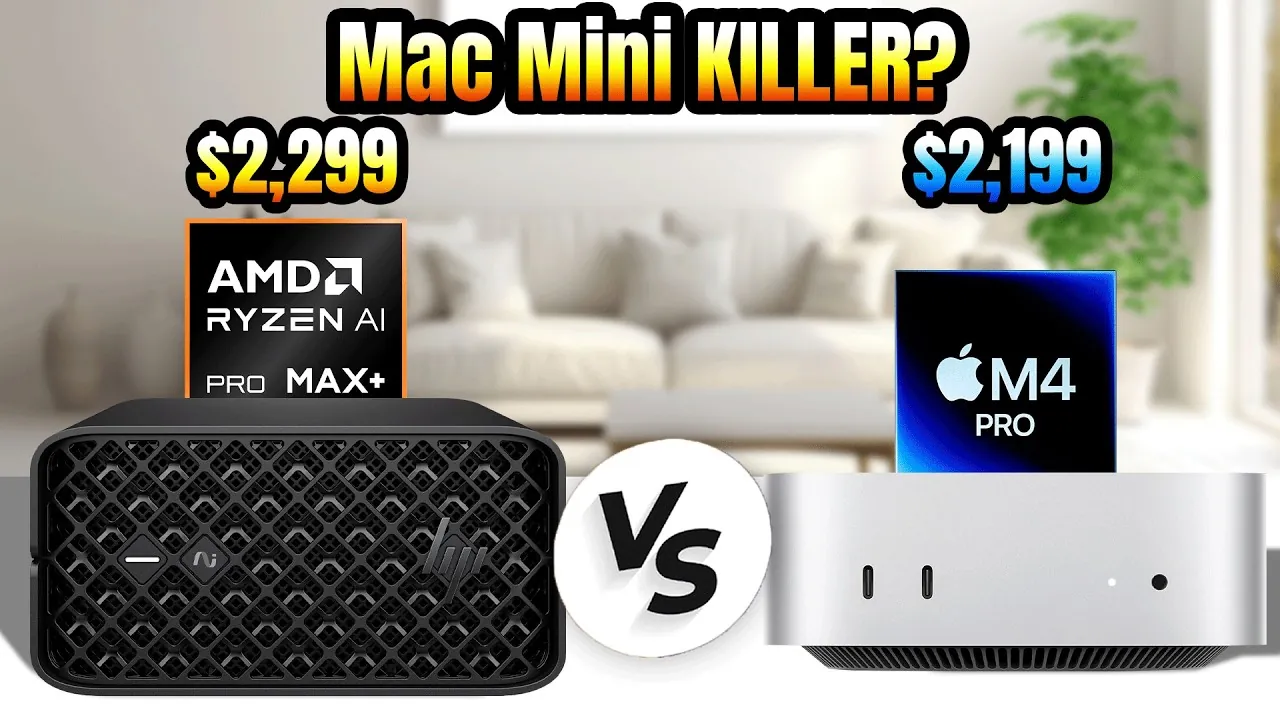
When evaluating high-performance mini PCs, the HP Z2 Mini G1A and the Apple Mac Mini with the M4 Pro chip emerge as two leading contenders. Both systems deliver exceptional power in compact designs, but they cater to distinct user needs. Whether your focus is on multi-threaded performance, gaming, or creative workflows, understanding their specifications, design, and performance is essential for making an informed decision. The video below from Matt Talks Tech gives us a look at the two devices.
Key Specifications: Power Under the Hood
The HP Z2 Mini G1A is engineered for demanding tasks. It features the AMD Ryzen AI Max Plus Pro395, a 16-core CPU paired with a Radeon 8060S integrated GPU. With support for up to 64 GB of RAM, expandable to 128 GB, and a 2 TB SSD, this mini PC is designed to handle intensive workloads with ease. Priced at under $2,300, it offers robust performance for professionals who need raw computing power.
In comparison, the Apple Mac Mini is powered by the M4 Pro chip, which integrates a 14-core CPU and a 20-core GPU. It comes with 48 GB of unified memory and a 1 TB SSD. At a slightly lower price point of under $2,200, the Mac Mini emphasizes efficiency and excels in creative workflows, making it a strong contender for professionals in fields like video editing and graphic design.
Design and Build: Modular vs. Minimalist
The HP Z2 Mini adopts a workstation-like design that prioritizes functionality. While it is larger and heavier than the Mac Mini, its modular build allows for future upgrades to components such as RAM and storage. This flexibility makes it an appealing choice for users who anticipate evolving hardware needs over time.
In contrast, the Mac Mini features a sleek, lightweight aluminum design that embodies minimalism. Its compact form factor is ideal for users seeking a clean and unobtrusive setup. However, its sealed design means that upgrades are not possible after purchase, requiring users to carefully configure their system at the outset.
Performance: Multi-Threaded vs. Single-Core Excellence
The HP Z2 Mini excels in multi-threaded performance, making it a top choice for tasks such as 3D rendering, AI training, and simulation workloads. The AMD Ryzen AI Max Plus Pro395 delivers exceptional processing power, ensuring smooth performance even under heavy computational demands.
On the other hand, the Mac Mini shines in single-core performance, which is critical for creative professionals. Tasks like video editing, coding, and general productivity benefit from its optimized architecture. The M4 Pro chip ensures efficient workflows, making it a reliable option for professionals who prioritize precision and speed in their work.
Gaming: A Clear Winner
For gaming enthusiasts, the HP Z2 Mini emerges as the clear leader. Its Radeon 8060S integrated GPU delivers superior frame rates and enhanced texture quality in graphically demanding games such as *Cyberpunk 2077*. This makes it a compelling choice for users seeking an immersive gaming experience.
While the Mac Mini offers decent gaming performance, it is better suited for macOS-specific games and lighter titles. Although it lacks the raw graphical power of the HP Z2 Mini, it can handle casual gaming effectively, making it a secondary option for gamers.
Connectivity: Versatility vs. Speed
The HP Z2 Mini offers a wide range of connectivity options, including DisplayPort 2.1, HDMI 2.1, USB-A, USB-C, Thunderbolt 4, and Ethernet. This extensive selection ensures compatibility with a variety of peripherals and displays, making it a versatile choice for professionals who require flexibility in their setups.
The Mac Mini, while offering fewer ports, includes advanced features such as Thunderbolt 5 and optional 10 GB Ethernet. These high-speed options cater to users who prioritize fast data transfer and network connectivity in a compact design. Although less versatile than the HP Z2 Mini, the Mac Mini’s connectivity options are tailored for specific professional needs.
Power Efficiency and Noise: Quiet vs. Powerful
Energy efficiency and noise levels are critical factors for many users. The HP Z2 Mini consumes up to 200 watts under load, which is significantly higher than the Mac Mini. Its fans can become noticeable during intensive tasks, which may be a drawback for users in noise-sensitive environments.
In contrast, the Mac Mini is highly energy-efficient, consuming less than 60 watts under load. Its near-silent operation makes it an excellent choice for quiet workspaces, particularly for creative professionals who require a distraction-free environment for long hours of work.
Use Cases: Tailored for Your Needs
The HP Z2 Mini is best suited for users who require powerful multi-threaded performance. It excels in tasks such as gaming, simulations, AI training, and other computationally intensive workloads. Its upgradeable design also makes it a future-proof investment for professionals with evolving hardware requirements.
The Mac Mini, by contrast, is ideal for creative professionals. Its superior single-core speed and optimized architecture make it perfect for tasks like video editing, coding, and general productivity. Additionally, its energy efficiency and quiet operation enhance its appeal for users who need a reliable system for extended creative sessions.
Making the Right Choice
Both the HP Z2 Mini and the Apple Mac Mini are exceptional mini PCs, but they cater to different priorities. If your focus is on gaming, simulations, or heavy multi-threaded workloads, the HP Z2 Mini is the superior choice. However, if you value energy efficiency, quiet operation, and optimized creative workflows, the Mac Mini stands out as the ideal option. By carefully assessing your specific needs, you can select the mini PC that aligns perfectly with your professional and personal goals.
Find more information on Ryzen AI Max Plus Pro395 by browsing our extensive range of articles, guides, and tutorials.
- Ryzen AI Max Plus 395 Overclocking Guide: Performance
- Radeon 860S iGPU Benchmarks: High-Performance Gaming
Source & Image Credit: Matt Talks Tech
Disclosure: Some of our articles include affiliate links. If you buy something through one of these links, Geeky Gadgets may earn an affiliate commission. Learn about our Disclosure Policy.
