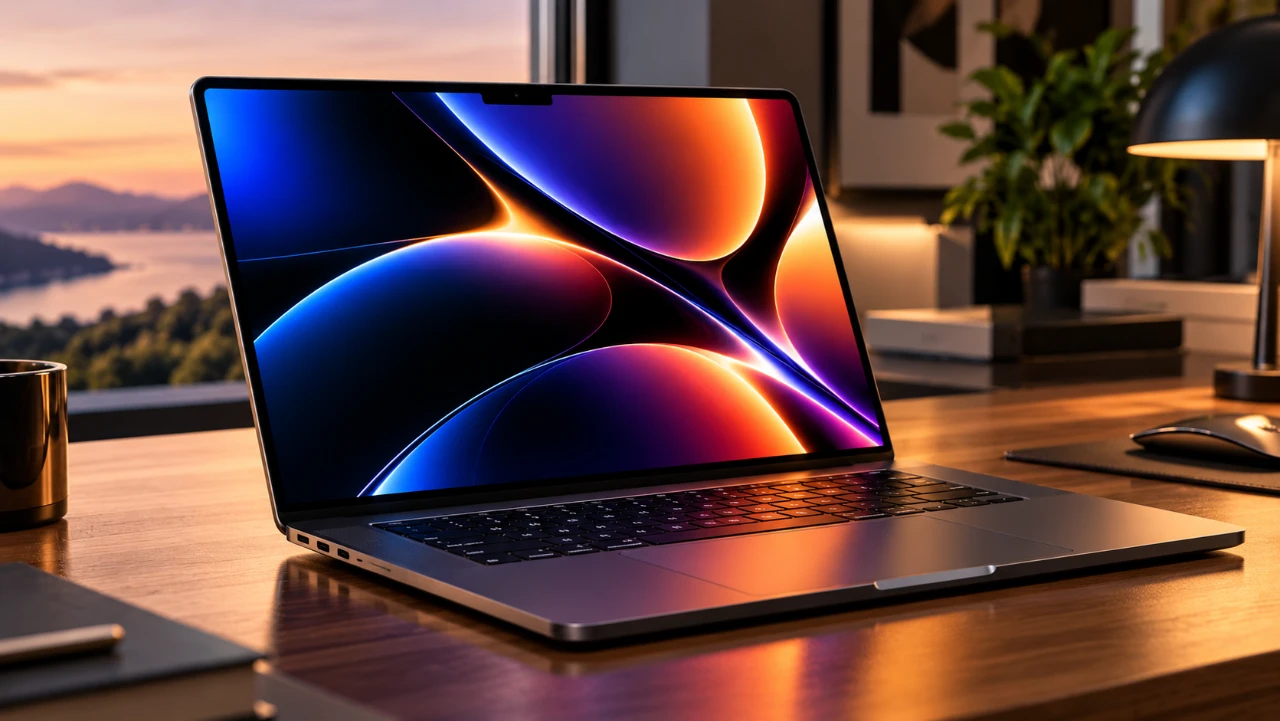
Apple is preparing to launch its first MacBook Pro featuring a touchscreen and OLED display, marking a significant evolution in its laptop design philosophy. This bold move aims to enhance user functionality and expand the MacBook’s appeal to a broader audience. However, this innovation is not without its challenges. Questions surrounding pricing, macOS optimization for touch input, and practical usability remain critical factors that could influence its reception.

Touchscreen Integration: A Step Toward Versatility
For the first time, Apple is introducing touchscreen functionality to its MacBook Pro lineup. Unlike traditional hybrid laptops, this feature is designed to complement existing input methods, such as the keyboard and trackpad, rather than replace them. This approach reflects Apple’s intent to provide a seamless user experience while attracting users accustomed to touchscreen devices, particularly those transitioning from Windows-based systems.
However, integrating touch functionality into macOS presents notable challenges. The operating system has historically been optimized for precise input via a trackpad or mouse. To ensure a smooth transition, Apple will need to redesign interface elements like buttons, menus, and sliders to accommodate finger-based interaction. Without these adjustments, users may find the touchscreen experience less intuitive, potentially undermining its appeal.
OLED Display: Raising the Bar for Visuals
The inclusion of an OLED display is another standout feature of the upcoming MacBook Pro. Compared to the current mini-LED technology, OLED screens deliver superior brightness, contrast and energy efficiency. Apple’s collaboration with Samsung Display, a leader in OLED technology, ensures that the new MacBook Pro will feature high-quality visuals that set a new standard for laptop displays.
This upgrade not only enhances the viewing experience but also enables a thinner and lighter chassis, aligning with Apple’s minimalist design ethos. However, this design shift raises concerns about potential trade-offs. A thinner chassis could result in reduced durability or fewer connectivity options, which may not sit well with professionals who rely on robust hardware and diverse port availability.
macOS and Touch: A Complex Transition
Adapting macOS for touchscreen functionality represents a significant hurdle. The operating system was originally designed for cursor-based input, making it less intuitive for touch interactions. To address this, Apple will need to rethink interface design, making sure that elements such as buttons, menus, and icons are appropriately sized and spaced for finger-based navigation.
The challenge lies in achieving this without alienating existing users who prefer traditional input methods. A poorly optimized touch interface could compromise the platform’s usability, potentially deterring both new and loyal users. Striking the right balance between touch functionality and the precision of traditional input methods will be crucial to the success of this feature.
Design Evolution: Thinner, but at What Cost?
The adoption of OLED technology and Apple’s efficient M-series processors is expected to result in a thinner MacBook Pro. While this aligns with Apple’s sleek and modern design philosophy, it may come at a cost. Reports suggest that the thinner design could lead to a reduction in ports, a recurring concern for professionals who require diverse connectivity options for their workflows.
Balancing form and function will be essential. While a thinner and lighter design may appeal to casual users and those prioritizing portability, professionals might find the reduced functionality limiting. Apple will need to carefully consider how to meet the needs of both user groups without compromising the MacBook Pro’s reputation as a versatile and powerful tool.
Performance Boost: The Power of M5 Chips
The new MacBook Pro models are expected to debut with Apple’s M5 Pro and M5 Max chips, offering significant advancements in speed and efficiency. These processors are designed to handle demanding tasks such as video editing, 3D rendering, and software development with ease, reinforcing the MacBook Pro’s position as a high-performance machine.
However, this level of performance comes with a premium price tag. The advanced capabilities of the M5 chips firmly position the MacBook Pro in the high-end laptop market. While professionals may appreciate the power and efficiency, casual users or those with less intensive computing needs might find the price difficult to justify.
Pricing: A Premium Proposition
The OLED MacBook Pro is expected to start at approximately $3,000, placing it firmly in the premium segment of the laptop market. This pricing strategy aligns with Apple’s branding as a provider of high-end, innovative technology. However, it also raises concerns about affordability, particularly for students, casual users, and budget-conscious consumers.
Speculation about a potential new naming convention, such as “MacBook Ultra,” suggests that Apple may be positioning these models as a distinct tier above the standard MacBook Pro lineup. While the advanced features may justify the price for professionals and tech enthusiasts, the high cost could limit the device’s appeal to a broader audience.
5G Connectivity: Enhancing Mobility
Apple is reportedly exploring the integration of built-in 5G connectivity for its MacBook lineup. This feature would allow users to stay connected without relying on external devices or Wi-Fi networks, significantly enhancing portability and convenience for remote work and travel.
However, it remains uncertain whether 5G connectivity will be included in the initial OLED MacBook Pro models. If implemented, this feature could provide a substantial advantage for professionals who prioritize mobility and constant connectivity, further solidifying the MacBook Pro’s position as a versatile tool for modern workflows.
Release Timeline: A Strategic Launch
The OLED MacBook Pro is anticipated to debut alongside macOS 27.2, likely in October or November 2026. This timing ensures that the hardware and software are optimized to work seamlessly together, delivering a cohesive and polished user experience.
This launch represents a pivotal moment for Apple as it ventures into new territory with touchscreen laptops and OLED displays. The success of this release will depend on how effectively Apple addresses the challenges of integrating these features while maintaining the MacBook Pro’s reputation for reliability and performance.
Here are more guides from our previous articles and guides related to Touchscreen MacBook Pro that you may find helpful.
- The Touchscreen MacBook Ultra Is Real And Arriving Sooner Than Expected
- Apple May Overhaul the MacBook Pro with an Unexpected Twist
- Leaked OLED MacBook Pro Marks Apple’s Biggest Mac Shift in Years
- What Apple’s First Touchscreen MacBook Pro Means for You
Source: SaranByte
Disclosure: Some of our articles include affiliate links. If you buy something through one of these links, Geeky Gadgets may earn an affiliate commission. Learn about our Disclosure Policy.
