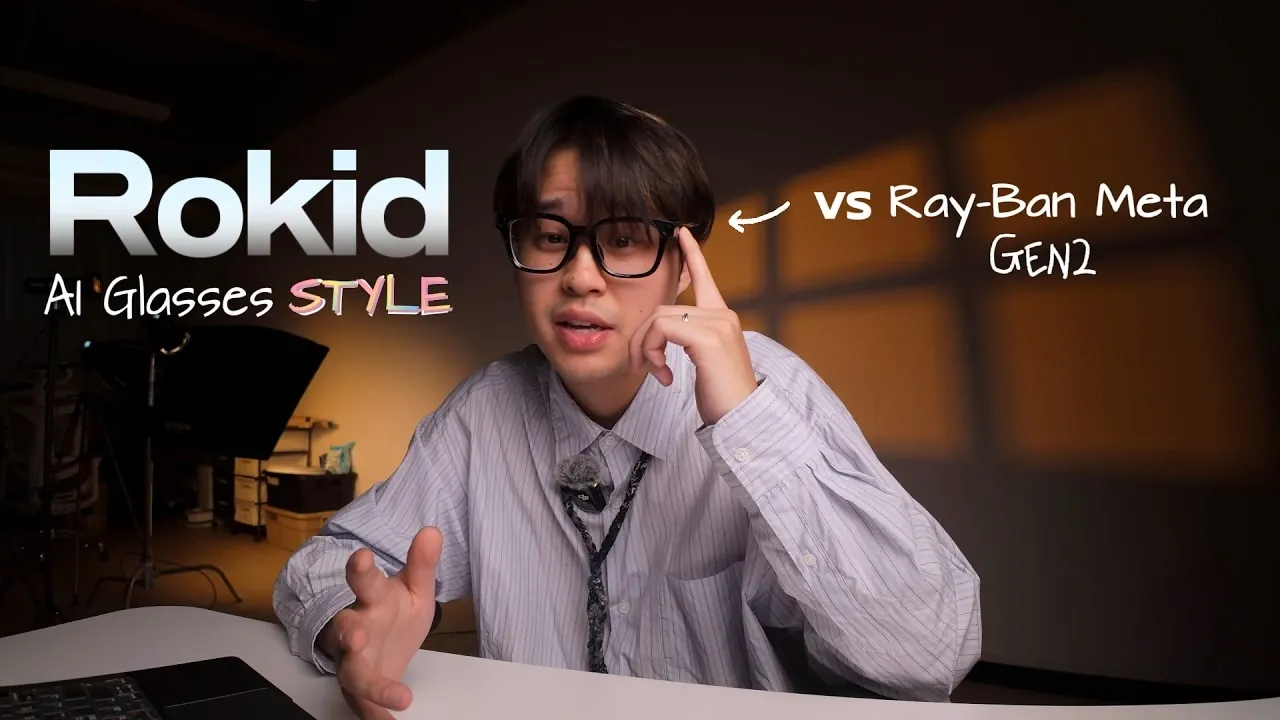
Smart glasses have become a prominent category in wearable technology, offering a range of features tailored to different user preferences. Chan’s Tech Review compares the Rokid AI Glasses Style and Ray-Ban Meta glasses, focusing on their distinct advantages and limitations. For example, Rokid’s lightweight build 38.5 grams without lenses, and liquid silicone nose pads enhance comfort for prolonged use, while Ray-Ban Meta emphasizes audio quality and social media integration, catering to users who value sound clarity and connectivity.
Dive into how these glasses compare in AI-driven features, camera performance, and ecosystem compatibility. Gain insight into Rokid’s offerings, such as offline translation and customizable navigation, alongside Ray-Ban Meta’s focus on social media functionality and high-quality audio. This analysis provides a clear breakdown to help you evaluate which option aligns best with your needs.
Weight and Comfort
TL;DR Key Takeaways :
- Rokid AI Glasses Style prioritize advanced AI features, including ChatGPT, offline translation and customizable navigation, making them ideal for functionality-focused users.
- Ray-Ban Meta glasses excel in audio quality and seamless integration with social media platforms like Instagram and WhatsApp, catering to users who value connectivity and sound performance.
- Rokid glasses are lighter (38.5g without lenses) and more comfortable, featuring liquid silicone nose pads and titanium alloy hinges for durability, while also being splash-resistant (IPX4).
- Rokid offers superior camera features, including longer recording times (10 minutes), multiple aspect ratios, stabilization and 32GB storage, making them better suited for content creators.
- Rokid glasses are more affordable, starting at $279, compared to Ray-Ban Meta’s $379, while also providing more flexible and cost-effective prescription lens options.
Comfort is a crucial consideration for wearable technology and Rokid AI Glasses Style takes a clear lead in this area. Weighing just 38.5 grams without lenses (47 grams with lenses), they are significantly lighter than Ray-Ban Meta glasses, which weigh 54 grams with lenses. Rokid also incorporates liquid silicone nose pads, making sure a secure and comfortable fit even during prolonged use or in warm weather. For users prioritizing a lightweight design and ergonomic comfort, Rokid offers a distinct advantage.
Build Quality and Durability
Durability is another area where Rokid excels. Featuring titanium alloy hinges, the glasses are designed for robust daily use. Additionally, their IPX4 splash resistance rating ensures they can withstand exposure to light rain or accidental splashes, making them suitable for various environments. Ray-Ban Meta glasses, while offering a sleek and stylish frame design, lack these durability features. If you’re looking for glasses that can endure the rigors of everyday wear and tear, Rokid’s build quality provides better long-term reliability.
Find more information on smart glasses by browsing our extensive range of articles, guides and tutorials.
- Samsung Smart Glasses 2026: Features, Specs, and Release Date
- Samsung Smart Glasses: Features, Release Date, and
- Apple Glasses: Everything We Know So Far
- Google Smart Glasses with Dockable Earbuds Leaked
- AI Smart Glasses Coming in Weeks: Maverick AI Pro & More
- Samsung’s Smart Glasses Will Transform Wearable Technology
- Rokid Glasses vs Rokid AI Glasses Style : Display vs Comfort
- Best Smart Glasses 2026 Compared : Android, Apple, Rokid & Snapchat
- New Meta AI Glasses 2025 : Everything You Need to Know
- Xiaomi AI Glasses First Impression Review: Features & Benefits 2025
AI Capabilities
Rokid’s AI capabilities set it apart in the smart glasses market. Equipped with ChatGPT and Gemini AI, these glasses offer advanced features such as scene descriptions and support for 89 languages, including offline translation for select languages. These functionalities make Rokid ideal for users who rely on AI for tasks like language translation, contextual assistance, or real-time information. In contrast, Ray-Ban Meta glasses feature proprietary AI but offer simpler responses and lack offline translation capabilities. For those prioritizing robust AI functionality, Rokid is the clear winner.
Navigation and Shortcuts
When it comes to navigation and shortcuts, Rokid once again takes the lead. It offers Google Maps turn-by-turn navigation and customizable AI shortcuts, enhancing its practicality for everyday use. Ray-Ban Meta glasses, however, do not include navigation features or customizable shortcuts, limiting their functionality. If you value tools that improve daily convenience and usability, Rokid provides a more versatile and user-friendly experience.
Camera Features
Both models feature 12MP cameras, but Rokid offers greater flexibility and functionality. It supports multiple aspect ratios, including 3:2, 4:3 and 9:16, and allows for longer recording times of up to 10 minutes, compared to Ray-Ban Meta’s 3-minute limit. Rokid also includes IMU-based stabilization and 32GB of onboard storage, making sure smoother recordings and ample space for content. These features make Rokid a more appealing option for content creators or users who frequently capture photos and videos.
Audio and Transcription
In terms of audio quality, Ray-Ban Meta glasses take the lead with richer, more immersive sound, making them ideal for users who prioritize high-quality audio experiences. Rokid, on the other hand, focuses on practicality by offering audio recording with automatic transcription via its app. This feature is particularly useful for note-taking, documentation, or professional use. Your choice here depends on whether you value superior sound quality or the added utility of transcription capabilities.
Prescription Lens Options
Rokid provides a wider range of prescription lens options, with prices starting at $79. The glasses also allow for easy lens swapping, adding to their practicality and versatility. In comparison, Ray-Ban Meta lenses are priced higher, ranging from $112 to $240, and may not offer the same level of flexibility. For users requiring prescription lenses, Rokid delivers a more affordable and adaptable solution.
Price Comparison
Price is a significant differentiator between these two models. Rokid glasses start at $279, making them a more budget-friendly option. Ray-Ban Meta glasses, priced at $379, are considerably more expensive. If affordability is a key factor in your decision, Rokid offers better value for money, especially given its extensive feature set.
Ecosystem and Integration
Ray-Ban Meta glasses excel in ecosystem integration, seamlessly connecting with platforms like Instagram and WhatsApp for video calls and quick content sharing. This makes them an excellent choice for users who are active on social media and value instant connectivity. Rokid, by contrast, focuses on standalone AI features and tools for content creation, catering to users who prioritize functionality over social media integration. Your decision will depend on whether you value social connectivity or independent functionality more.
Making the Right Choice
Choosing between Rokid AI Glasses Style and Ray-Ban Meta glasses ultimately depends on your individual priorities and how you intend to use the glasses.
- Rokid Strengths: Advanced AI capabilities, offline translation, customizable navigation, flexible camera features, longer recording times and affordability.
- Ray-Ban Meta Strengths: Superior audio quality, seamless social media integration and a stylish design.
If you value AI functionality, content creation tools, and affordability, Rokid is the better option. However, if social connectivity and audio performance are more important to you, Ray-Ban Meta glasses may justify their higher price. Both models cater to different user needs, making sure there’s a suitable choice for a wide range of preferences and lifestyles.
Media Credit: Chan’s Tech Review
Disclosure: Some of our articles include affiliate links. If you buy something through one of these links, Geeky Gadgets may earn an affiliate commission. Learn about our Disclosure Policy.
